Bacterial Canker
Identification
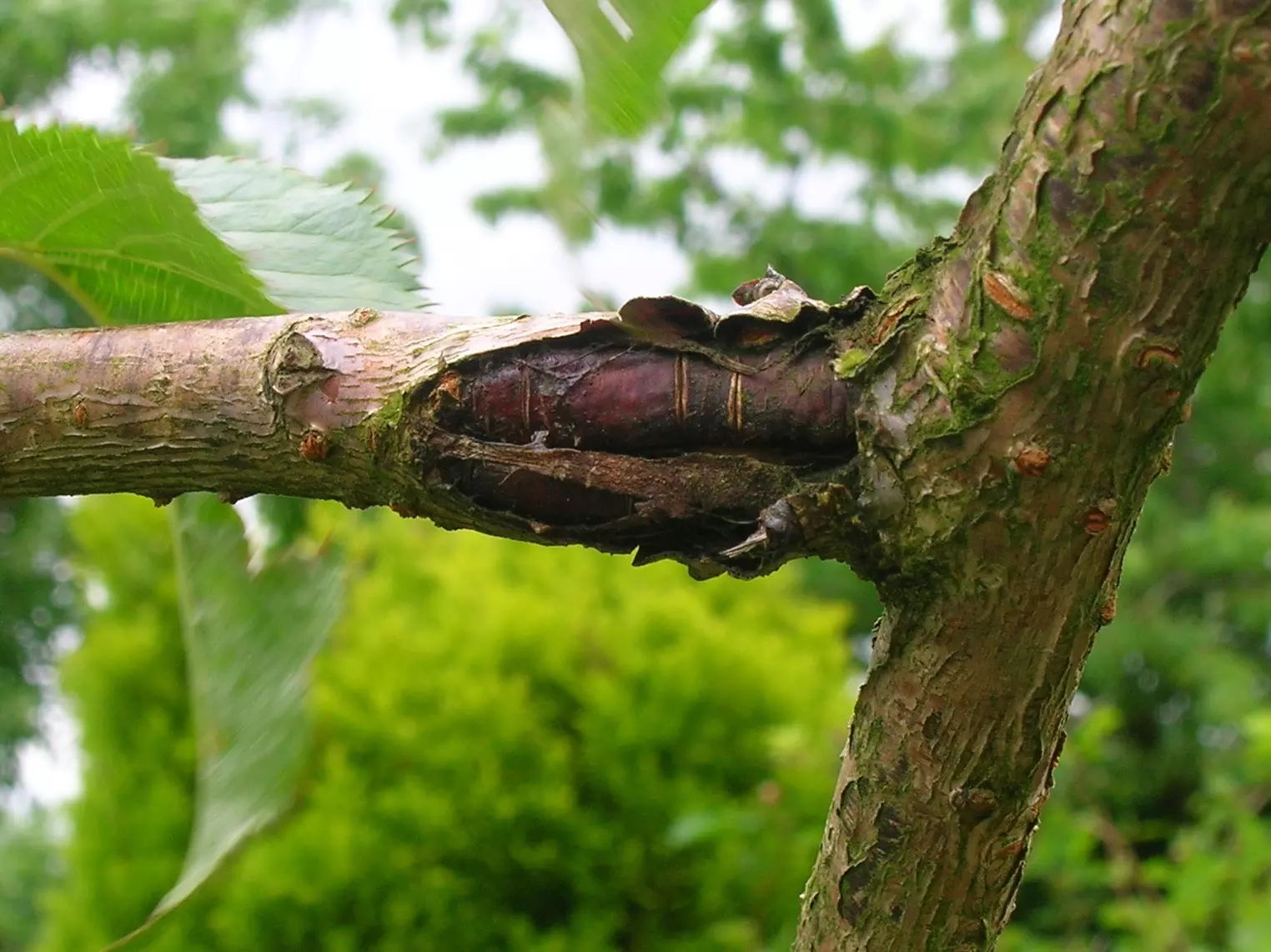
Bacterial canker can be identified by darkened areas of bark, often on individual branches. These areas are often sunken in towards their centers. Limbs and branches beyond the canker may be dead or dying. Symptoms can also appear on leaves and fruit. Symptoms can include dark, tattered patches on leaves, and black depressions on individual fruits.
Damage prevention
Select healthy nursery stock. If you've had issues with bacterial canker in the past, inquire about resistant cultivars. Select planting sites with adequate drainage, otherwise plant in raised mounds. Transplant when the risk of frost is low. Help trees/plants to avoid stress by ensuring they are not over-watered nor under-watered. Healthy, vigorous plants are better able to resist bacterial canker. Bacterial canker tends to take advantage of weakened or stressed plants, and typically infects younger plants. Avoid wetting the plant itself when watering; if possible use drip irrigation. Also avoid injuring the plant while wet e.g., by pruning or weeding. Keep weeds around the base of the plant under control.
Physical control
Bacterial canker is more likely to occur and spread during periods of cool temperatures. Prune infected trees and vines in mid- late summer, when the weather is hot and dry. Prune limbs 12" (30 cm) below the site of the canker. Disinfect pruning tools after each cut so as to not spread the bacteria. Dispose of infected material by burning (where allowed), otherwise dispose of it off-site following local regulations.
Chemical control
Chemical control is not recommended for controlling bacterial canker. The most effective control methods are preventative and cultural. In many areas bacterial canker is resistant to copper-based sprays so these are not recommended. If you must use a bactericide, an application of 10% lime sulfur in fall when the leaves drop may help to mitigate the disease for the next growing season. Follow local regulations and label instructions carefully to ensure safe and effective application. Be aware that lime sulfur is lethal to a wide variety of beneficial garden insects that hide in and around dormant trees and plants.
Plants Affected





Put away the pen and paper
Plan your veggie garden in minutes with Planter's easy drag and drop planner.
Try Planter for Free