Gray Mold (Botrytis)
Identification
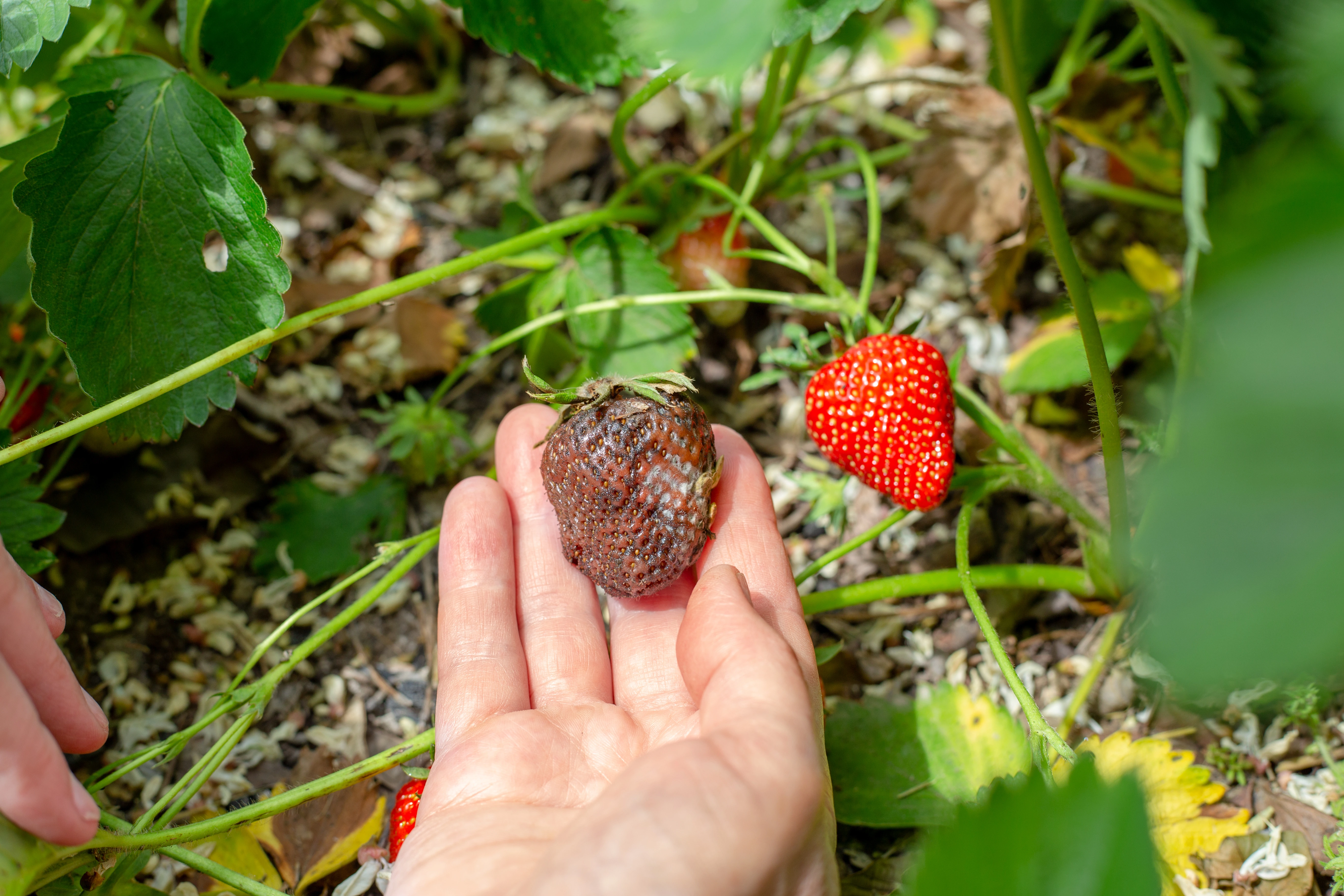
Gray mold, also known as botrytis, bulb and neck rot, or tulip fire, is a fungal disease that affects a wide variety of crops- flowers, fruit, and vegetables. Gray mold typically starts growing on injured flowers, fruits, and leaves where it can then migrate into healthy plant tissues. Gray mold can affect actively growing plants and crops in storage after harvest. Gray mold is also one of the fungal diseases that can cause 'damping off' of young seedlings, potentially killing them. Gray mold tends to grow in cool, wet, and humid conditions when plant parts stay wet for several hours or more. A classic symptom of gray mold is gray fuzzy growth on flowers, fruits, leaves, and tender stems. Some symptoms are specific to the plant affected, the stage of infection, and the exact species of botrytis fungus. Other symptoms include: water soaked spots on leaves, flowers, and fruit; browning and softening of leaves, flowers, and fruit; as well as girdling and wilting of stems.
Damage prevention
Remove dead and dying leaves, flowers, and fruit from plants using clean, sharp tools. Avoid injuring plants during pruning and harvesting and not leave dead stem 'stubs' on plants. Protect plants from other forms of injury such as from pests, weather, and chemical burn. Remove dead plant debris from the ground and maintain good weed control to minimize botrytis spores. When planting outside ensure plants are spaced properly in locations that have good airflow. Prune plants as needed with clean, sharp tools to improve air circulation. Avoid splashing water on plants when watering- either water close to the base of the plants or use drip irrigation if possible. Water in the morning so any water that does land on the plant will dry off quickly. For growing indoors, increase heat and improve ventilation to help control humidity and use fans to circulate air. Follow crop-specific best practices for harvesting and storage.
Physical control
Remove all affected plant tissues and dispose of them off-site; do not leave affected tissue near the growing area otherwise spores can easily spread. In storage, remove rotten produce as soon as it is found.
Chemical control
Fungicides have limited impact if the conditions that favor gray mold are not corrected. Many types of gray mold are resistant to fungicide and those that are not can easily become resistant. If you choose to use a fungicide, select a product that is labelled for gray mold and rotate products where possible to minimize resistance. Not all fungicide products work on all types of fungal diseases. Check local regulations (or your local Extension Office where applicable) to identify products that can be used in home gardens in your area. Follow label instructions carefully for safe and effective fungicide application and to ensure that edible crops are safe to harvest. Test fungicide on a few plants before widespread application. Spray fungicides in the late evening and try to avoid spraying during blooming to minimize negative impacts on pollinators- some fungicides are directly lethal to pollinators, and others can have indirect negative impacts. Fungicides may not help if the plant is already severely diseased; it works best when used early (or preventatively in cases where you know you have a particular disease susceptibility). Severely diseased plants may need to be removed and disposed off site.
Plants Affected







...and 45 more plants
Put away the pen and paper
Plan your veggie garden in minutes with Planter's easy drag and drop planner.
Try Planter for Free