Buckwheat
Fagopyrum esculentum
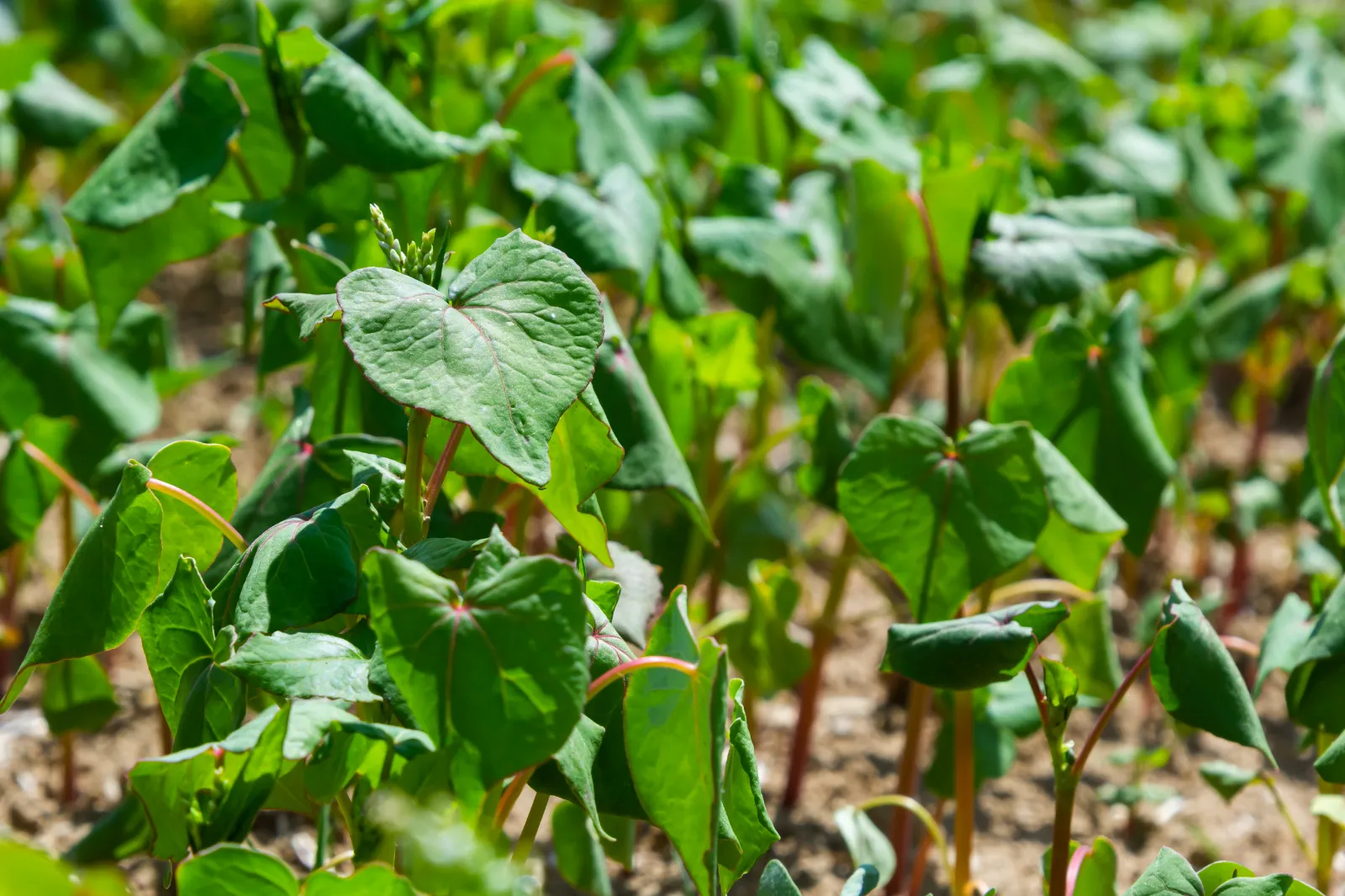
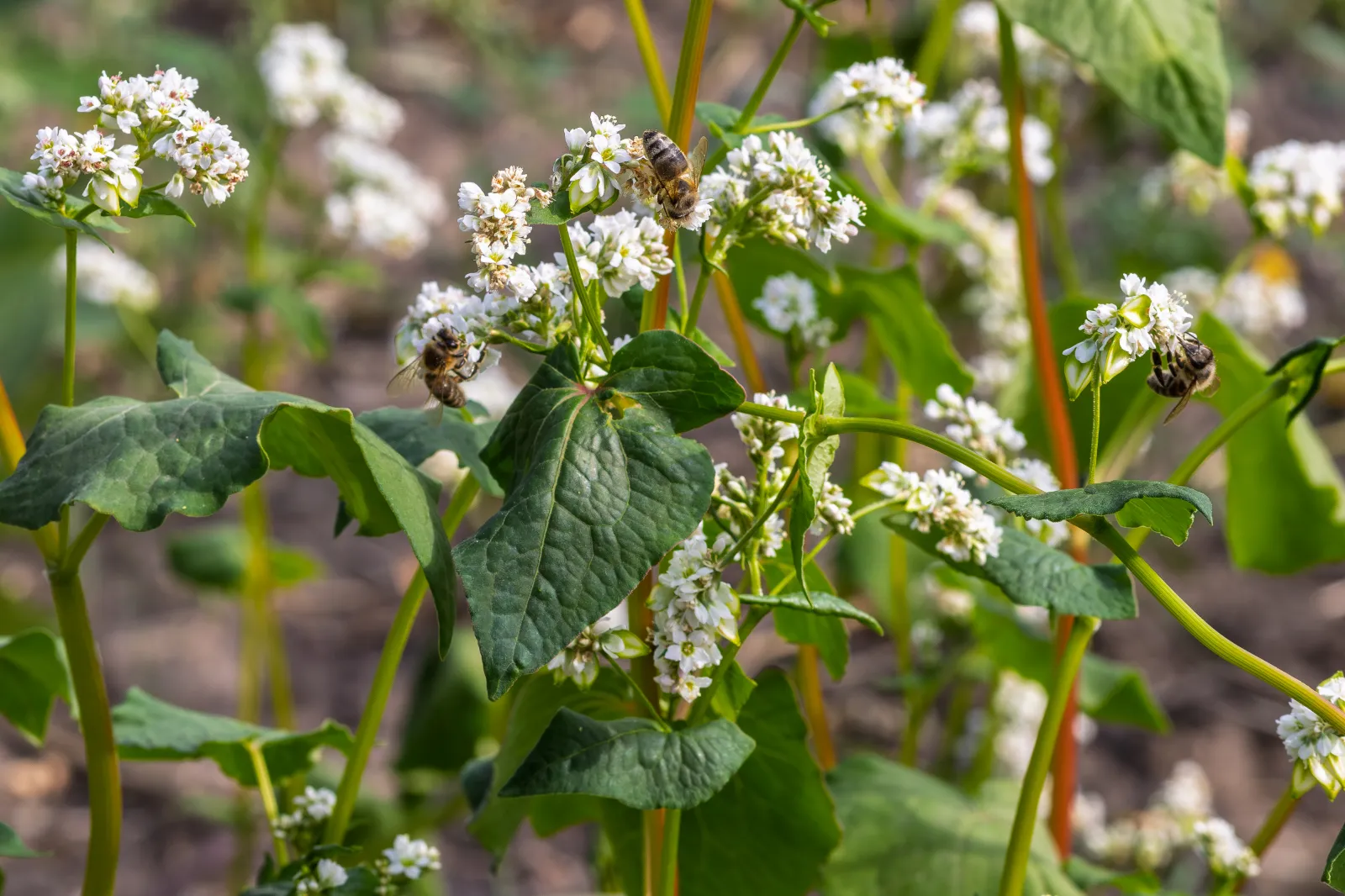
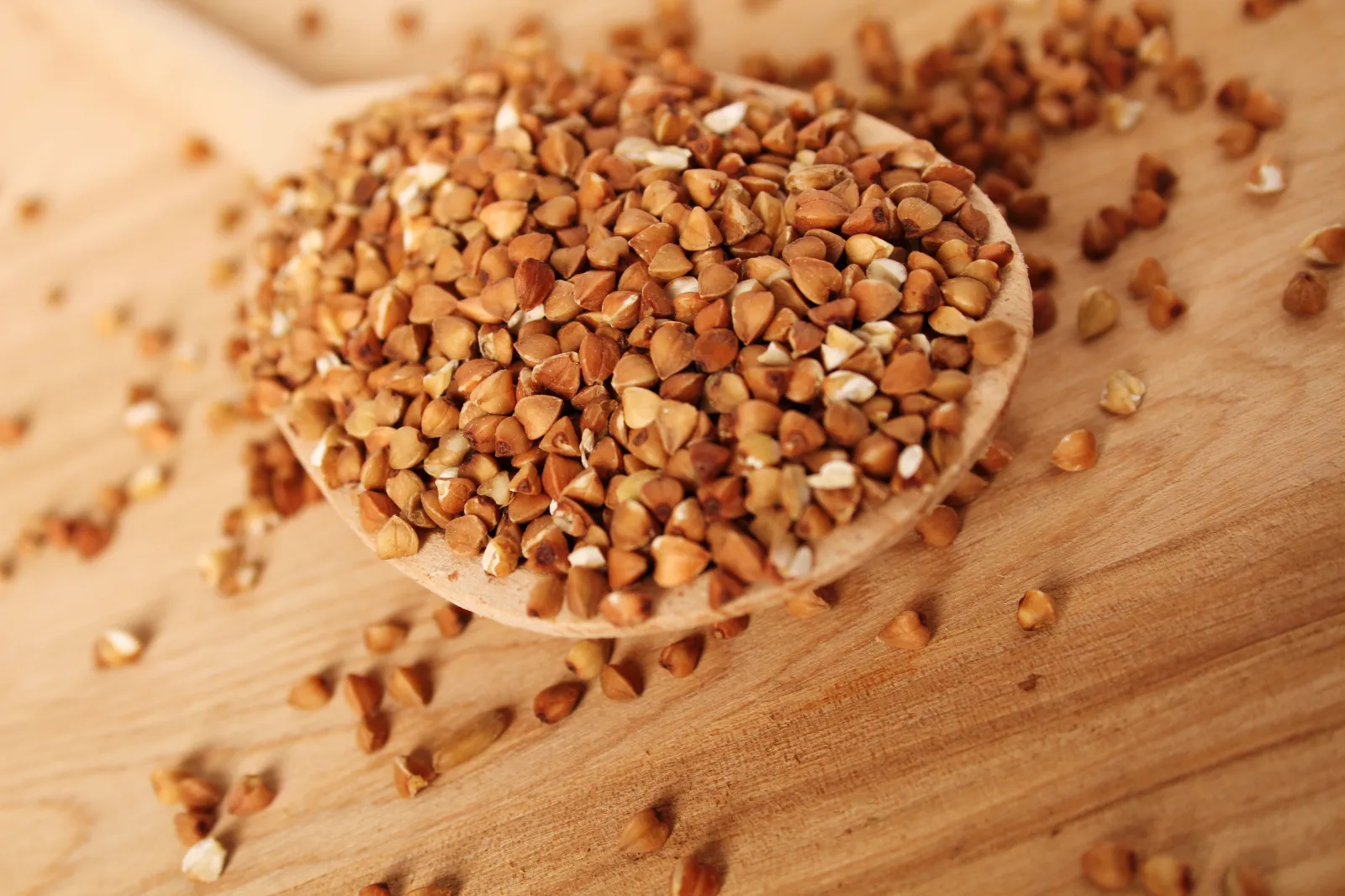
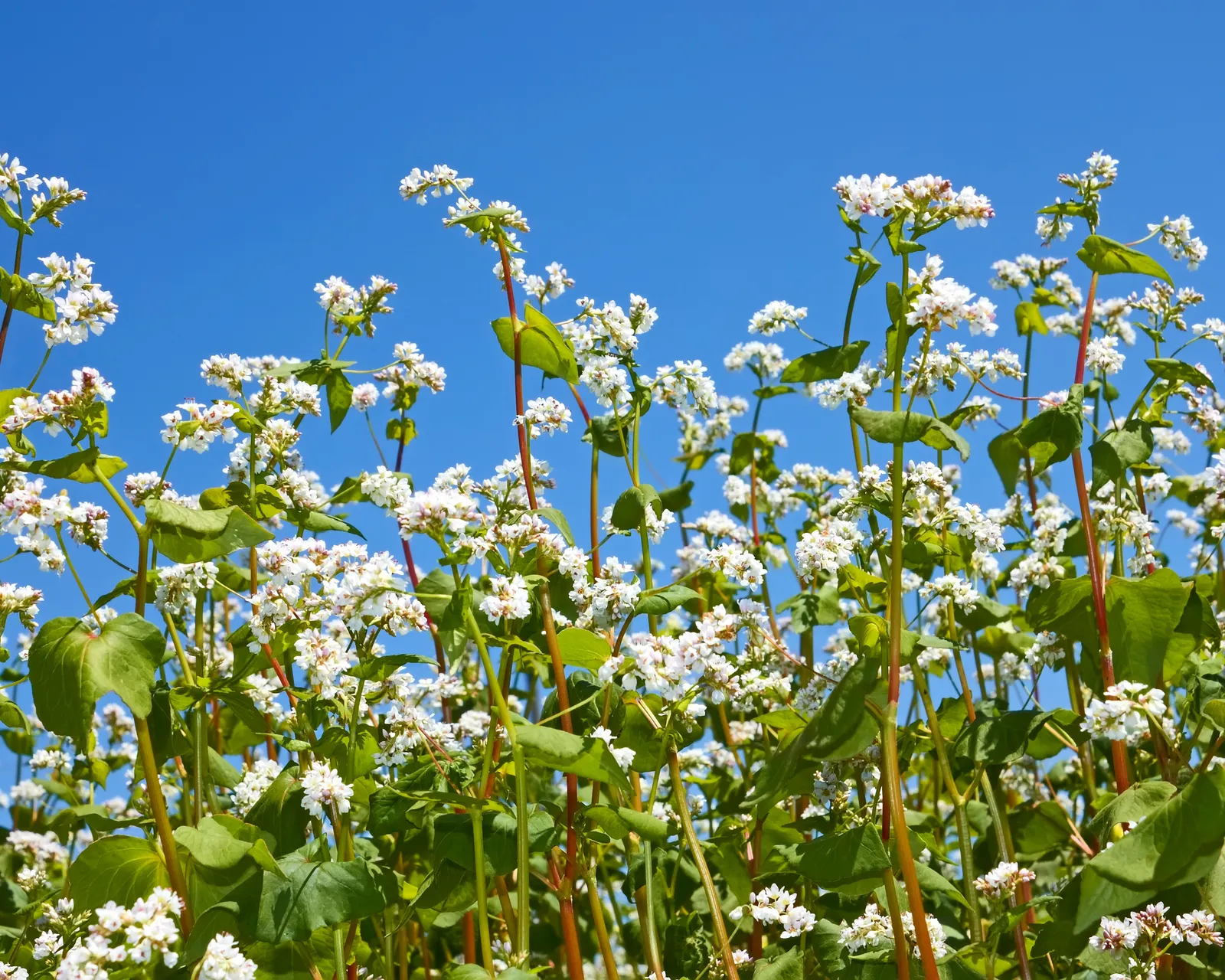
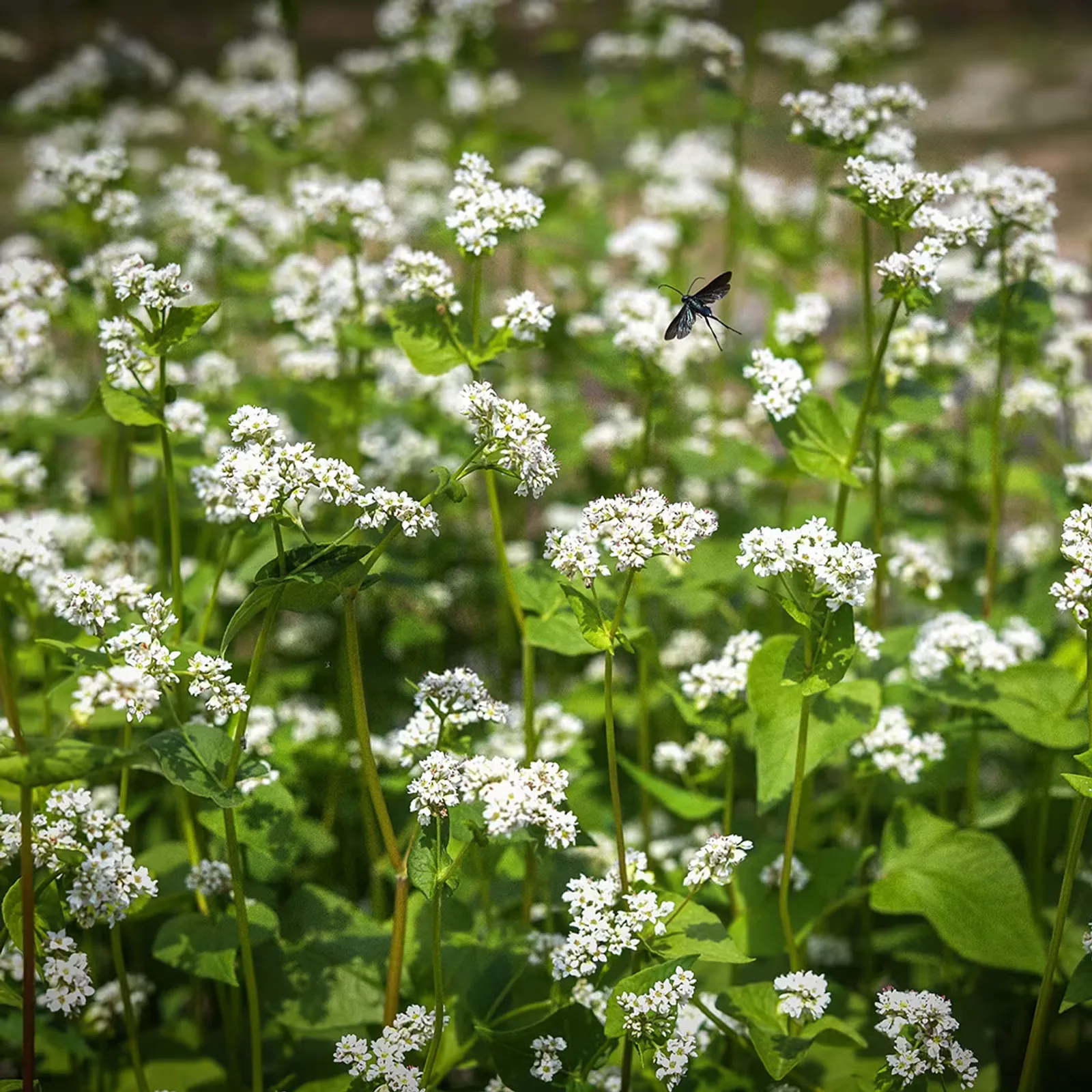
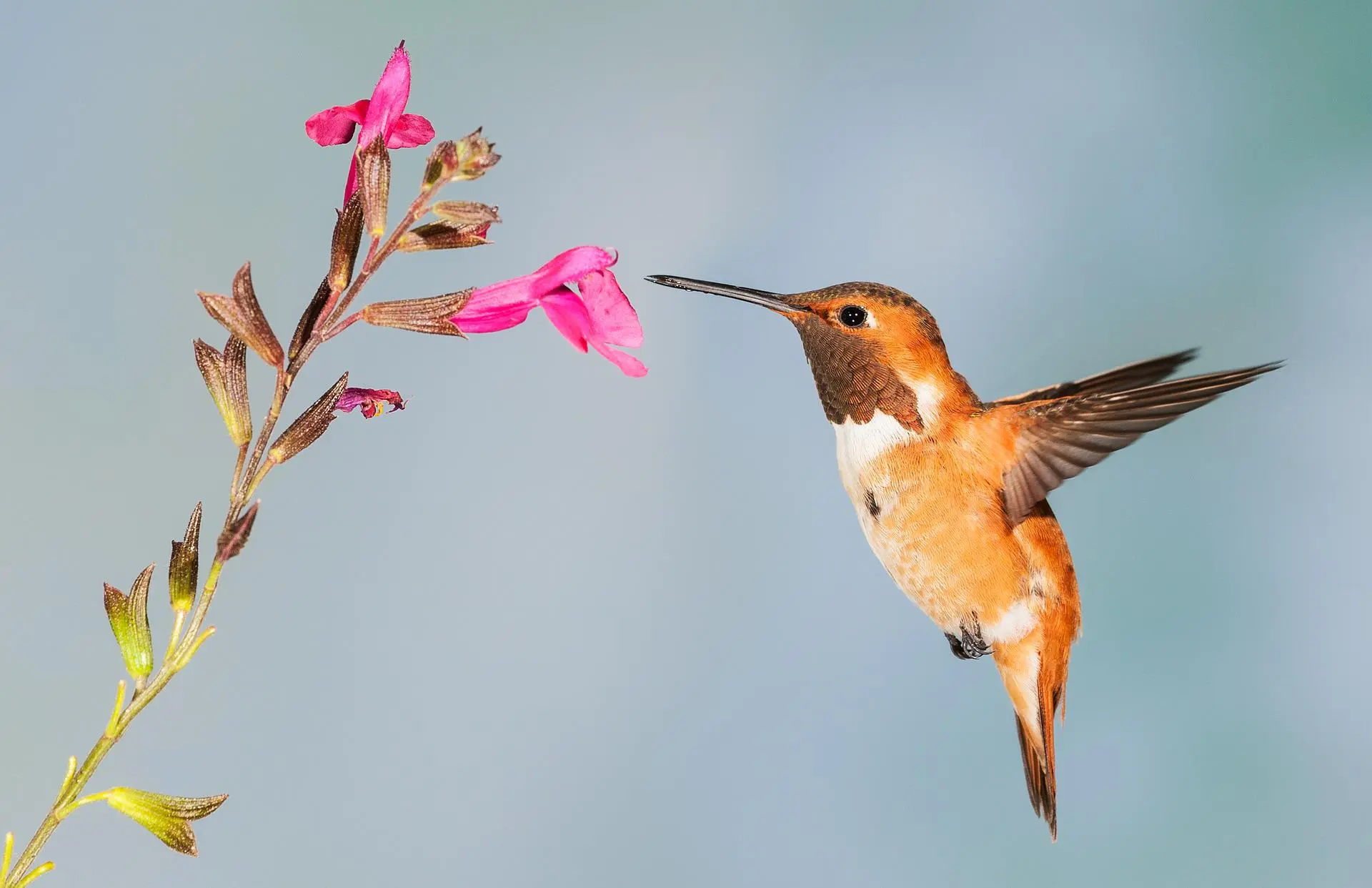
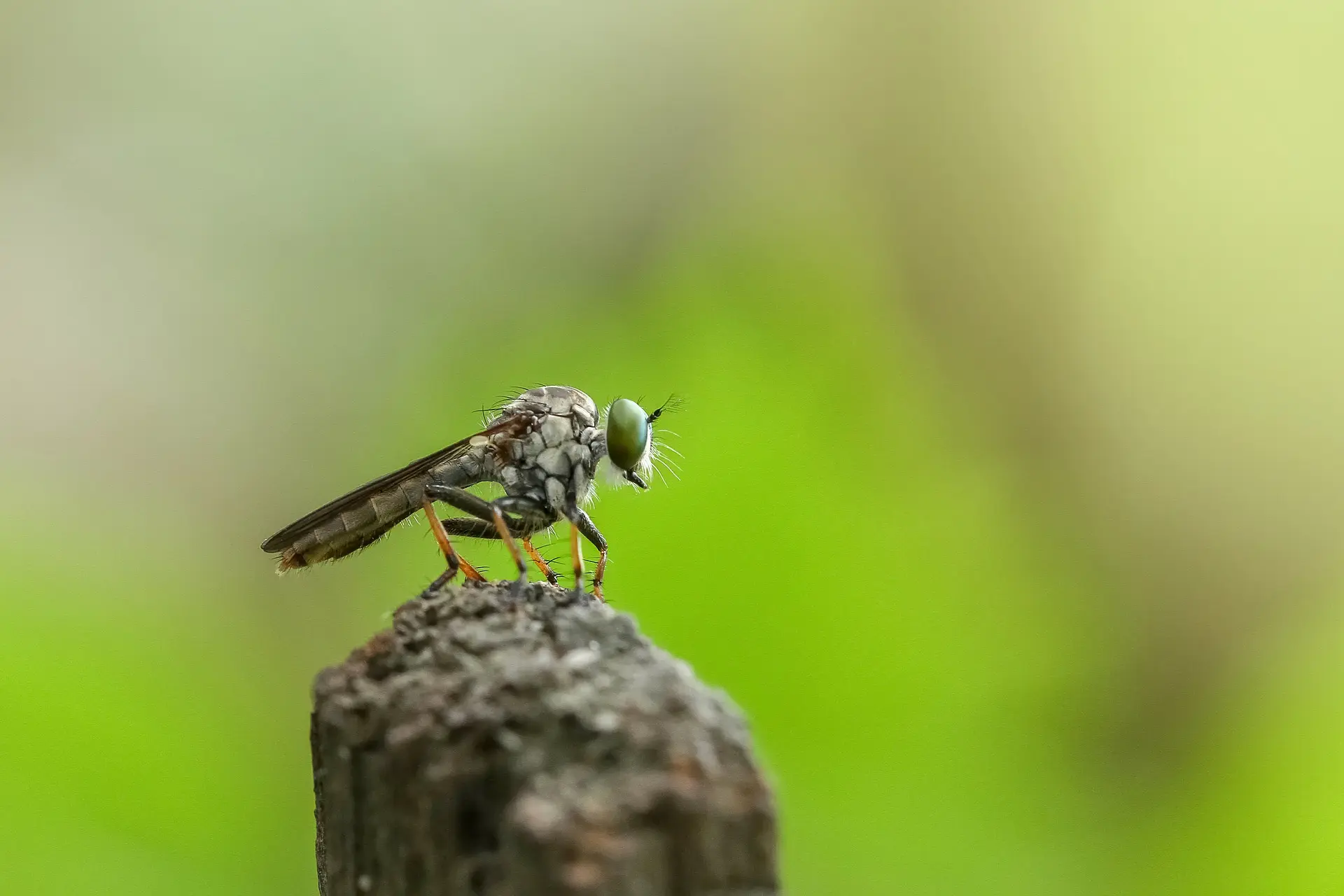
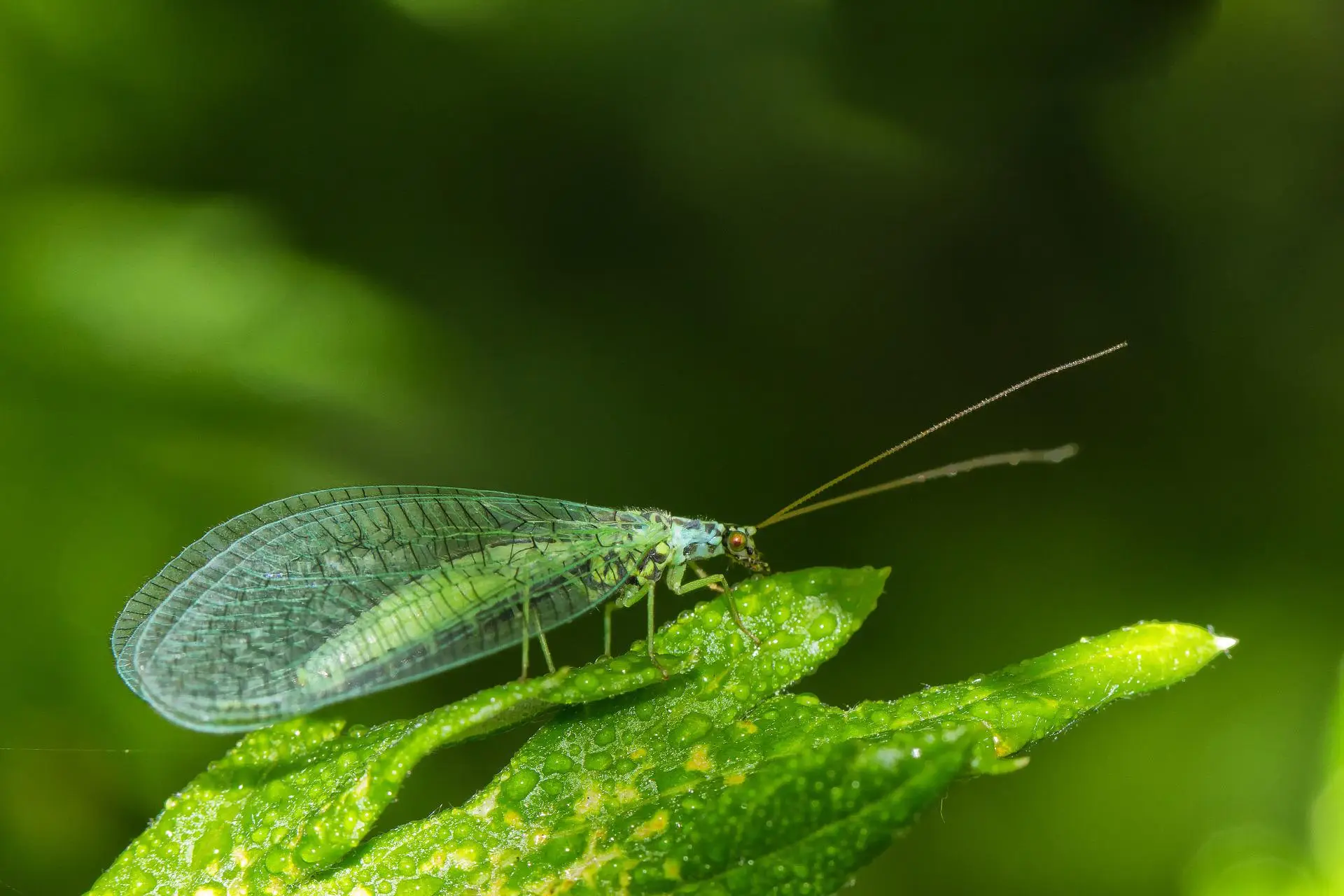
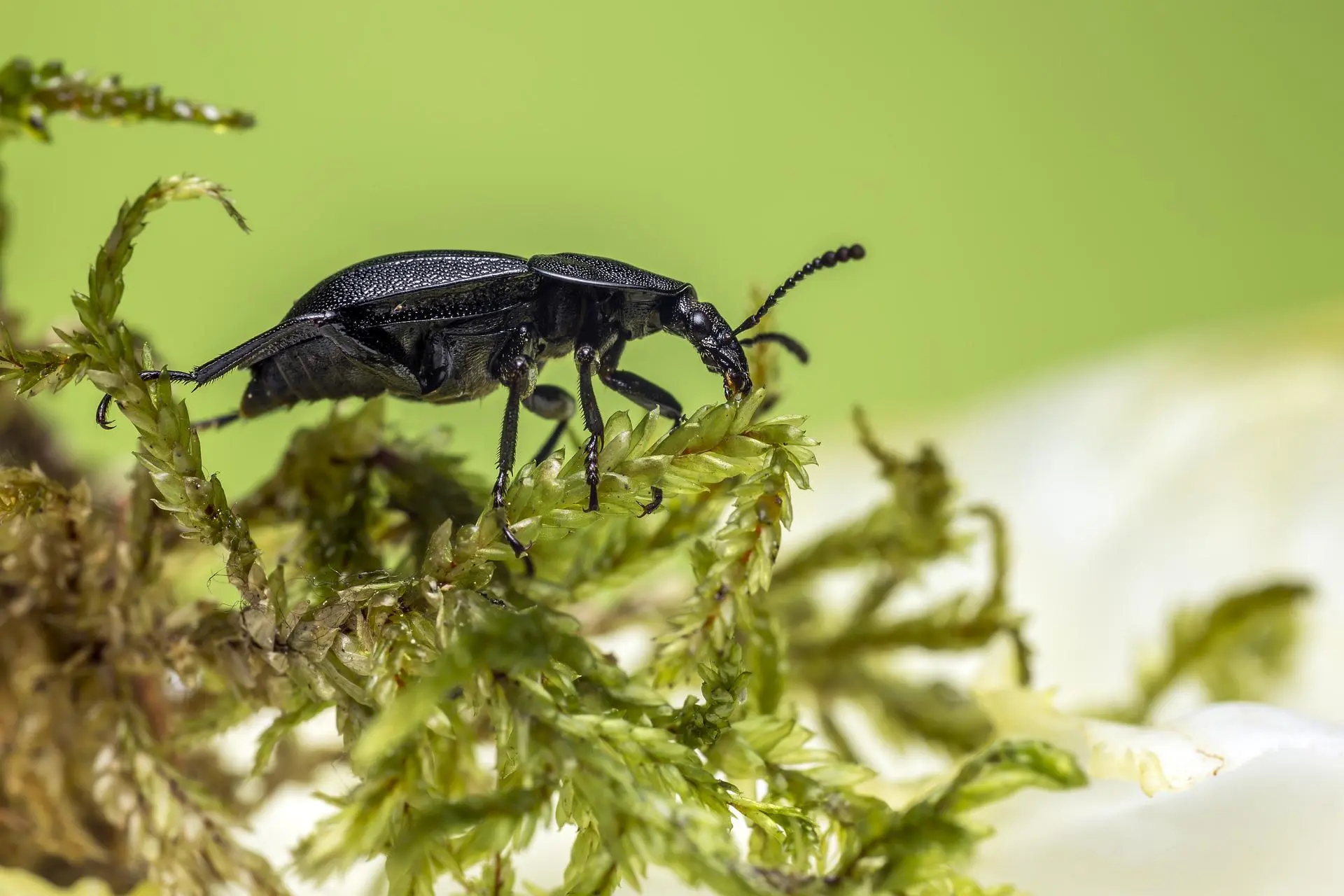
Buckwheat is a pseudograin related to rhubarb and sorrel. While not technically a grain, buckwheat seeds can be cooked and eaten as a grain or cereal, and they can be milled into buckwheat flour to make breads, noodles, and pancakes. While buckwheat leaves are edible they contain a compound called fagopyrin which can cause sun sensitivity and other skin problems if eaten in excess. Buckwheat is a fast-growing plant that produces well even in areas with shorter growing seasons. It is sometimes possible to get multiple successions of buckwheat in the same season. Buckwheat's rapid growth makes it a popular cover crop as it can quickly outcompete weeds and produces ample 'green manure' that can be incorporated into the soil or used as mulch. Buckwheat is a warm season crop and is more tolerant of heat than some other grains, which means it can potentially be planted in summer when other grain crops would struggle. Buckwheat also flowers prolifically which makes it highly attractive to pollinators and other beneficial insects.
How to Grow Buckwheat
Quick Info


Put away the pen and paper
Plan your veggie garden in minutes with Planter's easy drag and drop planner.
Try Planter for Free
Varieties

Related Articles
Nutrition
Vitamins



Nutrients










Pests
Diseases
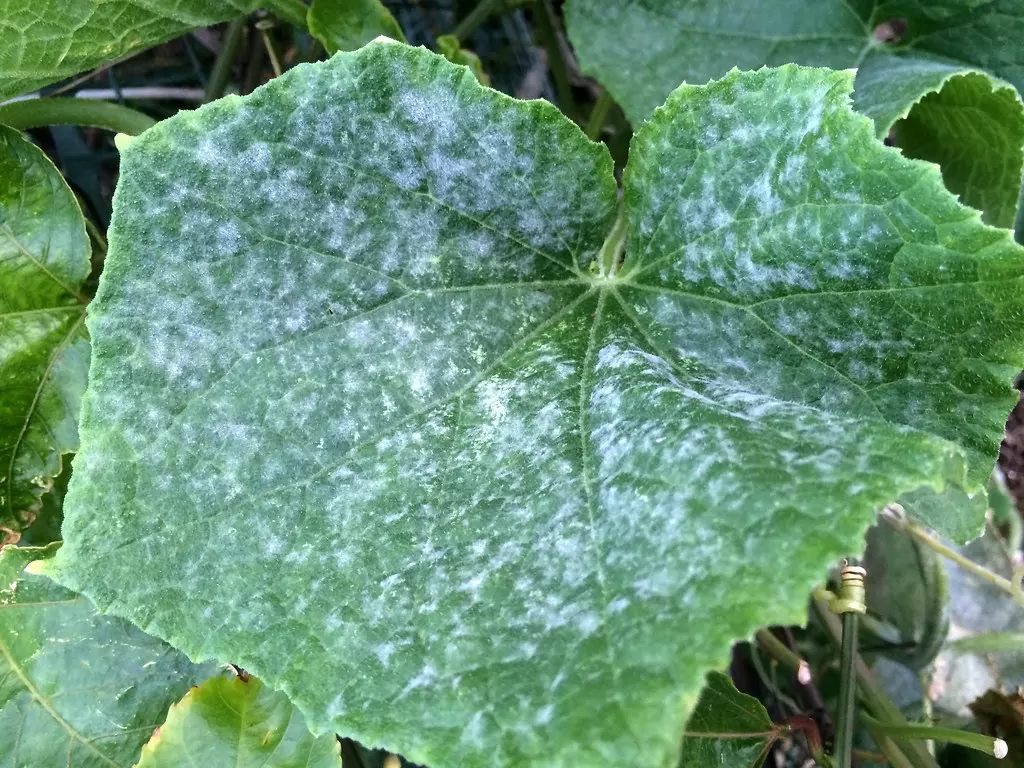
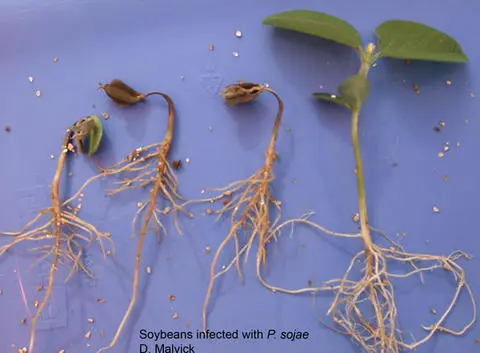
Beneficial Critters

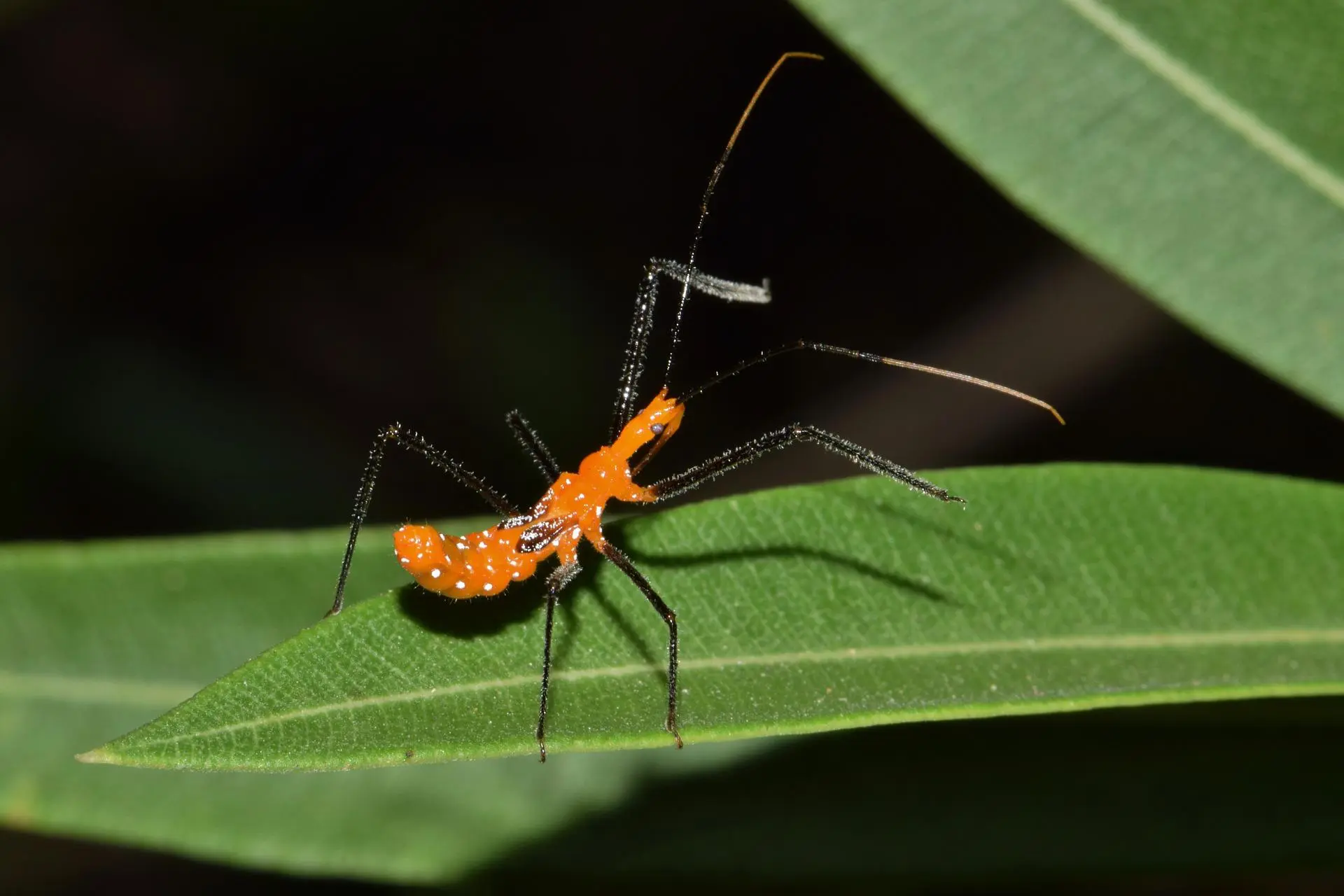
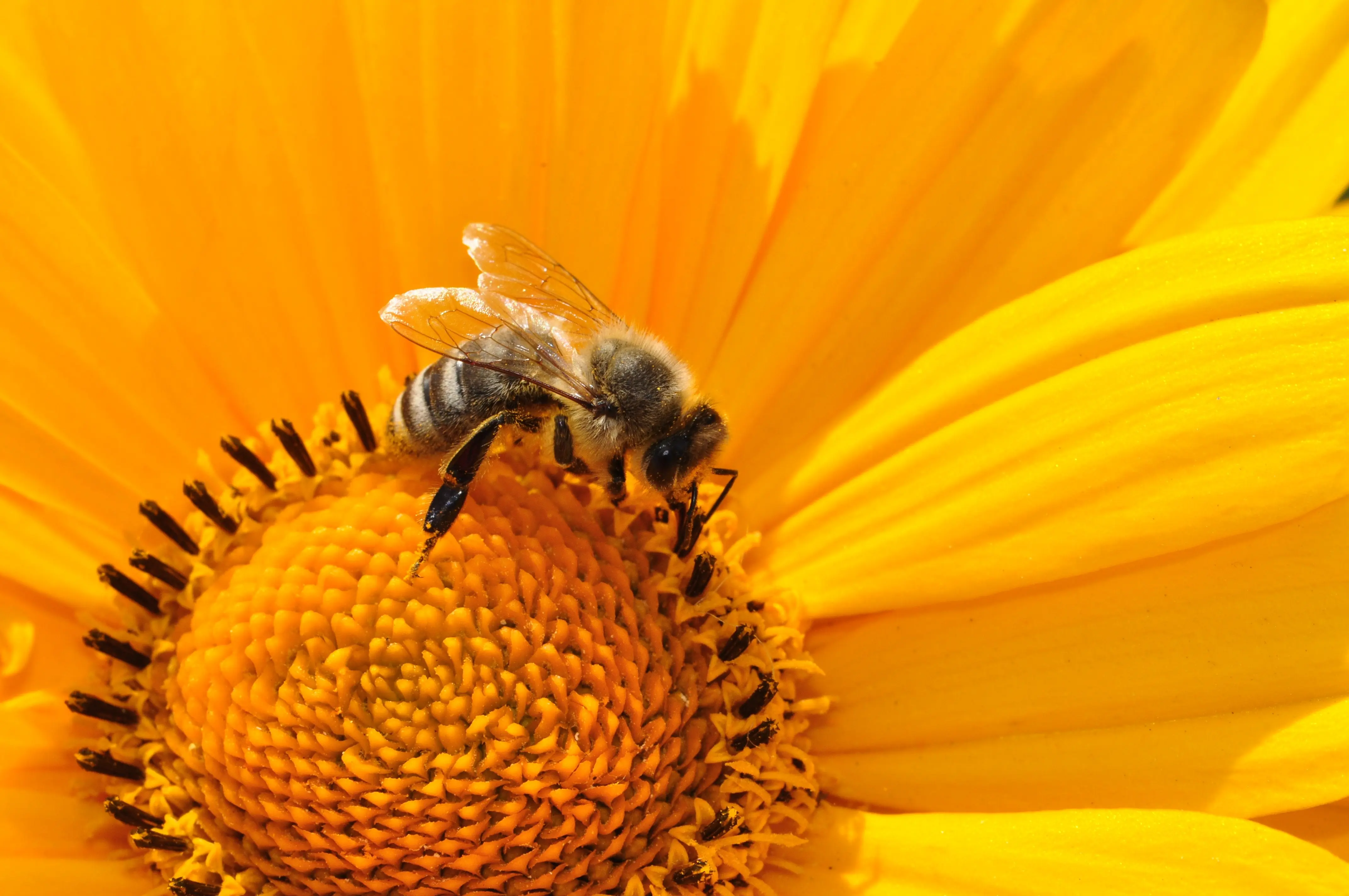

Growing from Seed
Unroasted store-bought buckwheat groats (hulled buckwheat seeds) may sprout but it is best to purchase buckwheat seed for planting.
Buckwheat should be sown directly outdoors after all risk of frost has passed. In areas with moderate summers buckwheat can be sown in summer for a fall crop. Buckwheat sown in summer and grown into the cooler fall days may have better yields than spring sown buckwheat, so long as it is given enough time to mature before frost. As a fall cover crop buckwheat can be planted as late as 4-5 weeks before the first fall frost.
To sow buckwheat seed outdoors, loosen compacted soil if needed, then lightly tamp down the surface using a rake or your feet to prepare a flat, even seed bed. Seeds can be scattered onto prepared soil by hand or using a hand-cranked seeder. If you have a push seeder it can be used to get more precise seed spacing. If you are scattering seeds by hand, you may want to sow at a slightly higher density than recommended, since germination may not be as high as with directly sown seeds. Buckwheat can quickly form a dense canopy however each individual plant is rather spindly so good seed coverage is essential when growing buckwheat as a cover crop. Rake in hand scattered seeds lightly to ensure they are covered with about 1" (2.5 cm) of soil (try not to move the seeds around too much to keep somewhat even spacing). Water in well with a gentle spray nozzle to ensure good seed-to-soil contact. If you have access to row cover, it can be secured flat over the planting area to help prevent birds from eating the newly planted seeds. Be sure to remove the row cover as soon as the seeds germinate.
Planting Considerations
A 10' x 10' (3 m x 3 m) plot can yield very roughly 2 - 5 lbs of buckwheat seeds.
If growing buckwheat as a cover crop, be aware that buckwheat has 'allelopathic' properties that can inhibit the germination of seeds planted after the buckwheat has been terminated. Buckwheat's allelopathic effects can last up to 30-60 days, so it may be best to wait a few months before sowing seeds in the same space. Mowing buckwheat and then using the debris as a mulch rather than incorporating it may help to suppres weed germination around already established plants.
Incorporating buckwheat cover crop debris into the soil can help to add soil organic matter and improve soil tilth. As buckwheat residue breaks down it can also add available phosporus to the soil.
Buckwheat prefers moderately fertile soil that drains well. Buckwheat does not do well in soils that retain too much moisture. Working compost into the soil at the time of planting can help to improve drainage, but do not plant buckwheat in an area that is prone to waterlogging.
Feeding
Buckwheat grows well even in poor soils. Adding compost at the time of planting should provide enough fertility. Excess nitrogen can cause 'lodging'- buckwheat that falls over.
Harvesting
Buckwheat is typically harvested once roughly 75% of the seed heads have turned from green to light brown. Buckwheat seed heads mature at different times so you might want to be selective when harvesting.
A traditional way to harvest buckwheat is with a scythe, but for smaller plots a serrated hand knife (ideally semicircular) can do the trick. Grab several stalks in one hand close to the soil level and cut with the other hand, leaving the heads attached to the stalks.Take the buckwheat to a dry, sheltered location and spread the stalks out to dry. Be sure the drying buckwheat cannot be eaten by rodents. It can take 1-2 weeks to cure buckwheat; curing is done when the kernels are fully dry and brown.
Next the buckwheat needs to be threshed (to remove seeds from the heads). Lay down a tarp to catch the seeds and either rub them by hand or beat them with a broom handle or other long piece of wood until the seed heads come off and the seeds are mostly separated. Some growers build specialized tools or machines for threshing. Threshing can be a dusty task, take precautions to avoid inhaling dust or getting dust in your eyes. Before winnowing, rubbing the seed heads through a screen can help to break up any heads that are still whole and to remove excess chaff.
After threshing, the buckwheat needs to be hulled. This can be done by rubbing the grains in a mortar and pestle, working gently to keep the grains intact. There are DIY and commercially-available hullers that can help the process go faster. If you want to save seed to re-plant do not hull it. Hulled buckwheat groats will be light green to tan in color.
Finally the buckwheat needs to be winnowed (i.e., grains need to be separated from the remaining chaff/loose hulls). To winnow buckwheat either use a fan or work outside on a breezy day. Slowly pour out the buckwheat in front of the fan into a large catchment container. The fan needs to be strong enough to blow away the lighter chaff but not so strong that the seeds are being blown away. This will need to be repeated several times to get buckwheat that is relatively free of chaff.
Storage
Before storing home grown buckwheat seeds, it is recommended to freeze them in an airtight container or freezer-safe bag for at least three days to kill insects or larvae.
Fully dried, whole buckwheat seeds can be stored in airtight containers in a cool, dark, dry place for up to several months or even years. Be sure to choose a storage location and container that is insect and rodent proof. It is not generally necessary to store buckwheat groats (uncooked) in the fridge.
Fresh ground buckwheat flour should ideally be used right away, but if needed it can be kept at room temperature or in the fridge for up to a few days. It can also be frozen in an airtight container or freezer-safe bags for up to several months.
Pruning
Buckwheat can readily self-seed. If growing buckwheat as a cover crop, terminate 7-10 days after flowering to prevent seeds from maturing and dropping. If growing buckwheat for pollinators, allow it to flower for at least 20 days before removing the flower heads.