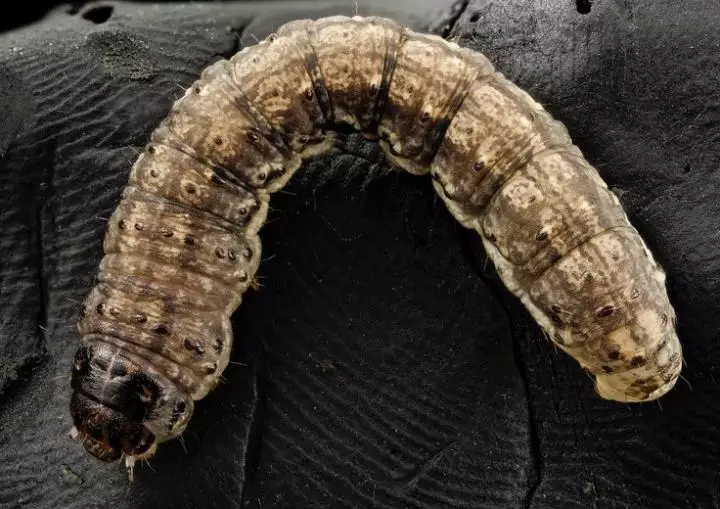
Cutworms
Identification
Adult cutworms are brown or gray night-flying moths. Their larval caterpillars are up to 2″ long and curl into a tight C-shape when disturbed. The caterpillars are found in the top few inches of soil, and they can be green, yellow, brown, or gray, depending on the species.
Damage
Cutworms sever seedlings at ground level or girdle them by chewing the outer stem tissue. The presence of wilted or severed seedlings is a clear sign of cutworms.
Prevention
Crop rotation is important as is protecting the stems of young seedlings at their base with a collar made from a toilet paper tube or aluminum foil nestled 1/2″ into the ground.Tilling the garden in autumn to expose pupae to predation and cold temperatures is also helpful.
Physical control
Bait cutworms with cornmeal or wheat bran paced in sunken bowls near susceptible plants; the caterpillars are attracted to the granules, but cannot digest them and die.
Chemical control
Beneficial nematodes (species Steinernema carpocapsae or Heterorhabdtis bacteriophora) mixed with water and applied to the soil are very helpful for controlling cutworms.
Plants Affected









...and 35 more plants
Put away the pen and paper
Plan your veggie garden in minutes with Planter's easy drag and drop planner.
Try Planter for Free