Nematodes
Identification
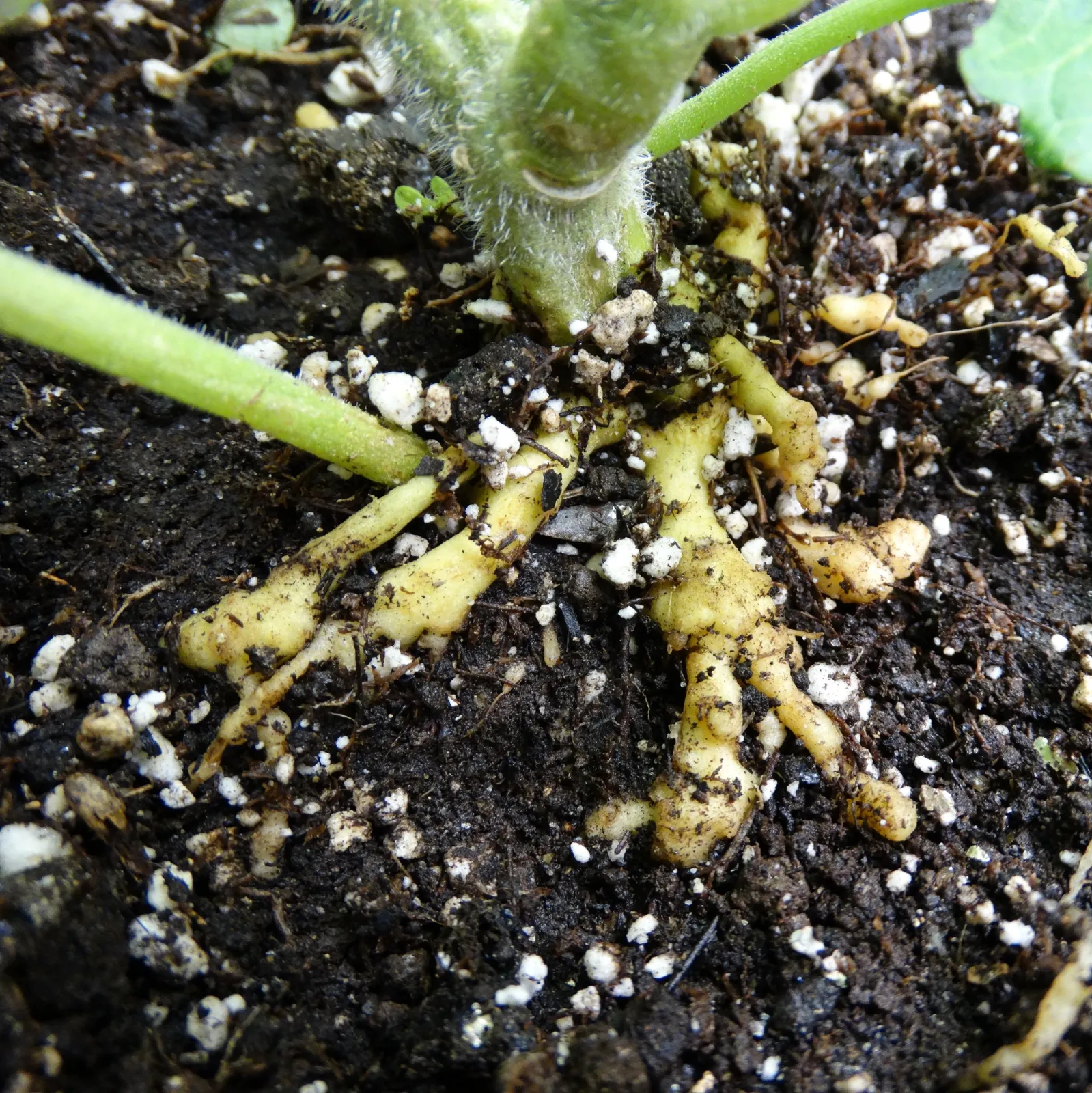
Nematodes are microscopic roundworms that live in soil and water. 'Plant parasitic' nematodes are the types of nematodes that cause damage to plants. Root-knot nematode is one of the most commonly known and destructive nematodes for garden crops. Root-knot nematodes are mostly found in warm climates, although there is a northern root-knot nematode that is found in more temperate areas. Nematodes feed and reproduce in plant roots and in some cases other plant parts. This feeding damage prevents affected plants from being able to uptake water and nutrients, eventually causing the plant to wither. Most nematodes do not move around much on their own which is why the damage often appears in patches rather than affecting entire plantings or whole gardens. While there are plenty of nematodes that can harm our garden plants some types of nematodes are beneficial. They can parasitize and kill insect pests, and some can even help to control harmful nematodes. Once the soil is infested it can be difficult to completely eradicate nematodes but good gardening practices can help to significantly reduce populations and to minimize damage. If nematode damage is suspected, dig up one or more affected plants to see if there are root nodules. Some species of nematodes do not cause the visible root galls that root-knot nematodes do. It's also possible to have more than one nematode species infesting an area. In these cases only lab analysis can confirm nematode presence and species. If you believe the symptoms are from nematodes rather than other causes but are unable to confirm this, follow the recommended practices to reduce potential impacts on your garden. Many of these steps are good general gardening practices.
Damage
Plants affected by nematodes may wilt, turn yellow, and generally fail to thrive. Depending on the type of nematode you may find swellings on the plant stem. If you dig up the plant there may be nodules (galls) or cysts on the roots.
Prevention
If possible, re-arrange the location of garden beds or plantings to avoid areas with nematodes. Raised beds filled with clean soil from off-site can be a good option in areas with nematodes. Rotate crops both within the season and from year-to-year between vulnerable crops and resistant crops so that nematodes lose potential food sources. Look for nematode-resistant plant varieties. Maintain good weed control as some weeds are host plants for nematodes. Avoid using garden tools in nematode infested areas then working in non-infested areas as this can spread the nematodes around. While gardeners often leave roots of spent plants in the soil to break down, in nematode infested gardens it may be best to pull out plant roots completely. Incorporating compost into the soil may help to increase populations of fungi and other organisms that feed on nematodes. Keeping plants consistently watered so they are not stressed may help them to endure mild-moderate infestations.
Physical control
If the affected areas are small enough, clear plastic can be placed over the soil, secured down, and left for 5 days to 'solarize' the soil and help kill off nematodes. This is most effective when the weather is consistently hot and sunny out.
Chemical control
The roots of French marigold (Tagetes patula)- as well as some other plants- release substances that are toxic to many types of plant parasitic nematodes. For the best results, French marigolds should be densely planted then 'turned under' (tilled into the soil). Information on whether interplanting marigolds can help to control nematode populations is conflicting. Interplanting marigolds may offer some level of benefit, but if you have an area that is already infested with nematodes the best defense is to avoid planting susceptible plants there if at all possible.
Plants Affected











...and 40 more plants
Put away the pen and paper
Plan your veggie garden in minutes with Planter's easy drag and drop planner.
Try Planter for Free