Deer
Identification
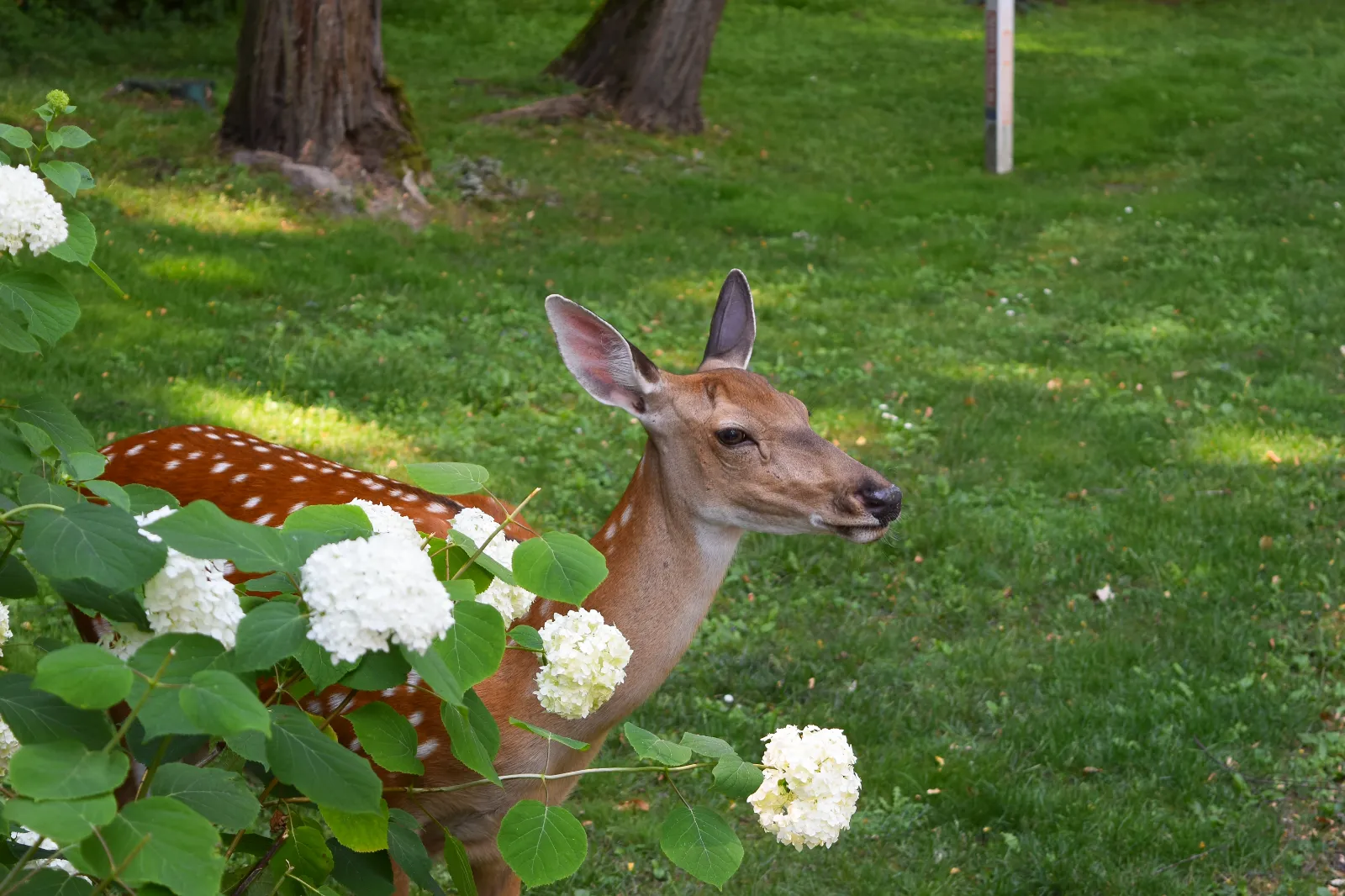
While bambi may be cute in the movies, deer can be a very destructive garden pest. They have voracious appetites and can jump tall fences, easily clearing out entire plots in one go. Deer aren't typically an issue in urban areas but in some suburban areas and many rural areas they can be a major problem for gardeners. Deer can be a year-round pest, eating fresh veggies and fruits in the summer then gnawing on shrubs and trees in the winter. They also will sometimes rub their antlers on trees in the spring, damaging the bark and potentially killing them. Keep an eye out for hoofprints in the garden which would point to deer as the likely plant-shredding culprit.
Damage
Deer can chew off plant stems and leaves, often leaving partially eaten plants with rough jagged edges. Deer can also uproot plants, gnaw on bushes, tree branches, and tree bark. They may also rub off tree bark with their antlers, leaving strips of bark hanging.
Prevention
It is difficult to monitor for deer damage as from one day to the next a garden can be severely damaged. If deer are known to be in your area and especially if you regularly see deer in your yard you will likely need to protect your garden to prevent damage. Row cover or insect netting may be enough of a deterrent to keep deer away from your plants- while deer can theoretically break through these barriers they may not bother if they can find easier access to food elsewhere. Be sure to not leave covers or netting on flowering plants that require pollination. Do not use heavy-duty row covers when the weather gets hot to prevent overheating. Some plants are highly attractive to deer and others they avoid. It may be possible to plan your garden such that resistant plants are planted in the areas deer frequent whereas their preferred plants are in areas they are less likely to come near. A full perimeter of unappetizing plants may convince deer to look elsewhere for food. Research to select deer resistant plants that will be suitable for your area and your garden conditions. You may also be able to plant sacrificial plants far away to help reduce the deers' temptation to come into the garden.
Physical control
Physical 'scaring' devices do not tend to work as deer eventually become accustomed to them. They may work for a short period of time, and could be more effective if you regularly move them or change tactics. Motion-activated sprinklers can be used to scare deer away, although they should be moved regularly so deer don't figure out how to avoid them. To prevent deer feeding on shrubs and young trees especially over winter, either construct a round fence or protective structure out of hardware cloth and pin it to the ground, or buy a commercially available tree guard. The fence should be at least 6' (1.8 m) tall or otherwise tall enough to cover and enclose the plant. Remove the enclosure in late spring. Plastic mesh fencing can be used- either attached to tall posts around the garden or draped and fastened over plants, as a short-term solution to keep deer out of the garden. If deer are a persistent problem stronger fencing material should be used. Generally deer fencing must be 8' (2.4 m) high to ensure deer cannot jump over it. It should also extend all the way to the ground to ensure there is no way for deer to sneak under. For larger garden areas there are "two-tiered" electric fencing systems that may be more cost effective than a tall, physical fence.
Chemical control
There are scent and taste repellants for sale that can help deter deer. Be sure to choose a product that is safe to use around edible plants (or that can be used around the garden perimeter to keep deer out). The product will have to be re-applied regularly especially after rainfall.
Plants Affected










...and 31 more plants
Put away the pen and paper
Plan your veggie garden in minutes with Planter's easy drag and drop planner.
Try Planter for Free