Groundhogs
Identification
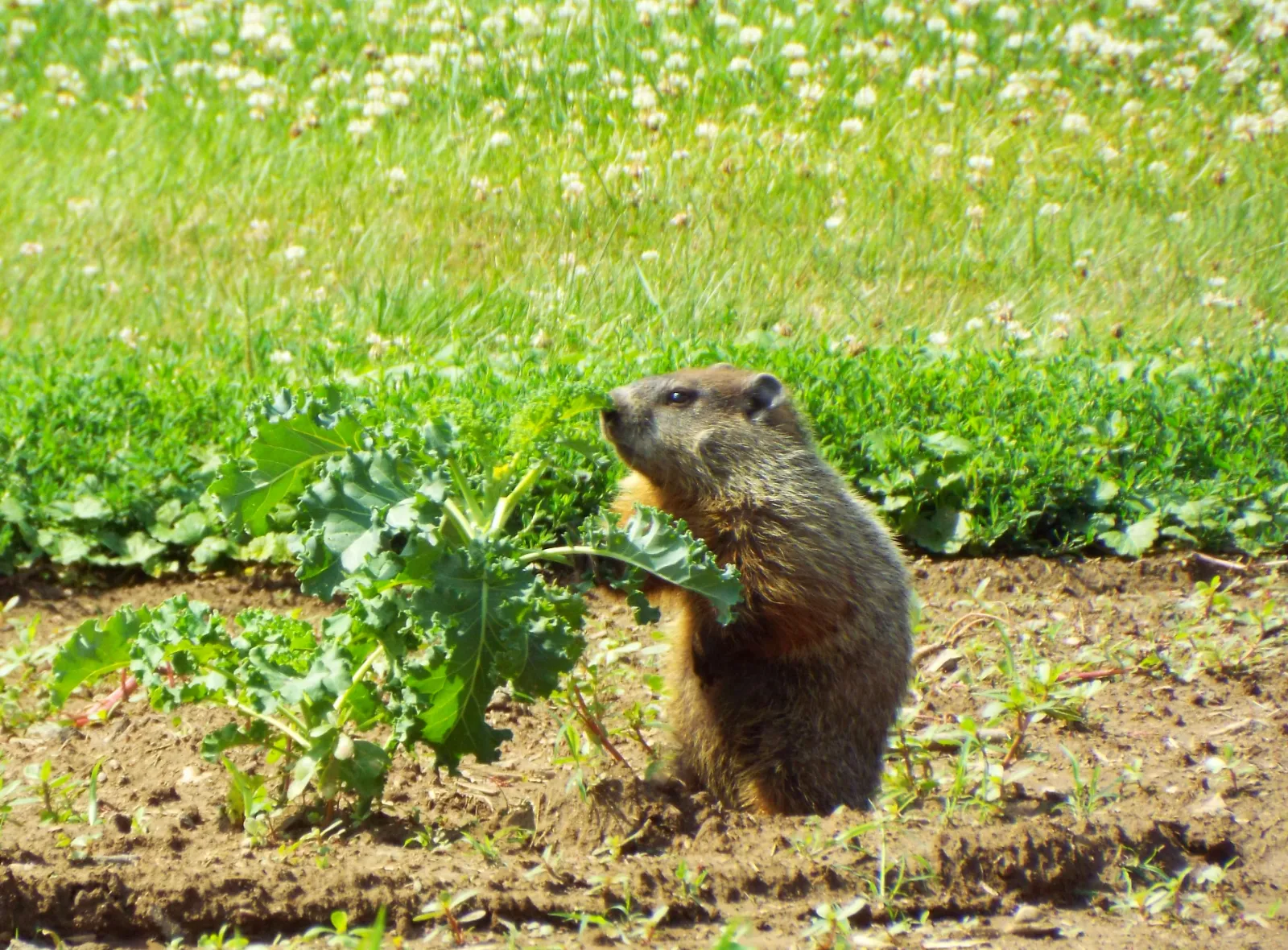
Groundhogs, also called woodchucks, play a very important role in the natural ecosystem but in the home garden they can be quite a pest! Not only can they eat more than a pound of produce each day, their burrowing behavior can uproot plants and trees and can even cause problems with garden structures. They will also strip the bark off young trees, potentially girdling and killing them. Look for burrows with large openings and a significant amount of rocks and earth piled by the entrance. Sometimes groundhogs may burrow underneath garden sheds and decks. You may need to quietly watch at a distance to see them come out to feed- often in mid-morning or late afternoon.
Damage
Groundhogs can: dig up bulbs and seeds, disturb soil and uproot plants, chew off stems and leaves (causing extensive damage especially to young, tender plants), leave bite marks in produce, and chew off tree bark. They have even been known to gnaw on buried power lines!
Prevention
Seal off openings under decks and sheds to make them less attractive to groundhogs (be sure no groundhogs or other wildlife get stuck inside though!) Clear the yard of brush piles and any other large objects with gaps underneath that could serve as hiding spots. If you have a cat or dog that you can safely let in the garden (meaning you can keep both them safe and your plants safe!) their regular presence and scent may convince groundhogs to stay away. Harvest produce that is ready as soon as possible to avoid leaving it open to attack from groundhogs and other pests.
Physical control
Physical 'scaring' devices do not tend to work as groundhogs eventually become accustomed to them. They may work for a short period of time, and could be more effective if you regularly move them or change tactics. Motion-activated sprinklers can be used to scare groundhogs away; choose one that is able to detect groundhogs and move it around periodically so they don't learn how to avoid it. If groundhogs are a regular problem in your area you may want to invest in groundhog-proof fencing- especially if your garden is relatively small and easy to protect. To construct a groundhog-proof fence around your veggie garden use hardware cloth or chicken wire and be sure the fence is at least 3-4' (90-120 cm) above the ground and buried at least 1' (30 cm) below the ground with an additional 1' underground horizontal "skirt" around it. Be sure you are not inadvertently fencing any groundhogs inside your garden! To protect young trees from groundhogs either construct a round fence out of chicken wire or hardware cloth and pin it to the ground or buy a commercially available tree guard. If you have an isolated groundhog problem, call a licensed wildlife control specialist who can deal with groundhogs humanely and safely. Live trapping and relocating groundhogs is generally not recommended as it is illegal in some areas (or a permit is needed), groundhogs can carry rabies, the groundhog may become a nuisance for someone else, and groundhogs may not survive relocation to an unfamiliar area (and if they are breeding their offspring may die). Killing groundhogs is not recommended for home gardeners.
Chemical control
There are scent and taste repellants for sale that can help deter groundhogs. Be sure to choose a product that is safe to use around edible plants.The product will have to be re-applied regularly especially after rainfall.
Plants Affected












...and 17 more plants
Put away the pen and paper
Plan your veggie garden in minutes with Planter's easy drag and drop planner.
Try Planter for Free