Root Maggots
Identification
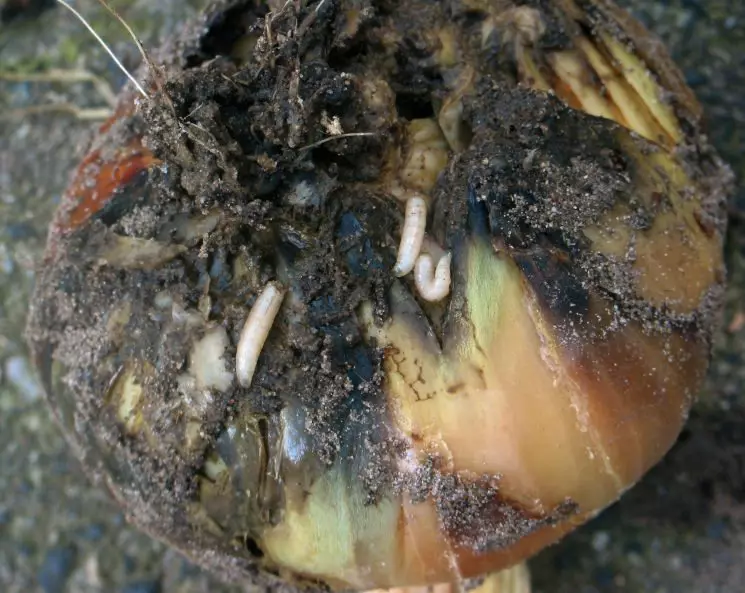
The adults resemble small house flies. The maggots are 1/4" long, yellowish-white and cylindrical.
Damage
Root maggots (also known as cabbage and onion maggots) have several generations in a year, but most of their damage is limited to early spring plantings. Seedlings and transplants suffer more damage from root maggots during a wet, cold spring. The maggots feed on roots and bulbs, creating tunnels. Plants first begin to wilt and can become stunted and yellowed.
Prevention
Do not use animal manure or green manure in your garden in spring. Rotting and decaying organic matter attracts root maggots and can lead to plant damage. Remove target plants in the fall, including their roots, and destroy them. This will kill any pupae that might be left.
Physical control
Row covers are an effective option to prevent adult flies from getting near the plants to lay eggs.
Chemical control
There is no chemical solution available.
Plants Affected








Put away the pen and paper
Plan your veggie garden in minutes with Planter's easy drag and drop planner.
Try Planter for Free