Leeks
Allium ampeloprasum var. porrum
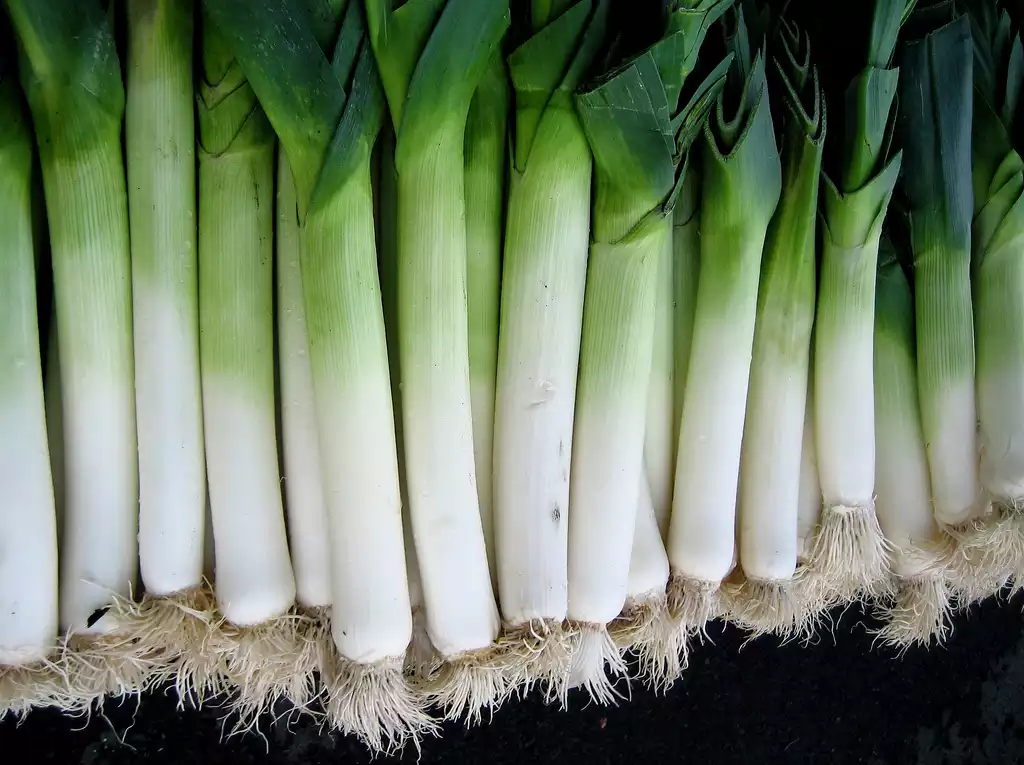
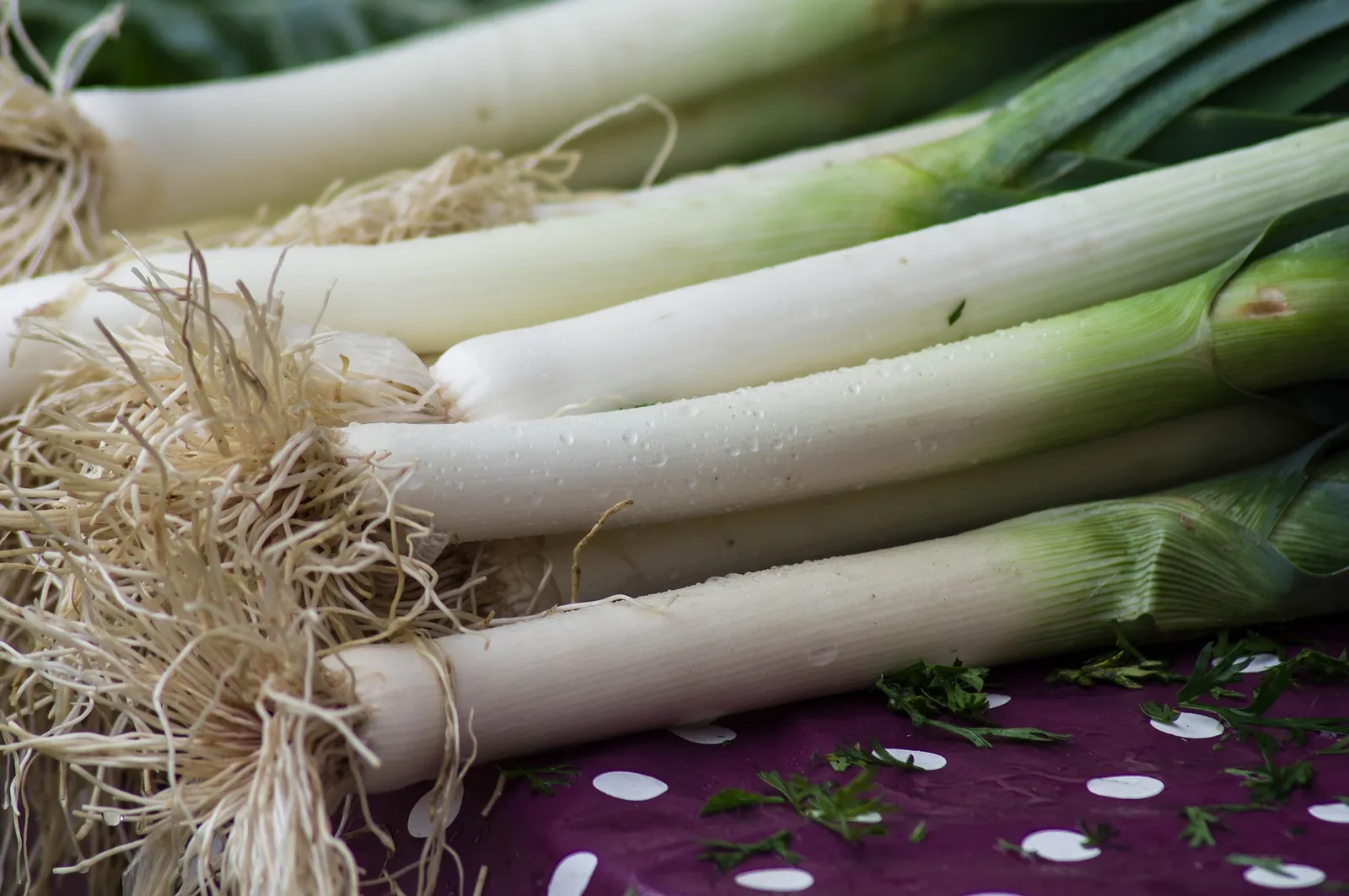
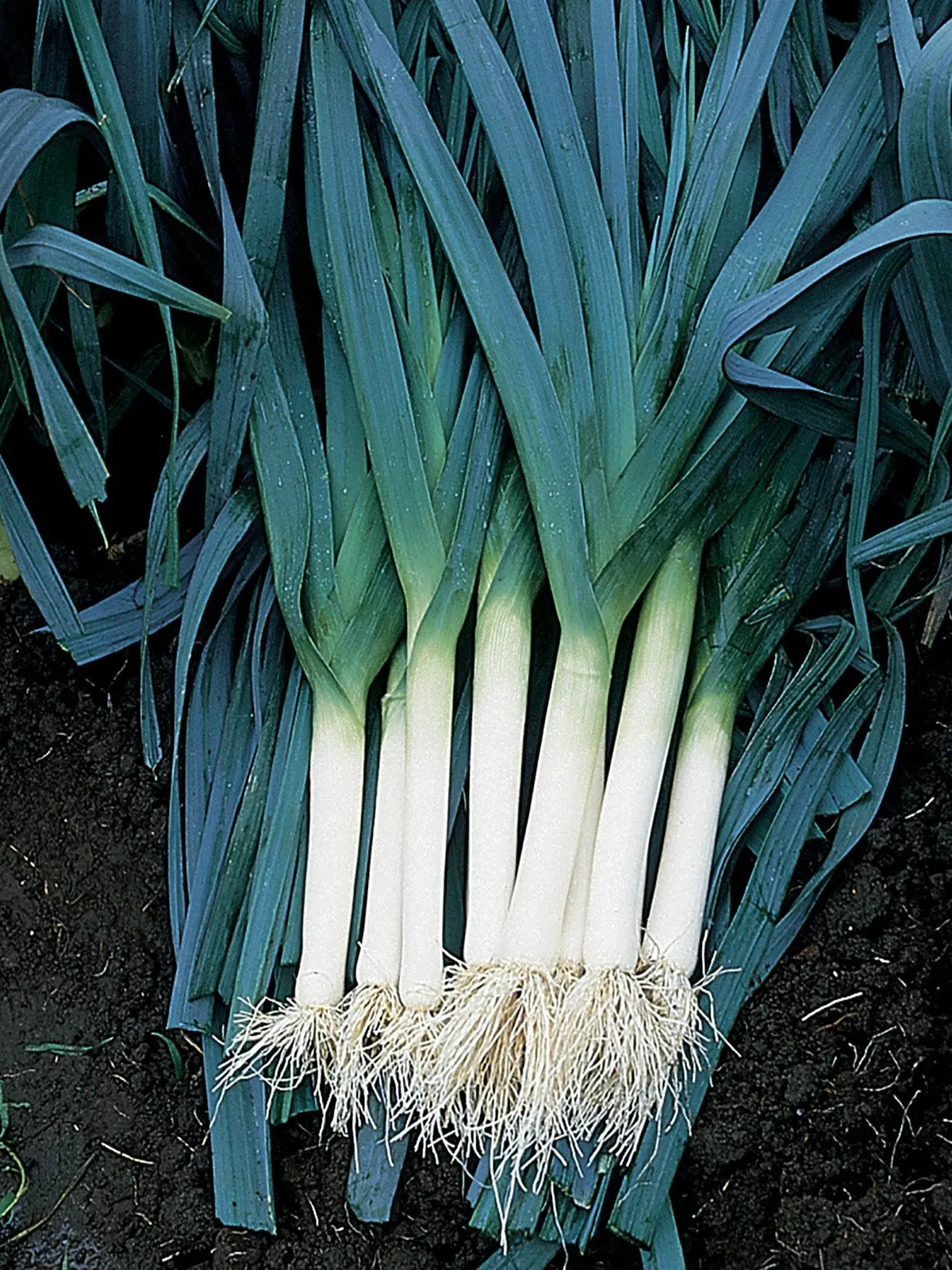
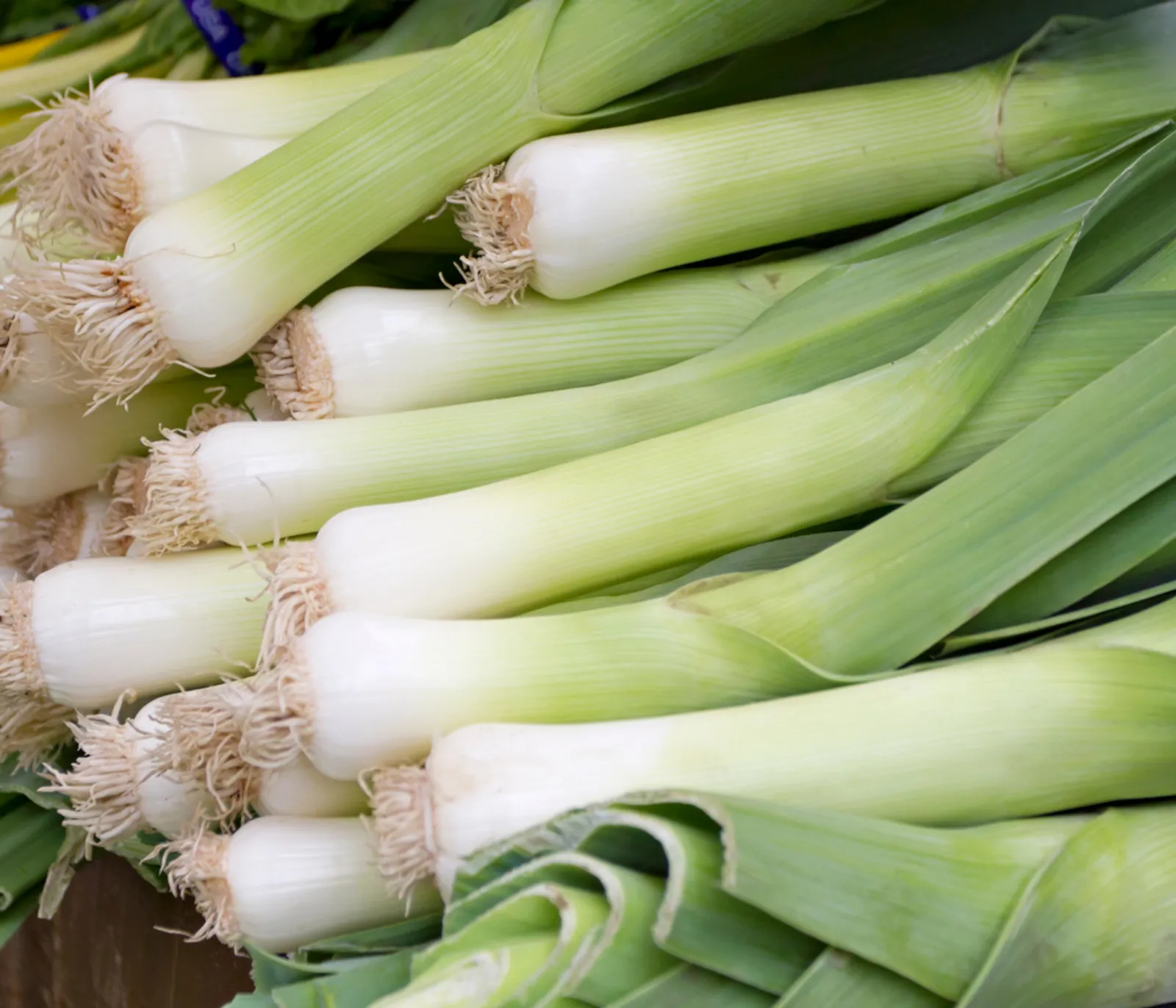
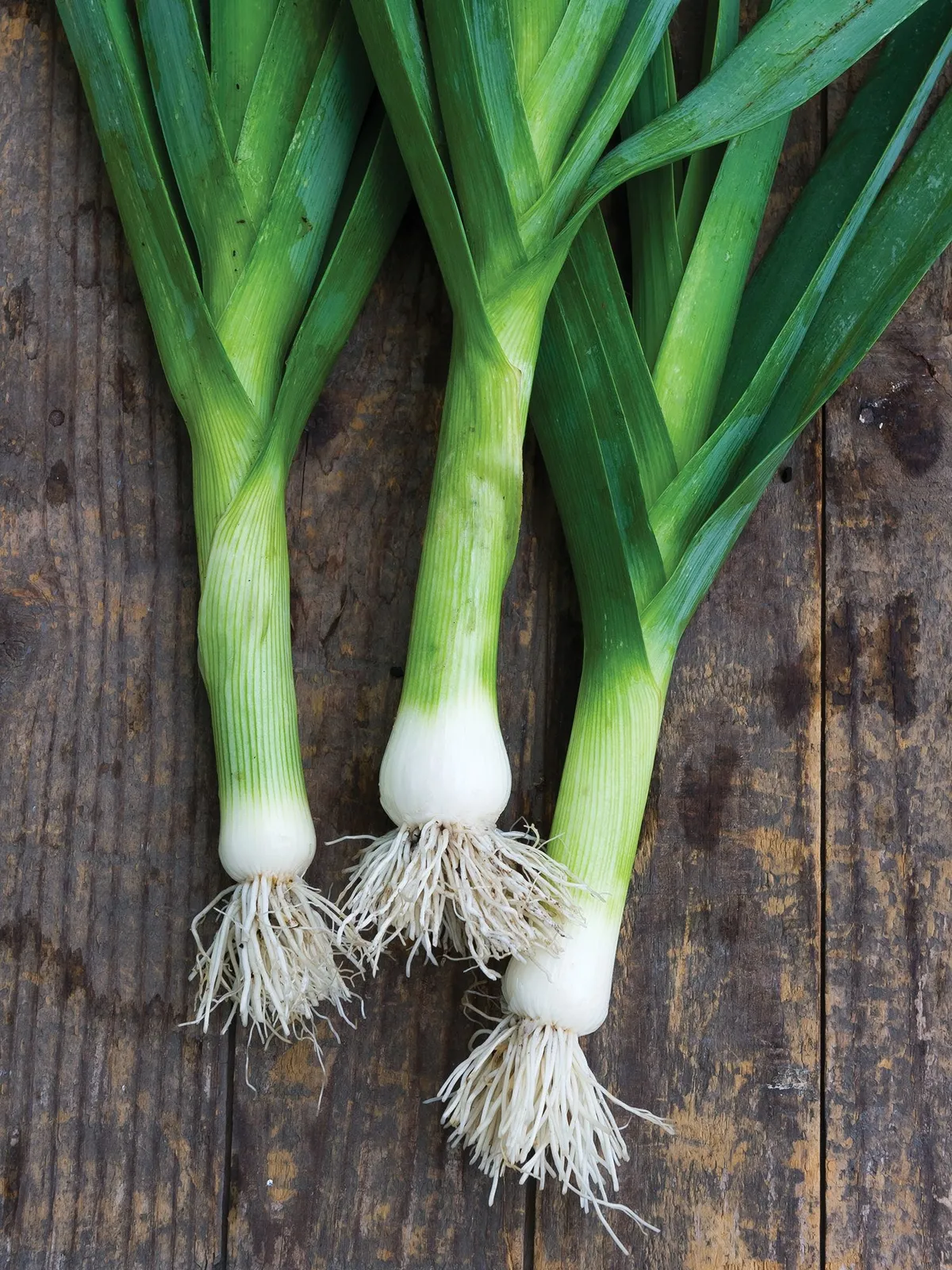
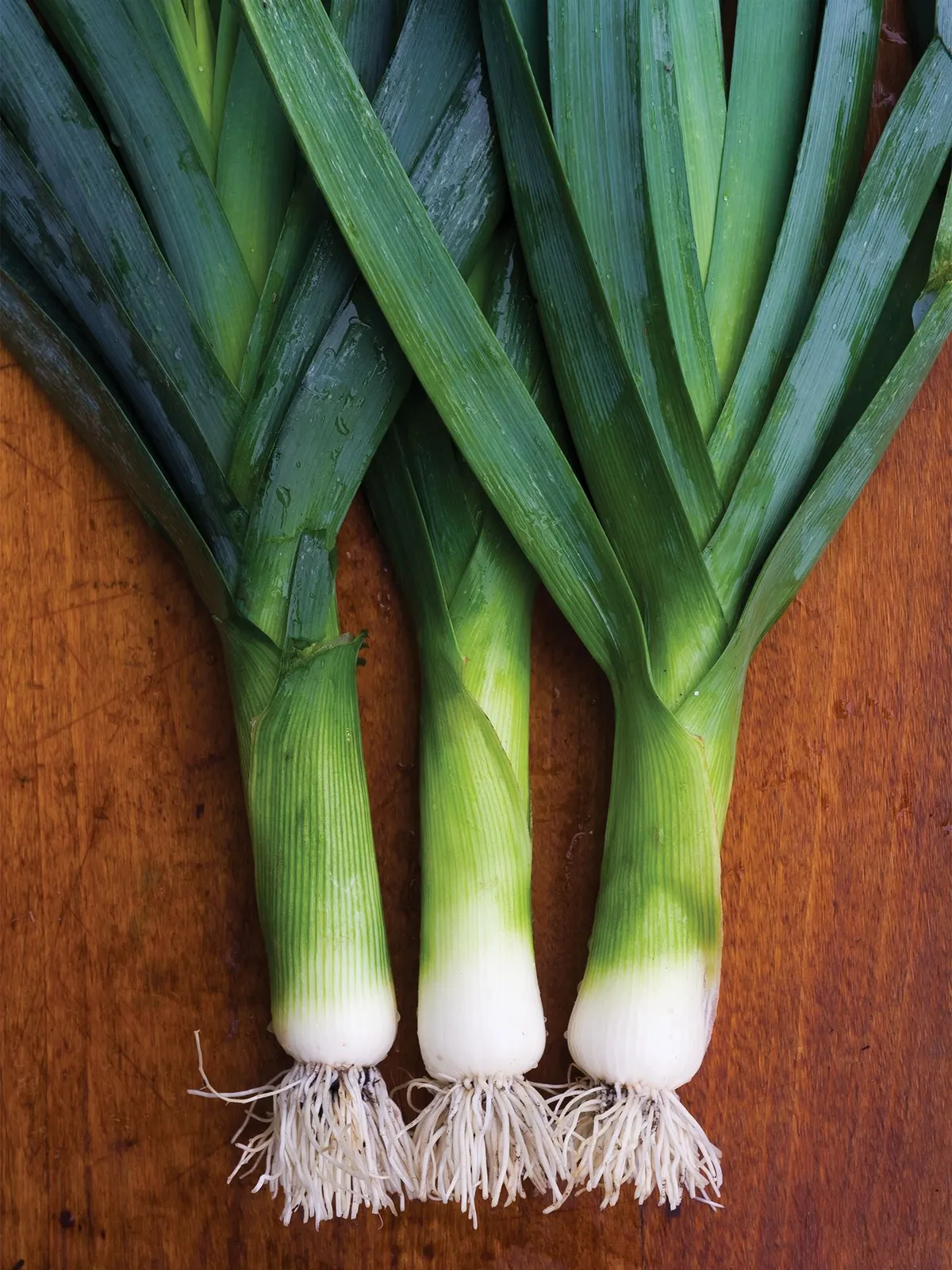
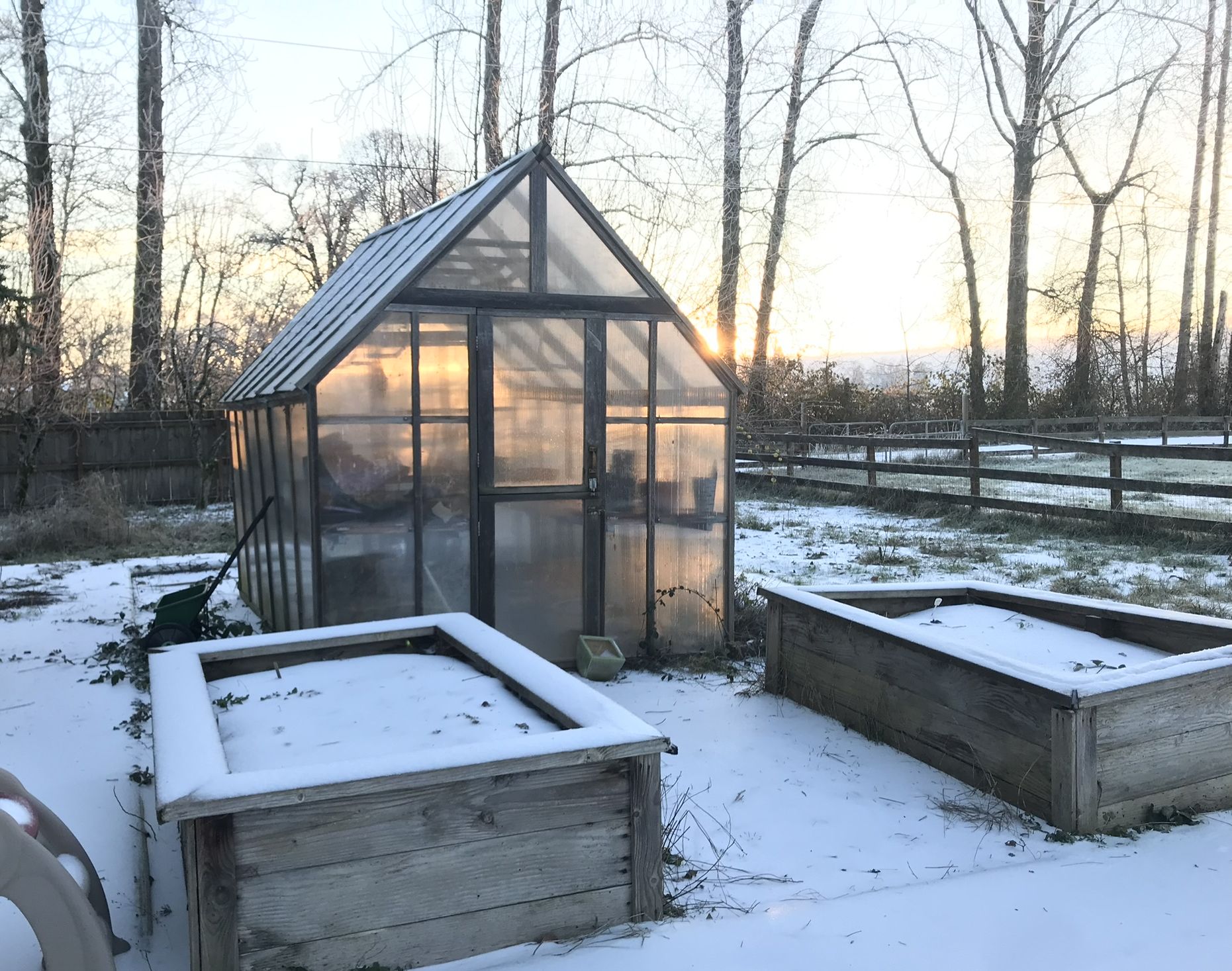
Leeks are members of the allium family that are grown mainly for their substantial white stalks which have a sweet, nuanced onion flavor. Leeks are a long-growing, cool-season crop. While leeks are technically perennials (many sources say biennial) they are usually harvested well within a year of planting. There are early-season, mid-season, late-season, and overwintering leek varieties. In milder areas leeks can be overwintered without protection, in colder areas they can overwinter with generous mulching, and in the coldest climates if they survive winter they might not be able produce good quality leeks come spring. Be sure to choose leek varieties that are suited for your area and the time of year you intend to grow them.
How to Grow Leeks
Quick Info


Put away the pen and paper
Plan your veggie garden in minutes with Planter's easy drag and drop planner.
Try Planter for Free
Varieties
Related Articles
Companion Plants

Nutrition
Vitamins





Nutrients







Pests
Diseases
Beneficial Critters


Growing from Seed
Because leeks are slow-growing they are usually started indoors then transplanted out, although they can be directly sown outdoors where the season is long enough. Leek seeds can be sown into flats filled with seed starting mix and gently separated at the time of transplanting, or sown into individual cells. Keep the seed starting mix consistently moist. Supplemental heat should not be needed for germination; the optimal temperature of the seed starting mix for germination is around 70°F (20°C). Provide supplemental light as soon as seedlings emerge.
Planting Considerations
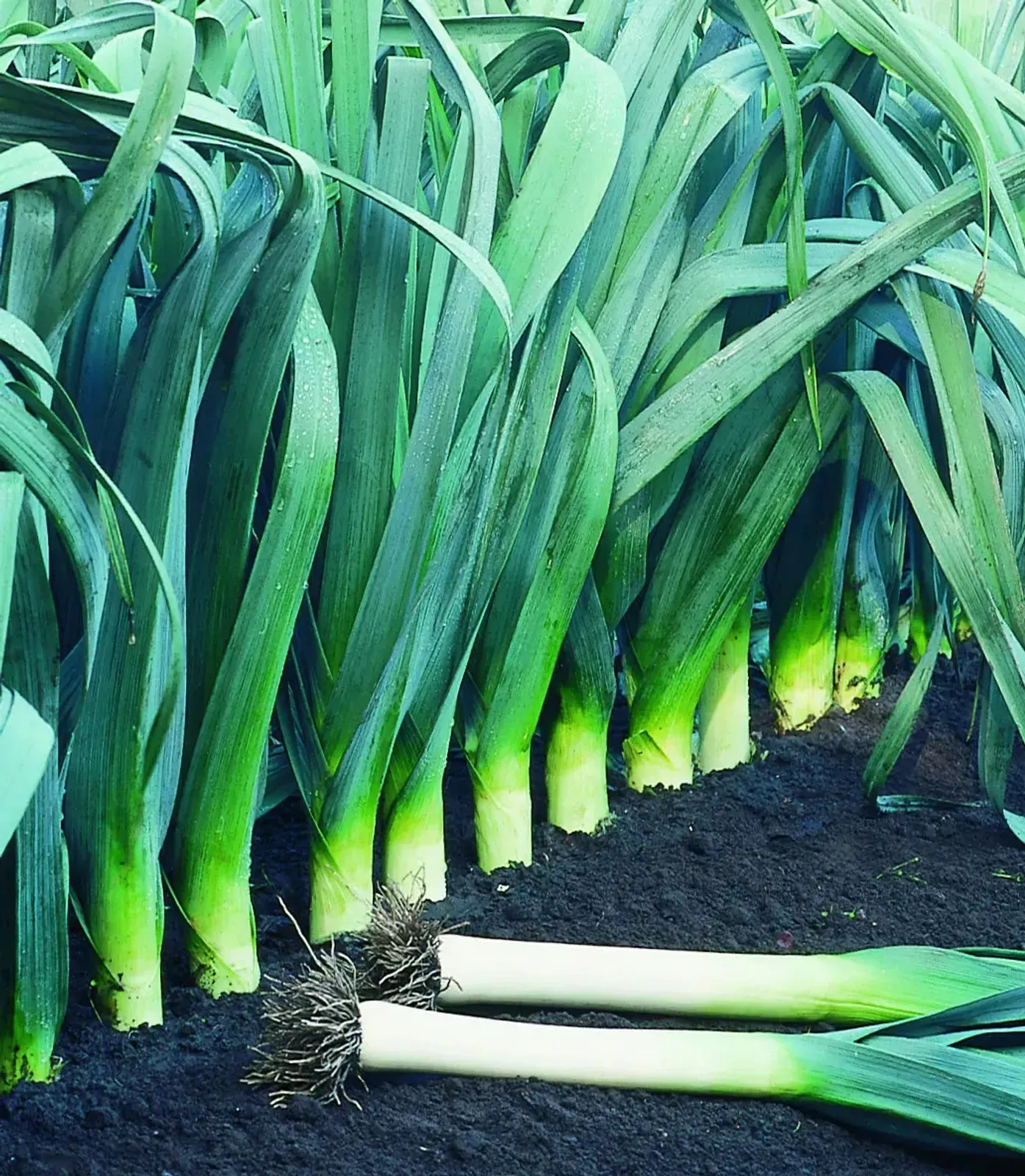
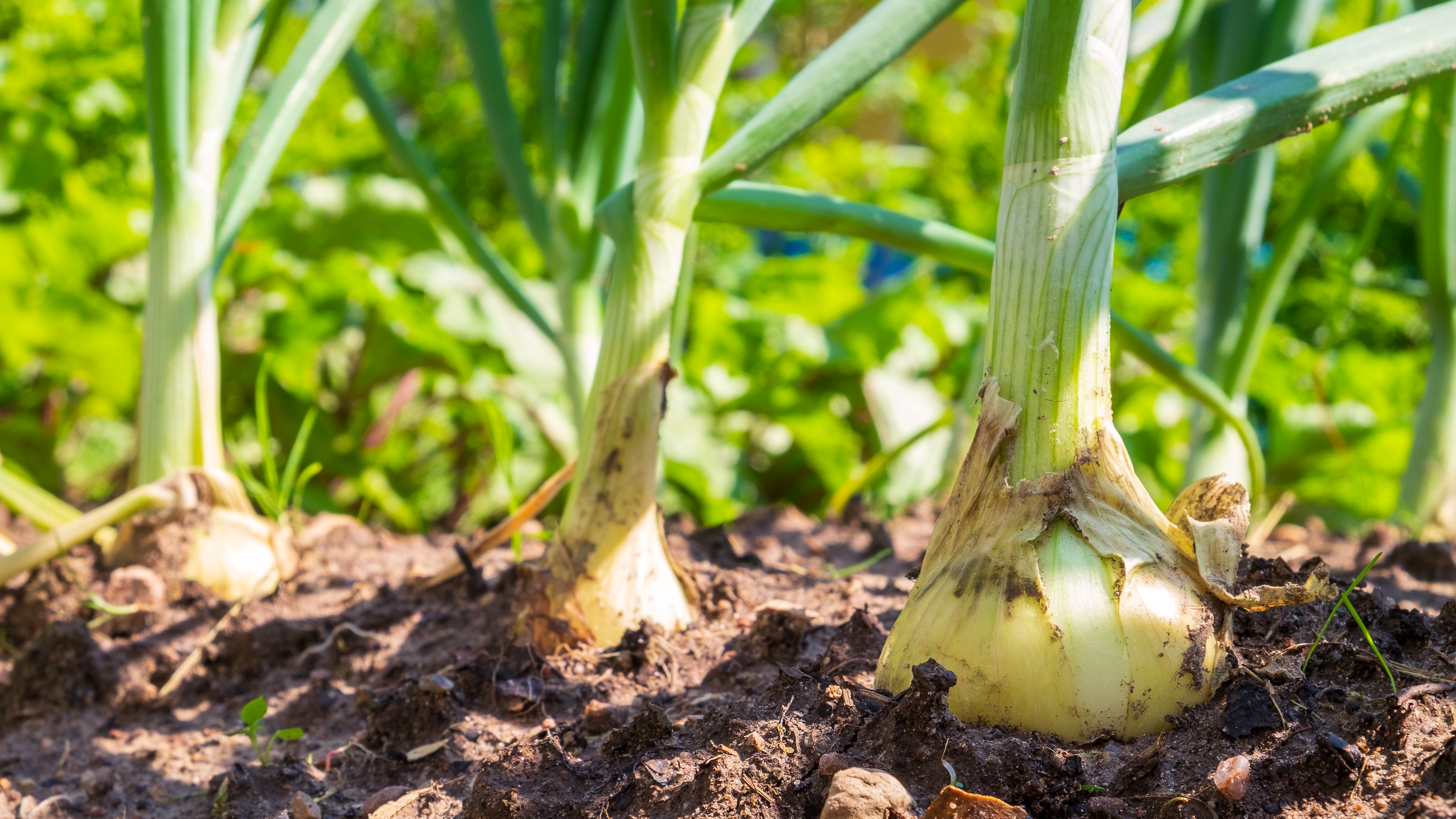
Leeks grow best in rich, well-draining soil. Work compost into the soil prior to planting. Leek seedlings are ready for transplant once they are about 8" (20cm) tall. Some growers lightly trim the tops and roots of the leek seedlings prior to planting for uniformity and ease-of-planting. Leek seedlings can be transplanted out after the risk of heavy frosts has passed. Harden off the seedlings before planting out. There are several methods of planting leeks, with the ultimate goal of having long white blanched stalks. Blanched stalks are achieved by preventing sunlight from reaching the stalks.
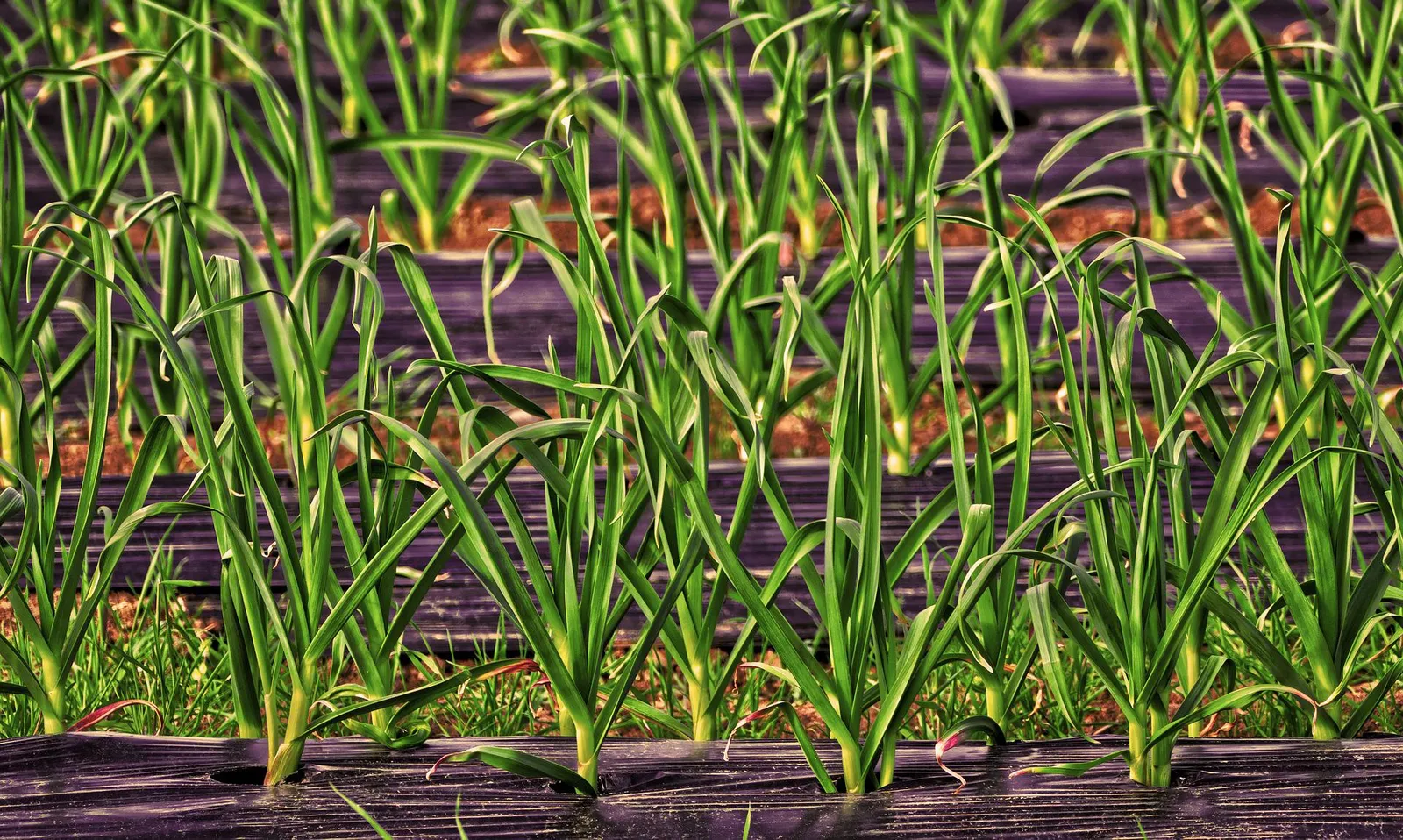
Leeks can be planted into trenches dug 6-8" (15-20cm) deep, and the soil can be gradually backfilled around the leeks as they grow. Do not backfill the trench too quickly or the seedlings may rot.
A “dibbler” (or a makeshift tool resembling a dibbler) can be used to create 6" holes that the seedlings can be dropped into. The holes should not be backfilled. Instead, water right away to start the process of soil filling the holes naturally.
Leek seedlings can also be planted at the same level as they were grown. To blanch the stalks, hill up soil (or mulch) around the stalks several times during season or wrap the stalks with cardboard tubes to block light.
Note that leeks can be toxic to pets; while the effect is dose-dependent do not allow your pets to eat leeks.
Feeding
Leeks are heavy feeders. Fertilize regularly during the growing season with a balanced fertilizer.
Harvesting
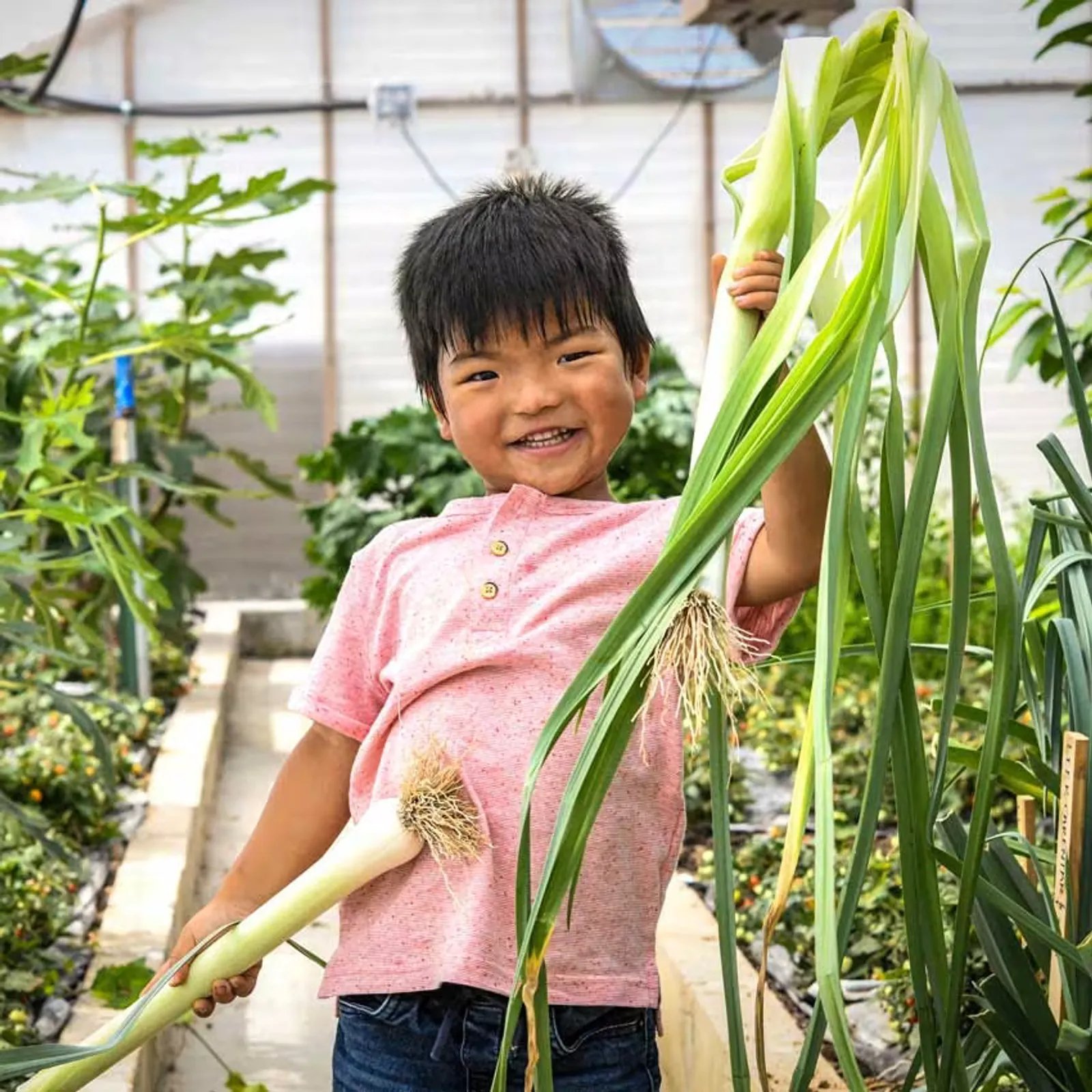
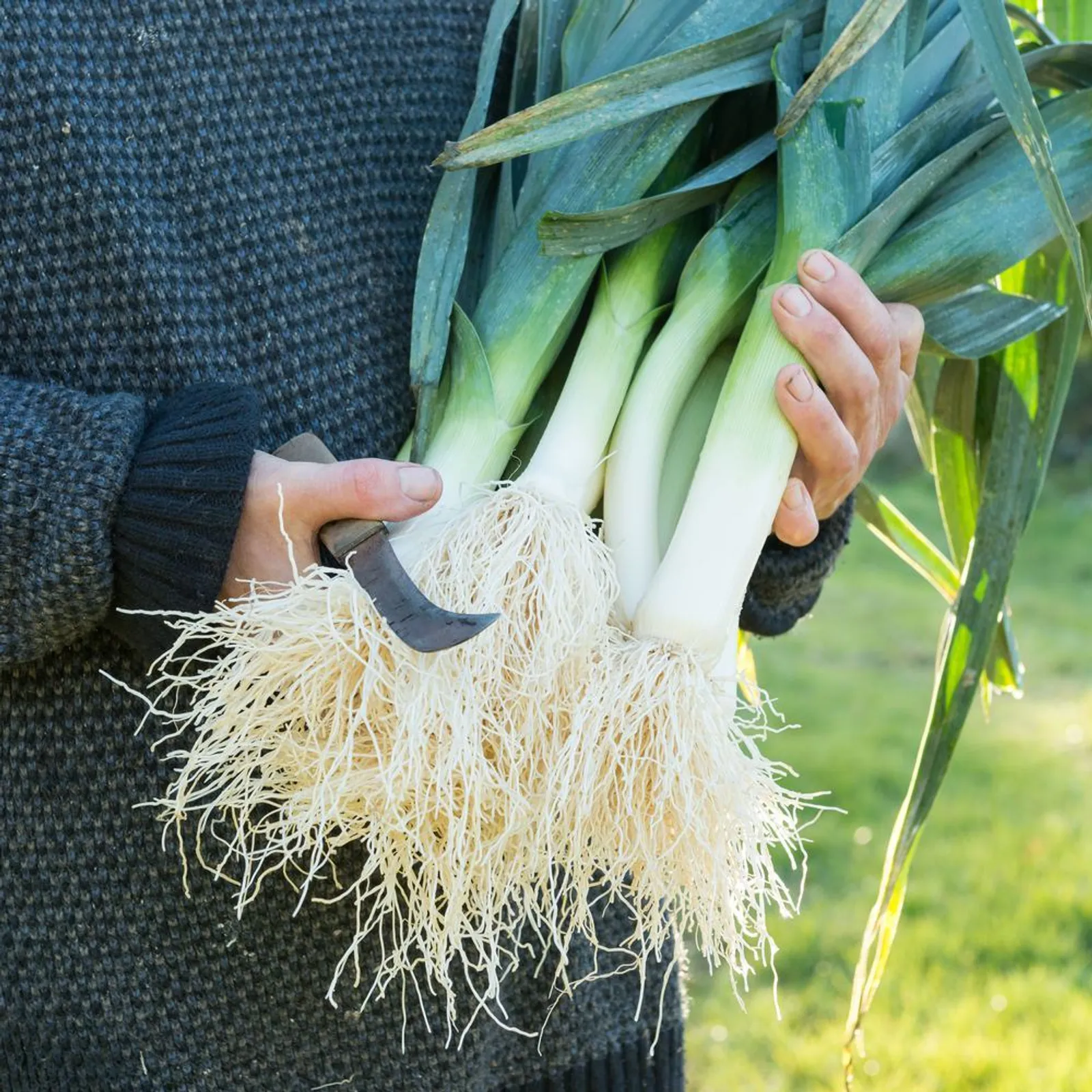
Full size leeks generally have stalks that are at least 1-2" (2.5-5cm) wide. Full-size leeks have a wide range of days to maturity for harvesting; check the days to maturity for your variety to determine roughly when harvesting can start. Leeks can also be harvested when they are young as "baby leeks". Baby leeks can be used similarly to green onions. Leeks hold well in the ground so you can harvest them as needed and leave the rest for future harvests (so long as the weather remains favorable). To harvest leeks use a garden fork to carefully lift the soil around the leek without piercing it. Pull the leek out of the ground then trim the roots and the tops of the leaves (the leaves are edible although not often eaten). If needed, peel off outer leaves that are yellowed or damaged.
Storage
Whole leeks can be stored in the fridge for up to a week. Leeks can accumulate soil between the layers in their stalks that can be tricky to remove. Cut off the tops and bottoms and slice the stalks lengthwise to expose the layers before soaking them in clean water then rinsing very thoroughly. Leeks can also be fully sliced up and swished in a bowl of clean water then rinsed. To freeze leeks, slice them to the desired size then blanch briefly in boiling water before cooling and then freezing in a single layer on a baking tray. Transfer frozen leek slices to a freezer-safe bag where they can be kept frozen for up to several months.