Leafminers
Identification
Adult leafminers are nondescript flies that do not feed on plants. Their tiny, brown or green larvae feed inside plant tissues.
Damage
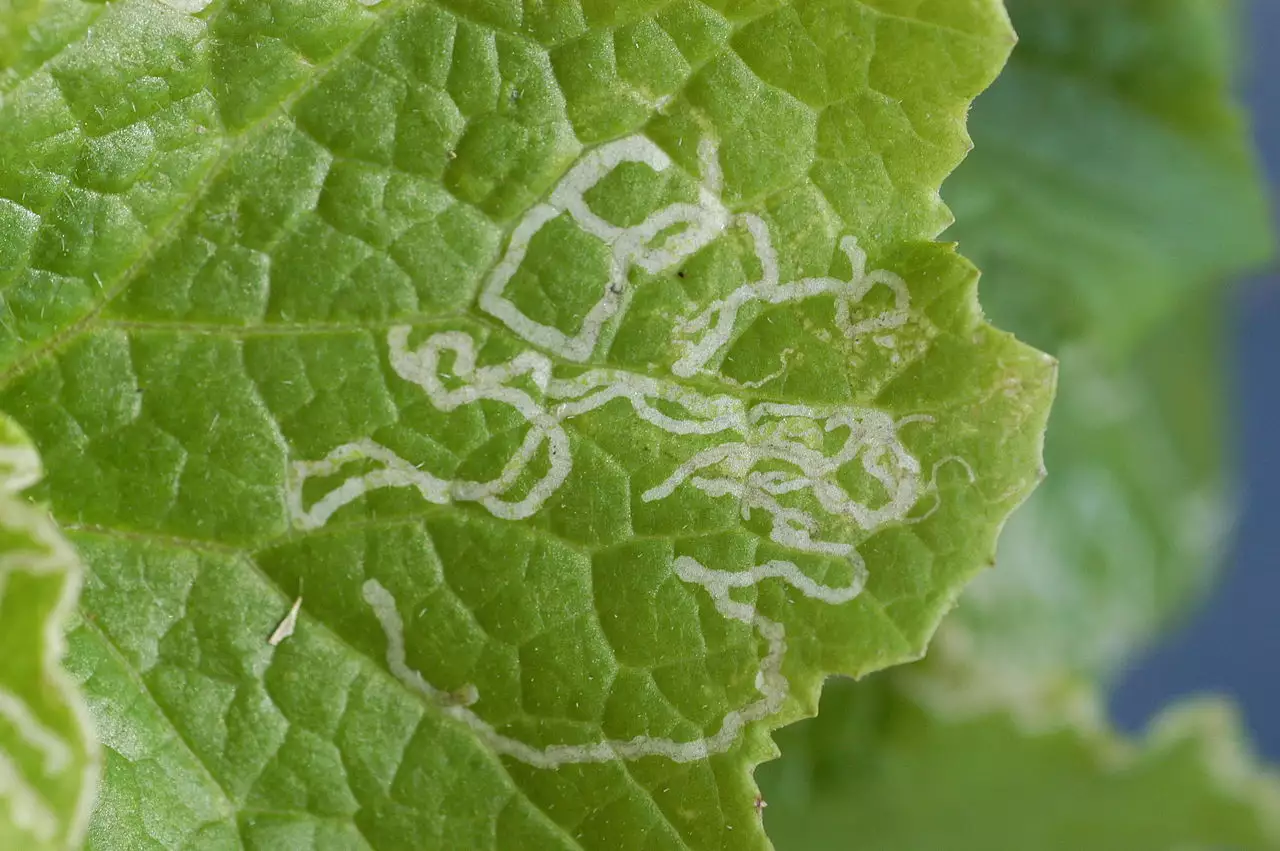
Leafminer larvae tunnel between layers of leaf tissue, creating tell-tale squiggly tunnels and lines on leaves.
Prevention
Cut off leaves where tunnels are present throughout the growing season and toss them in the garbage to prevent another generation. Damage is seldom severe enough to cause harm to the plant.
Physical control
Place floating row cover over susceptible vegetable crops to prevent adults from accessing the plants. Include lots of flowering herbs in the garden to attract beneficial insects to help control the leafminers (more on this later).
Chemical control
Leafminers are difficult to control with products because the larvae are between leaf tissue layers. Neem or spinosad-based products may have some effect. Check local regulations (or your local Extension Office where applicable) to identify which products can be used in home gardens in your area. Follow label instructions carefully for safe and effective insecticide application and to ensure that edible crops are safe to harvest. Test insecticide on a few plants before widespread application. Look for the most selective insecticide to minimize harm to beneficial insects- even some “selective” and "natural" insecticides can still negatively impact beneficial insects. Where possible, apply contact-based insecticides in the late evening and try to avoid spraying during blooming to minimize negative impacts on pollinators- in some cases the insecticide may need to be hosed off in the morning to avoid contact with pollinators. Do not spray spinosad on flowering plants.
Plants Affected








...and 24 more plants
Put away the pen and paper
Plan your veggie garden in minutes with Planter's easy drag and drop planner.
Try Planter for Free