Thrips
Identification
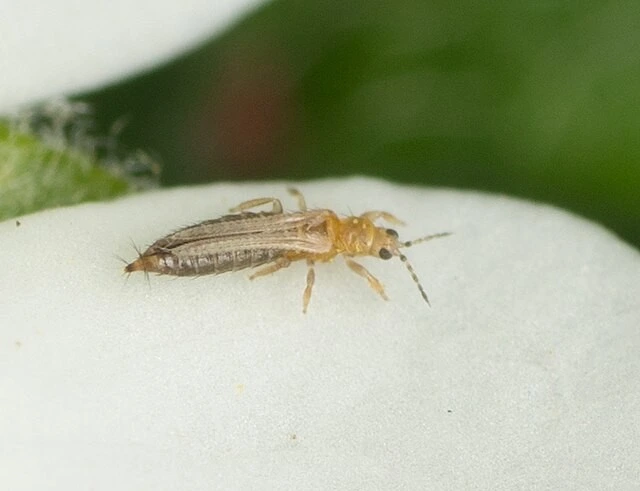
Thrips are tiny, slender insects that are less than 1/20" (1-2 mm) long. They can be white, yellow, brown, green or black. They can be hard to spot with the naked eye! Thrips that feed by puncturing plant tissues and sucking out the contents. There are many different types of thrips that feed on different plants. There are even beneficial predatory thrips! Some, but not all, beneficial thrips have distinct bright coloring that can help identify them.
Damage
Symptoms of thrips infestation include: leaf stippling, silvery patches on leaves, small black specks on leaves, distorted leaves, leaf death and dropping, stunted plant growth, petal damage, fruit deformation, and fruit scarring. Thrips can potentially transmit plant viruses such as Tomato Spotted Wilt virus.
Prevention
To check for thrips gently shake the plant over a piece of white paper or cloth- if thrips are present they will fall on the cloth. For indoor plants yellow sticky traps can be placed amongst plants to monitor for adult thrips. If thrips are a known problem in your garden apply insect netting or row cover to affected plants at the time of planting. Be sure to not leave covers or netting on flowering plants that require pollination. Remove heavy-duty row covers when the weather gets hot to prevent overheating. Maintain good weed control as weeds can be host plants for thrips. Clear away fallen plant debris from the garden at the end of the season to reduce overwintering thrip populations. Plant companion plants that attract predators of thrips such as lacewings, minute pirate bugs, and parasitic wasps.
Physical control
Inspect newly-purchased nursery plants and plants grown indoors for thrips. If thrips are present and the plant has thrip damage, shake off and pick off the thrips (into a tray or container) and dispose of them. Remove thrips regularly until there is no further damage.
Chemical control
In the garden thrips rarely cause enough devastation to warrant widespread action. Indoor or greenhouse-grown plants may be more susceptible to thrip damage since there are no predators. Some thrips feed on pollen or fungal spores and do not damage plants. Some types of thrips will live on several types of plants but only eat specific types. Because there are many kinds of thrips and proper identification is challenging, broad control measures are not recommended. In some cases by time thrip damage is noticeable the thrips may no longer be there. There are other insects that can cause damage resembling thrip damage. Act only when thrips are visibly present and causing significant damage. It is not recommended to use insecticides in the garden for thrip damage; the damage is usually cosmetic and insecticides are often not very effective on thrips due to their small size, mobility, and lifecycle. Also thrips can build up insecticide resistance over time. In an outdoor setting, by time thrips are detected and reactive control measures take effect they have already had the opportunity to transmit potential viruses. If you absolutely must use an insecticide on thrips, Spinosad is recommended for effectiveness. Follow the product label instructions carefully for safe and effective application. Spinosad can be toxic to bees, as well as beneficial predatory insects that can eat thrips, for up to one day after spraying. Do not spray Spinosad on flowering plants.
Plants Affected



...and 52 more plants
Put away the pen and paper
Plan your veggie garden in minutes with Planter's easy drag and drop planner.
Try Planter for Free