Bitter Melon
Momordica charantia
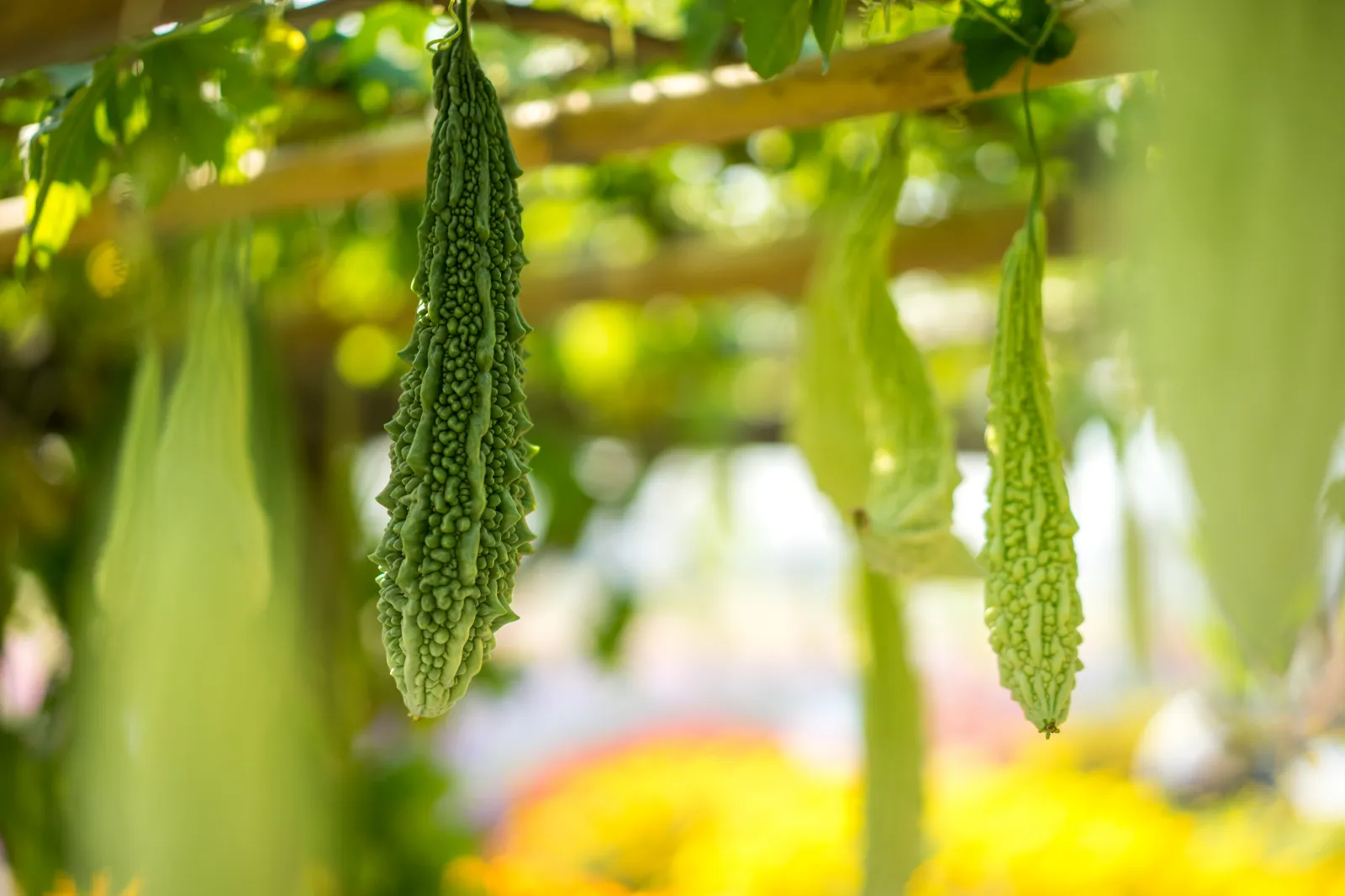
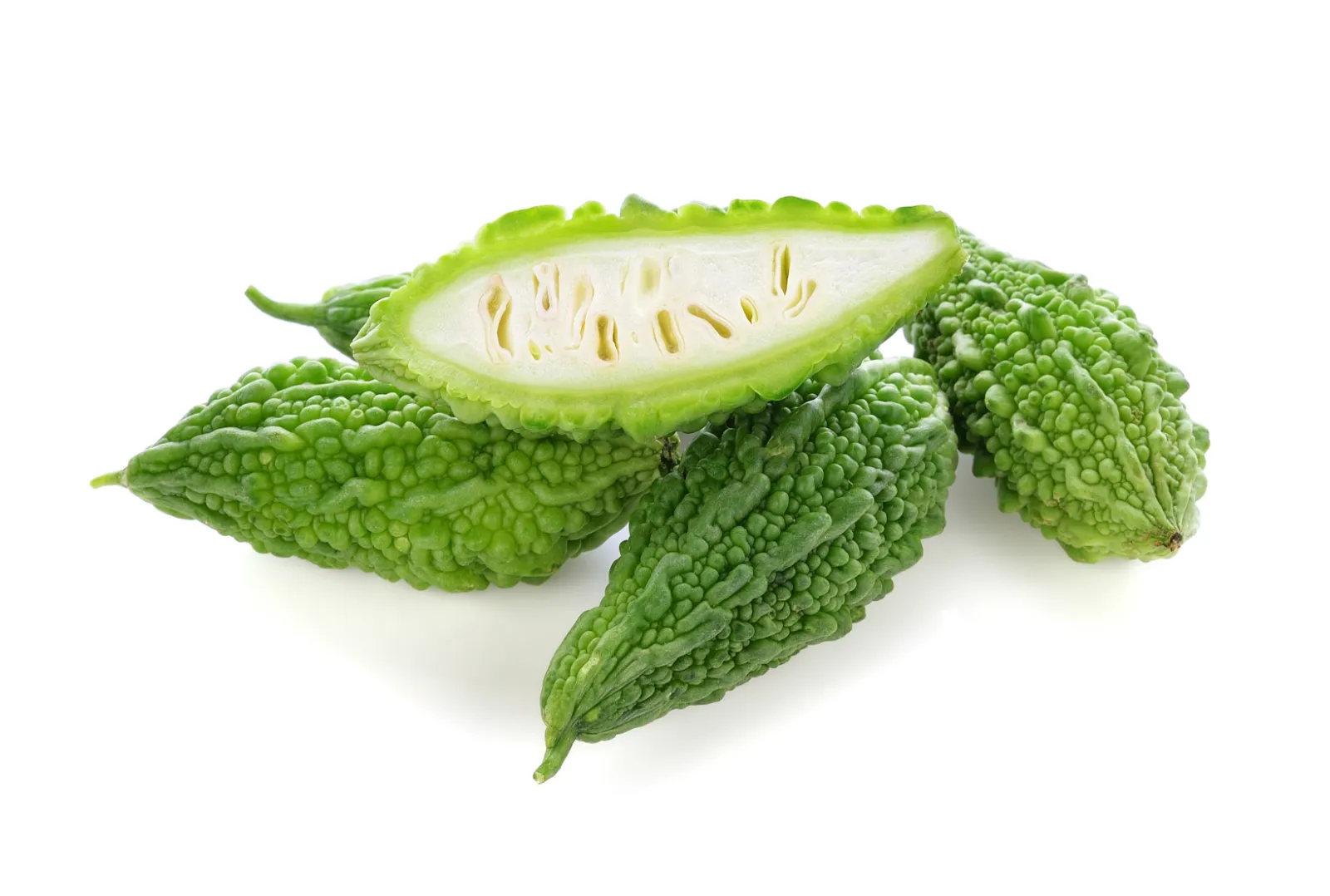
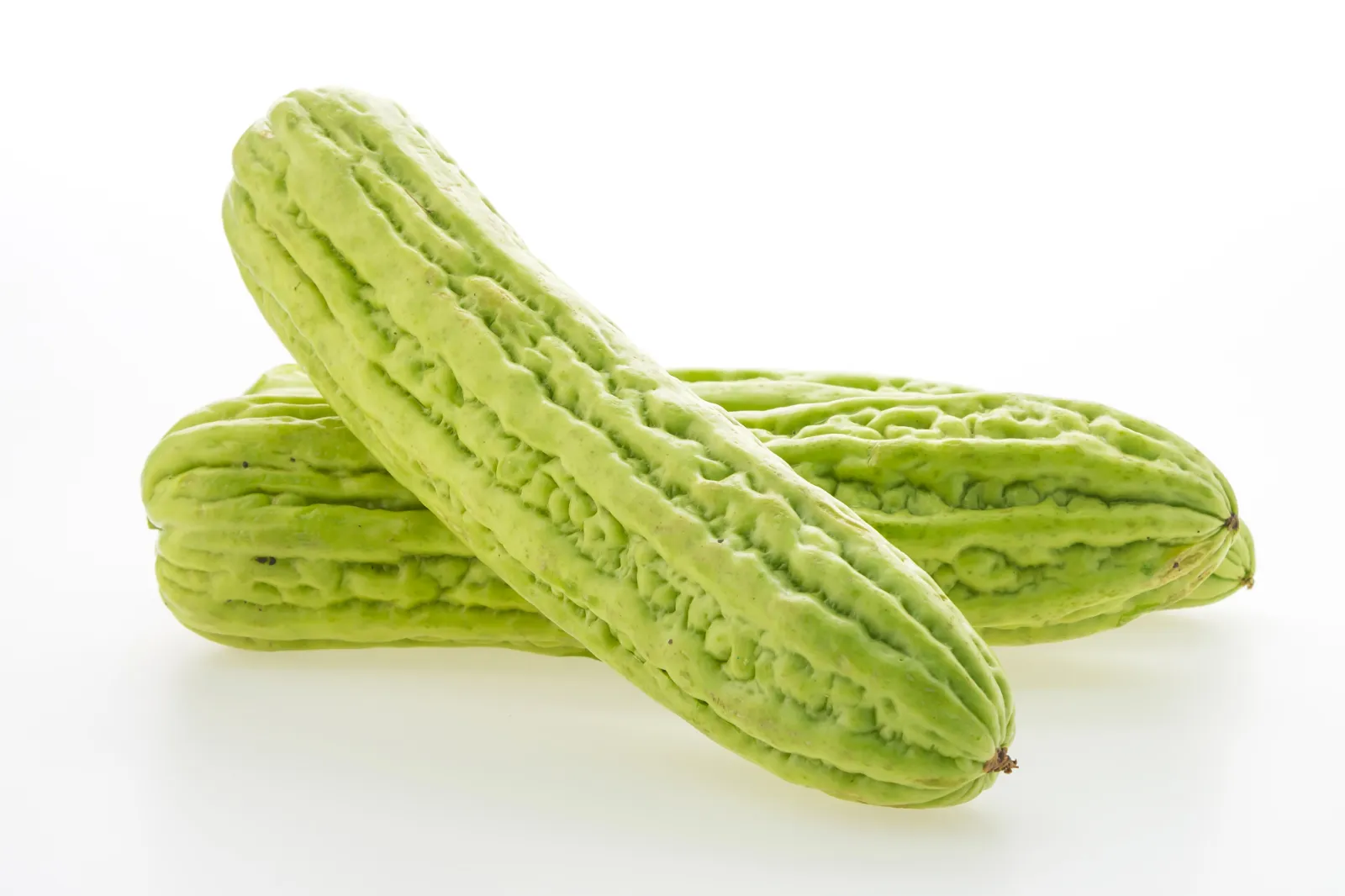
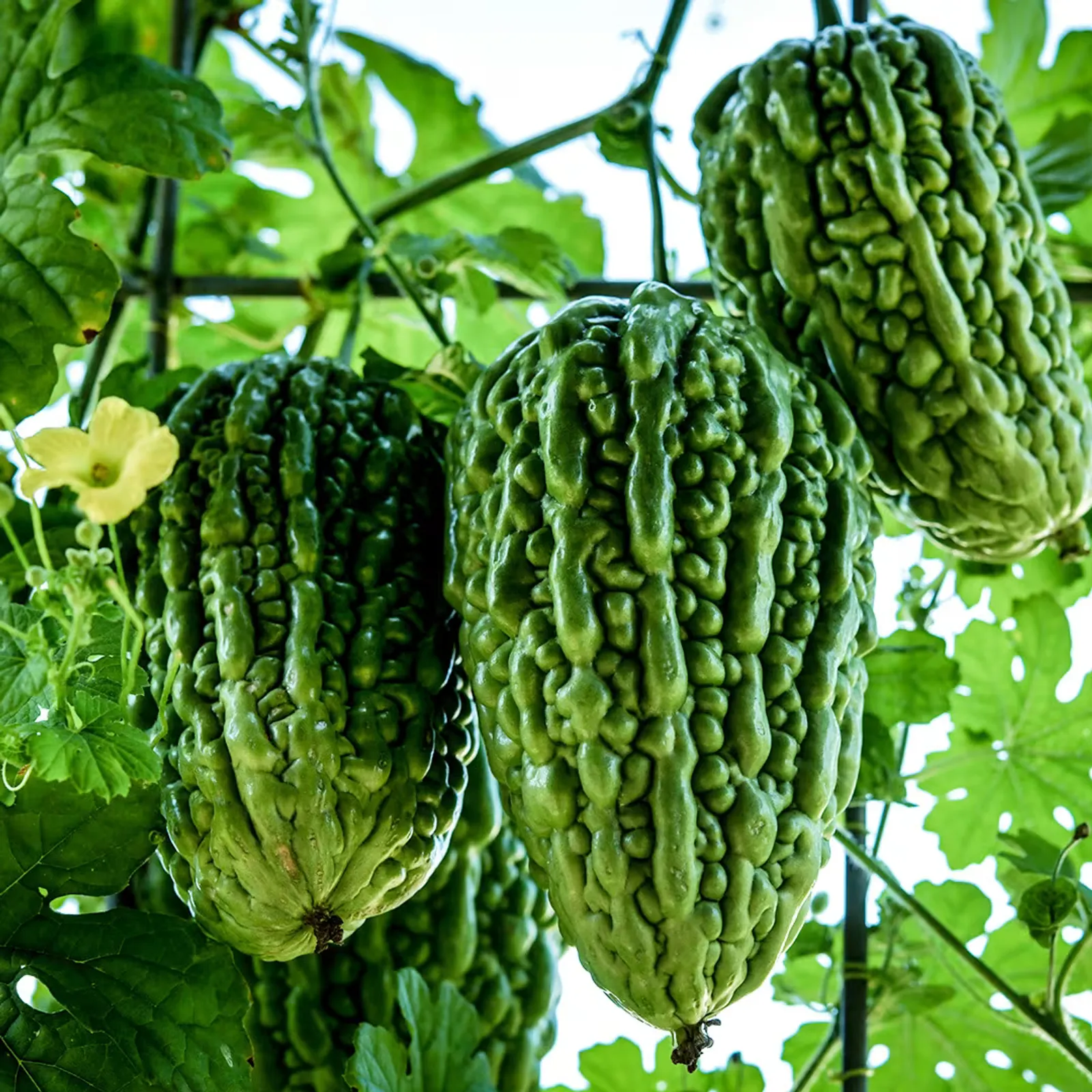
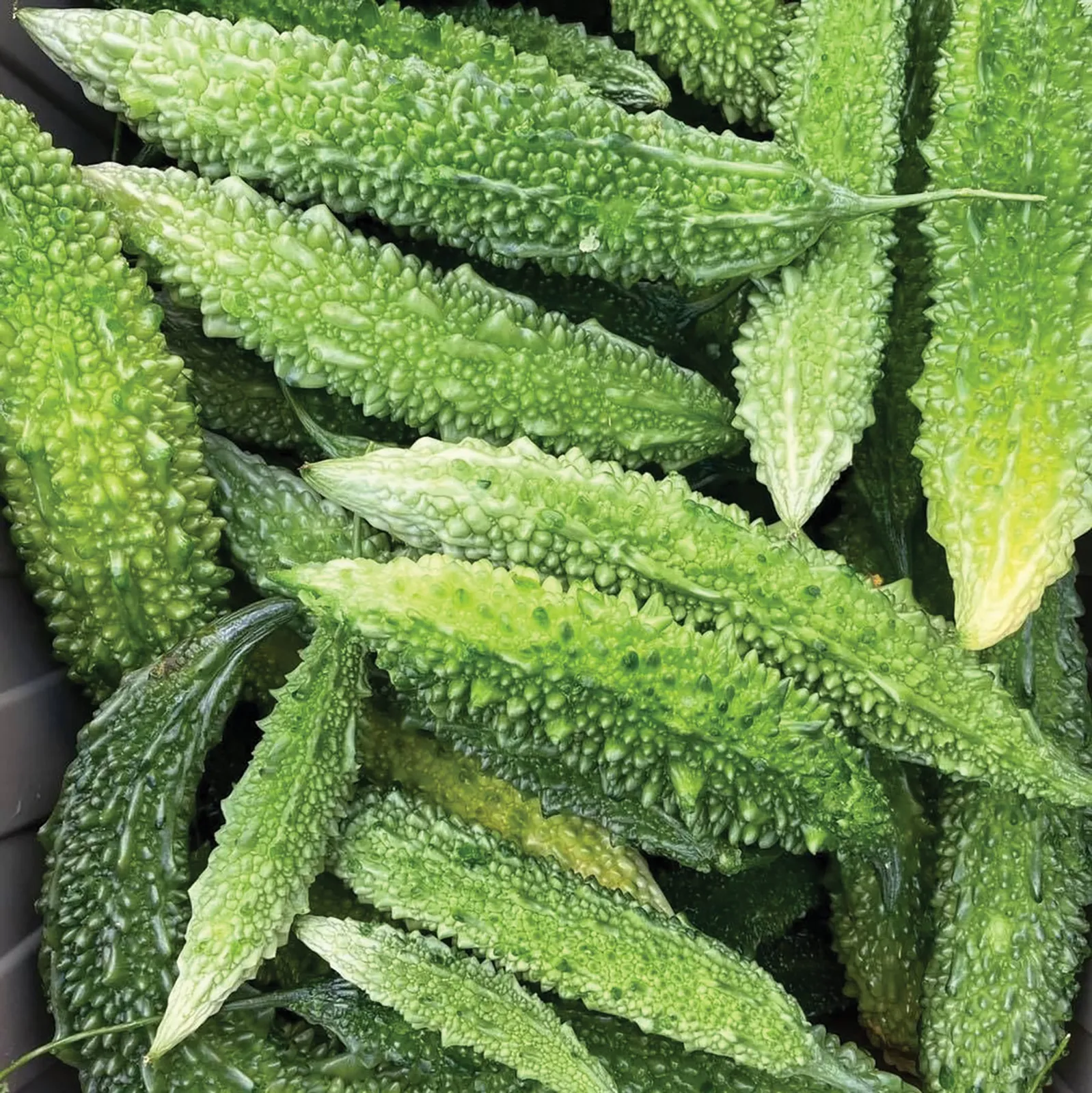
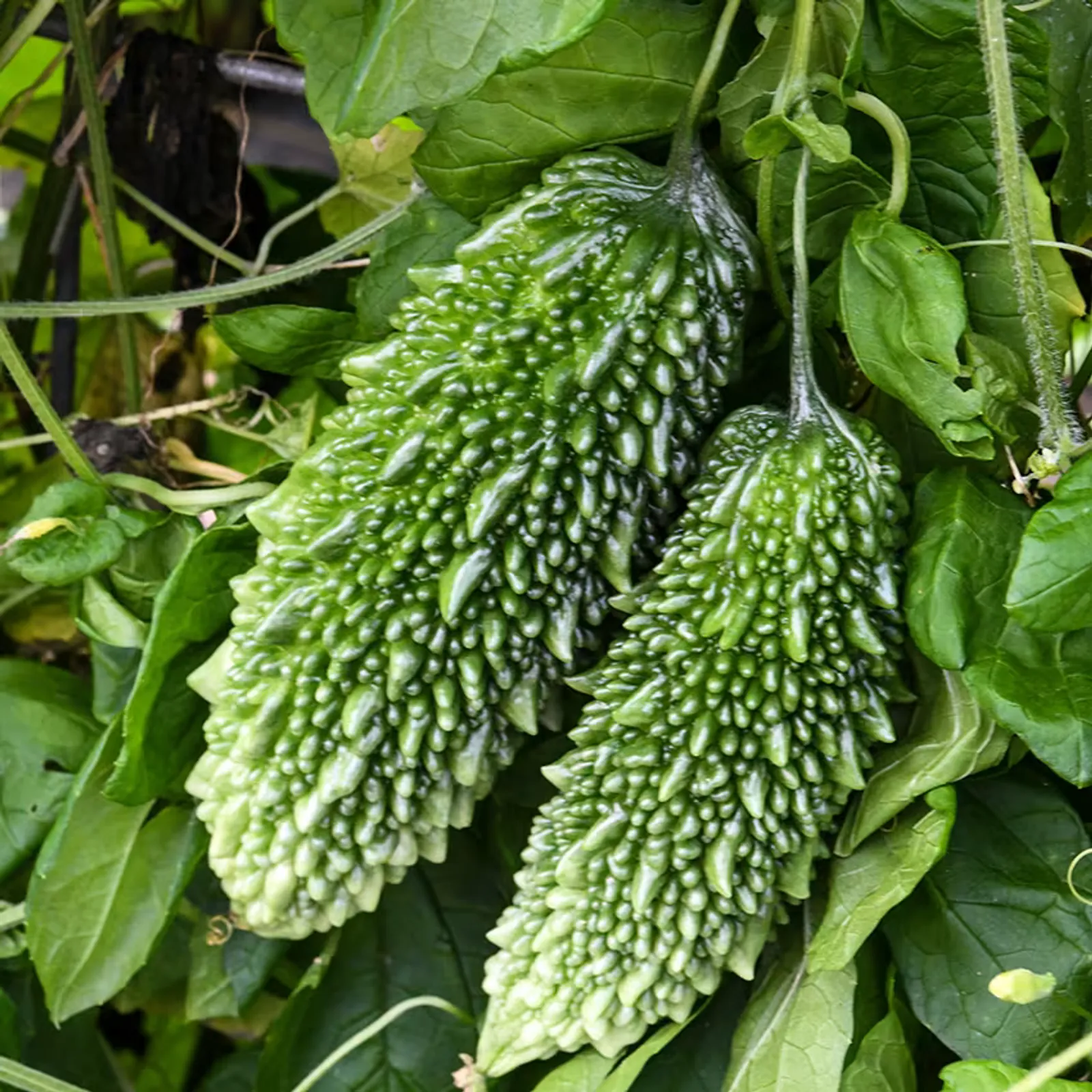
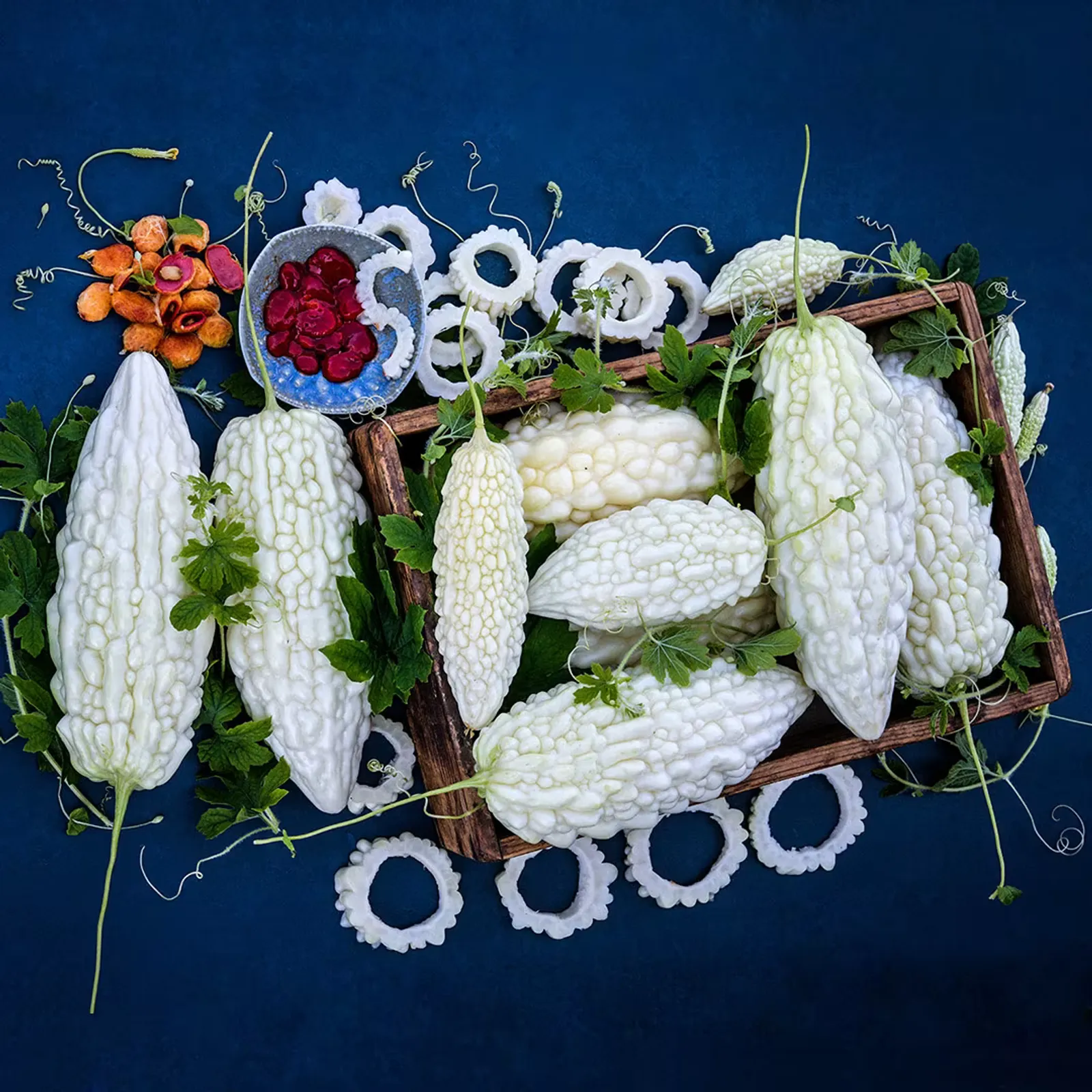
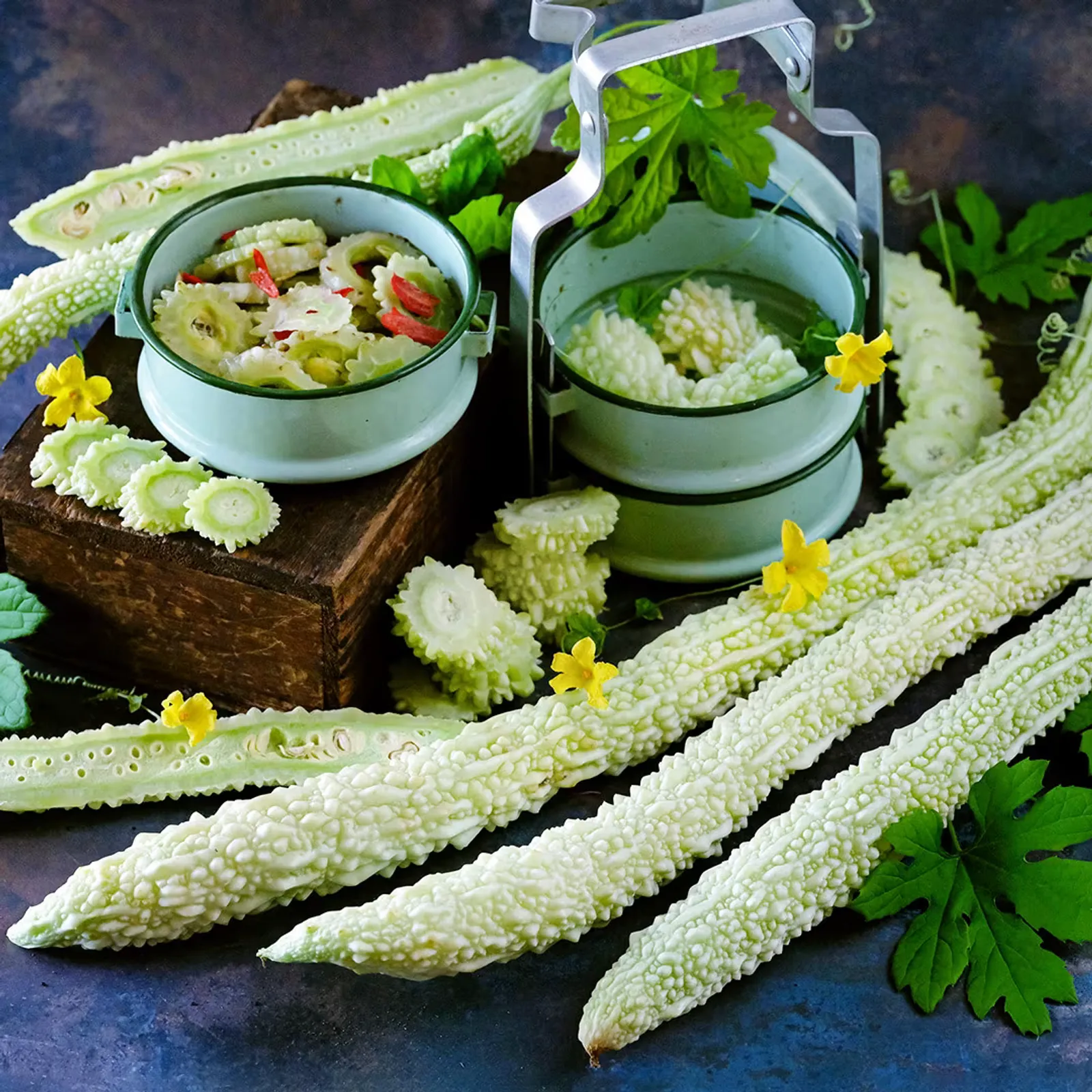
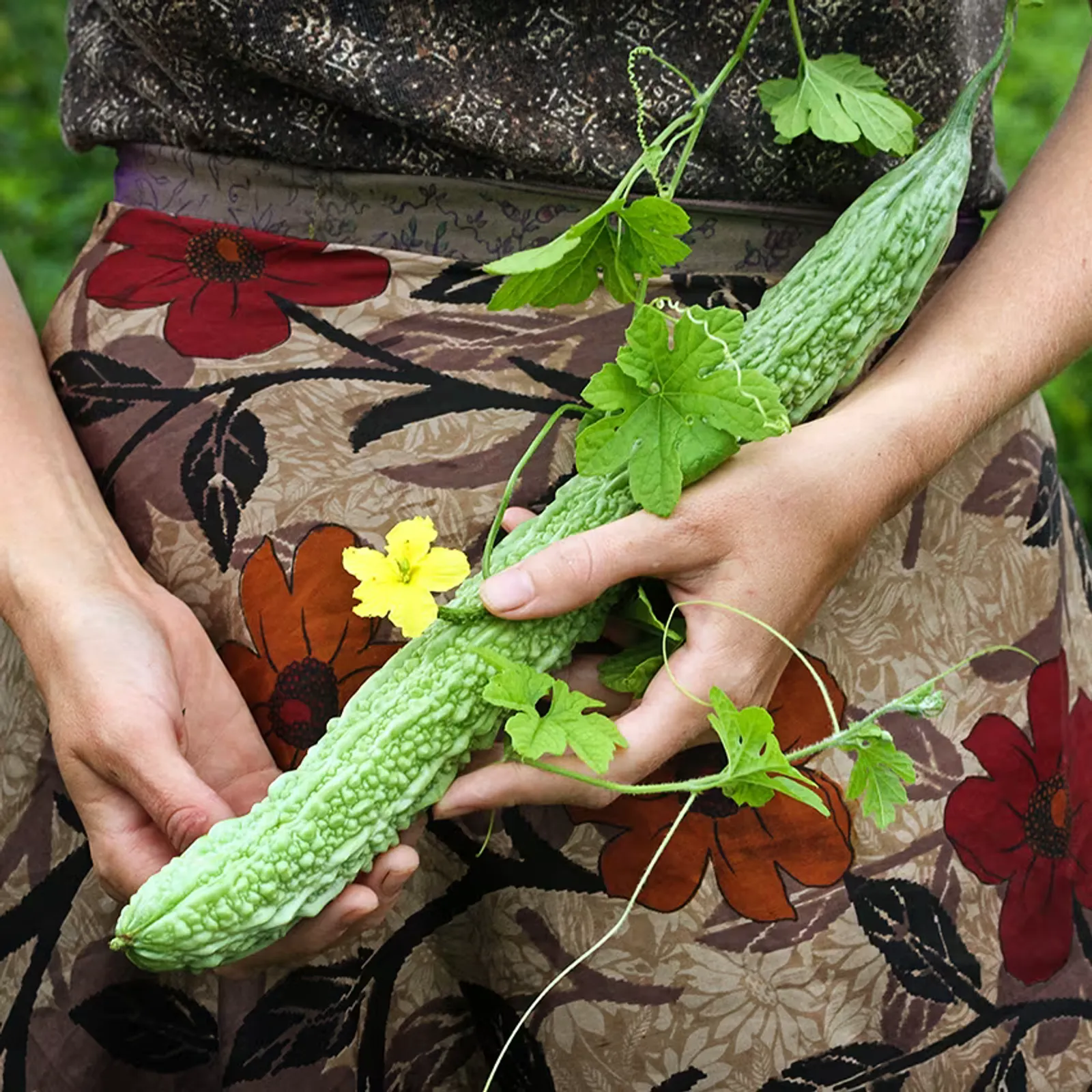
Bitter melon is a member of the Cucurbitaceae family and although it is technically a fruit it is treated as a vegetable in cooking. Its flavor is primarily bitter, although some varieties can develop a very slight sweetness. There are two primary types of bitter melon- the Indian type which is shorter and has bumpier flesh and the Chinese type which is longer and somewhat smoother-fleshed. Bitter melon is a nutritional powerhouse and can be turned into tasty dishes when paired with complementary flavors. The flowers are fragrant and highly attractive to pollinators; some gardeners even grow bitter melons solely as ornamental plants!
How to Grow Bitter Melon
Quick Info


Put away the pen and paper
Plan your veggie garden in minutes with Planter's easy drag and drop planner.
Try Planter for Free
Varieties
Related Articles
Nutrition
Vitamins




Nutrients











Pests
Diseases
Beneficial Critters
Growing from Seed
Bitter melon seeds can be tricky to sprout. Scarify (lightly scratch) the seed coat and pre-soak the seeds for good germination. If starting indoors, a heat mat can be used to aid germination. Use grow lights to provide supplemental light as soon as the seeds germinate. Keep the seed starting mix consistently moist. If direct seeding outdoors, wait for the soil temperature to reach 60° (15°C) at bare minimum before planting.
Planting Considerations
Bitter melon prefers loamy-to-sandy, well-draining soil. Bitter melon is a (sub-)tropical vine that prefers high heat, humidity, and full sun. Bitter melon may perform better if grown on a trellis and the fruits will be straighter and longer, although it can be left to grow along the ground. Be sure to plan your garden space accordingly if you let the plant sprawl. Apply mulch around the base of the plants to help retain moisture. Bitter melon can be grown in a container; be sure to choose a container that holds at least 5 gallons. Note that the wild type of bitter melon 'balsam pear' is considered invasive in some areas. Choose varieties intended for cultivation and research the potential for invasiveness in your area.
Feeding
Add compost to the soil at the time of planting. Side dress the plants with a balanced slow-release fertilizer. Plants grown in sandier soils or containers may need more frequent fertilizing.
Harvesting
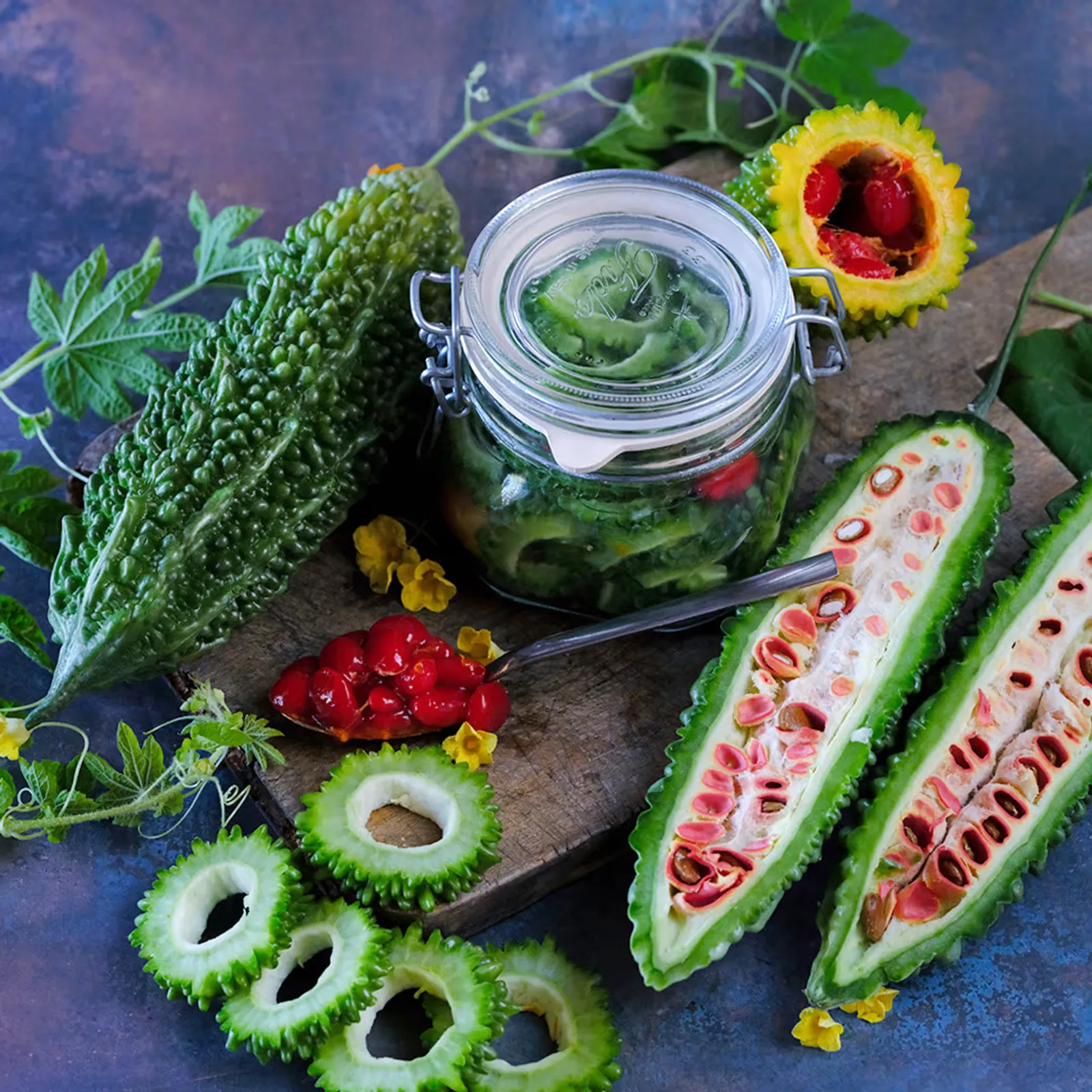
It is not recommended to consume bitter melon while pregnant. Bitter melon may have adverse interactions with some medications. Eating bitter melon seeds is not recommended. Fruits are typically harvested young as the flesh of ripe fruits is poisonous. Ripe fruits do form red, sweet tasting arils around the seeds that some people will eat (while spitting out the seeds). It is not recommended to give bitter melon to children given the potential for poisoning from different parts of the plant at different stages of ripeness. Do your own research and proceed with caution when harvesting and eating bitter melon.
Since bitter melon comes in different shapes, sizes, and colors the criteria for ripeness depends on the variety you are growing. Check the expected days to maturity, fruit color, and fruit size for the variety you are growing. As a rough guide, fruits are ready to be harvested 8 to 10 days after flower drop. Use clean snips to cut the fruits off the vine. Harvest regularly to encourage continued production.
Storage
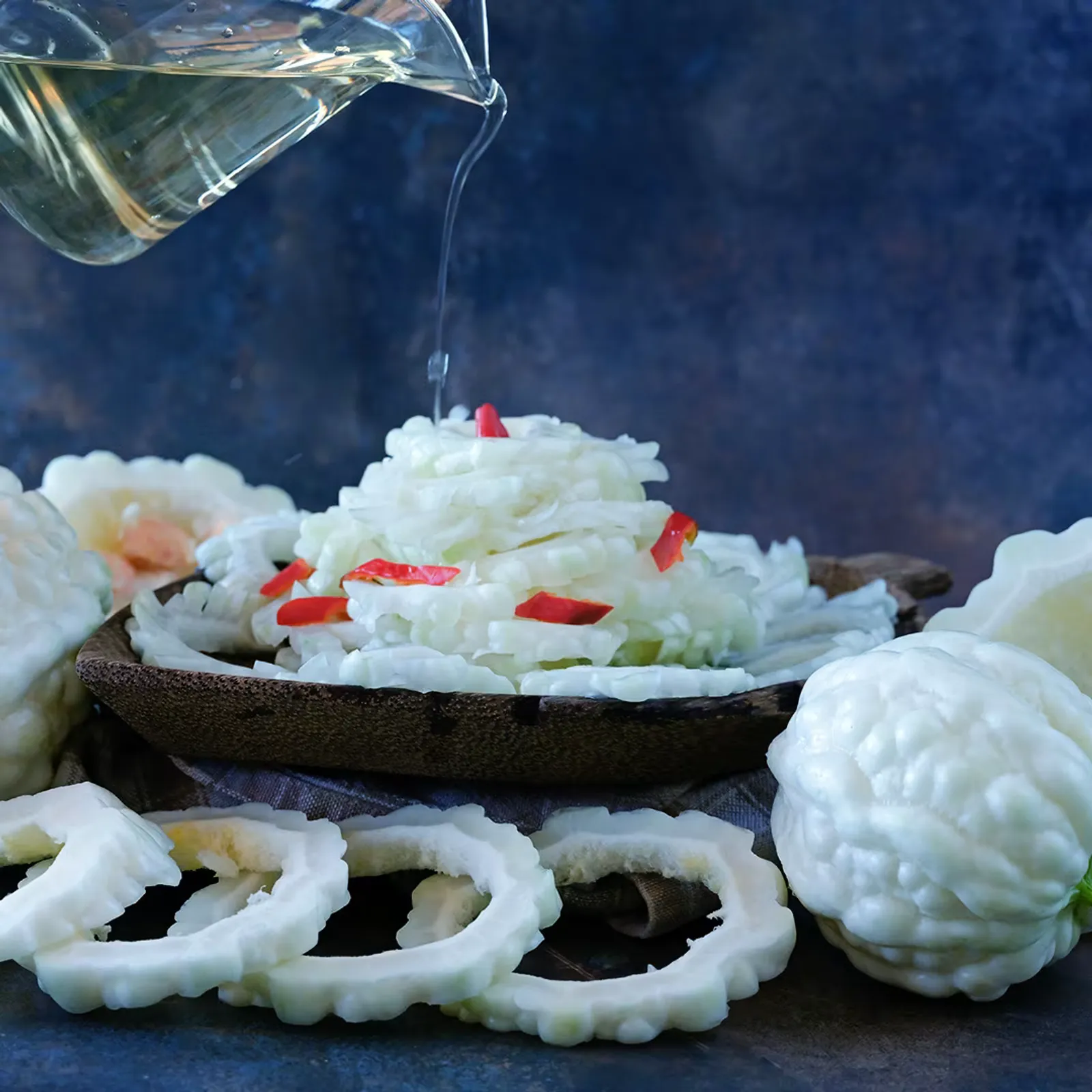
Bitter melon can be stored in the fridge for up to several days. Bitter melon can be eaten raw although it is often cooked to tame the bitterness. Bitter melon can also be de-seeded, chopped, and blanched then placed on a single layer on a baking tray and frozen. Transfer the frozen bitter melon pieces to a freezer-safe bag where it can be kept frozen for up to several months. Bitter melon can also be pickled.
Pruning
The tips of bitter melon vines can be trimmed as needed to encourage more lateral growth, to shape the vine on the trellis, and to maintain good airflow. They can also be pruned to manage the number of fruits so the plant will produce fewer, larger fruits.