Black Rot
Identification
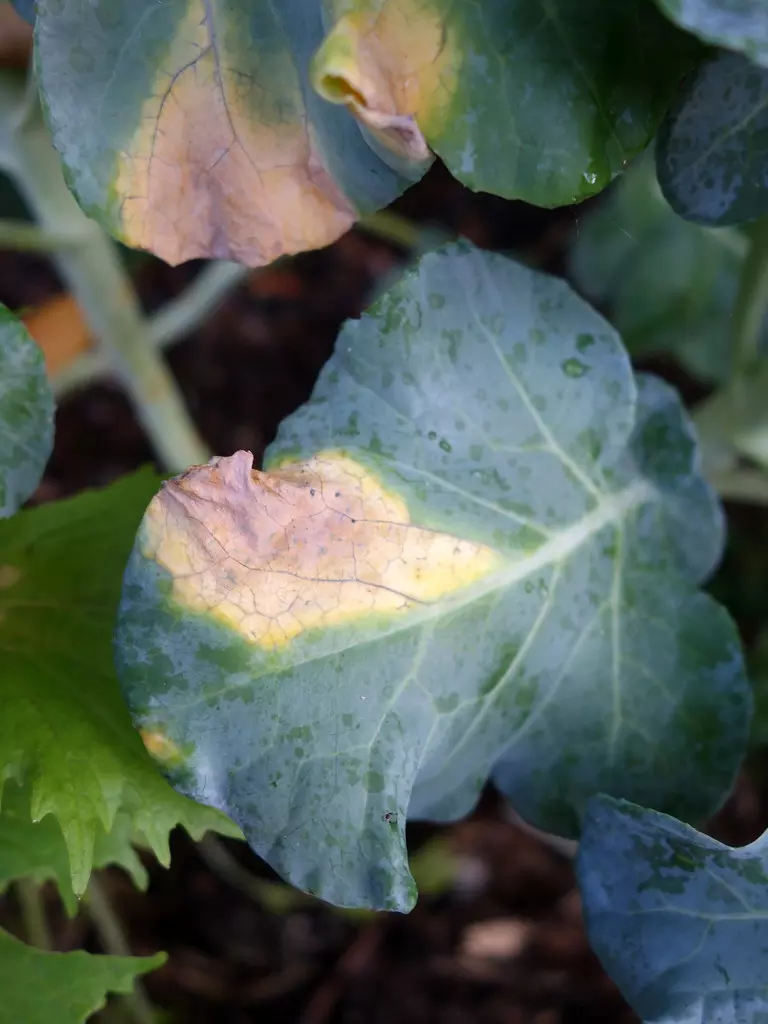
Black rot begins as yellow, V-shaped lesions that eventually result in leaf wilt and death. Within these lesions, leaf veins will turn black.
Damage prevention
Rotate crops every few years with non-cruciferous crops and keep weeds under control. Use certified disease-free seed and plant resistant varieties.
Physical control
Remove and destroy infected plants immediately.
Chemical control
It is highly recommended to try physical prevention/control methods before resorting to chemical control. If you choose to use a bactericide, select a product that is labelled for black rot and rotate products where possible to minimize resistance. Not all bactericide products work on all types of bacterial diseases. Check local regulations (or your local Extension Office where applicable) to identify products that can be used in home gardens in your area. Follow label instructions carefully for safe and effective bactericide application and to ensure that edible crops are safe to harvest. Test bactericide on a few plants before widespread application. Spray bactericide in the late evening and try to avoid spraying during blooming to minimize negative impacts on pollinators- some bactericides are directly lethal to pollinators, and others can have indirect negative impacts. Bactericide may not help if the plant is already severely diseased; it works best when used early (or preventatively in cases where you know you have a particular disease susceptibility). Severely diseased plants may need to be removed and disposed off site.
Plants Affected










...and 7 more plants
Put away the pen and paper
Plan your veggie garden in minutes with Planter's easy drag and drop planner.
Try Planter for Free