Phytophthora
Identification
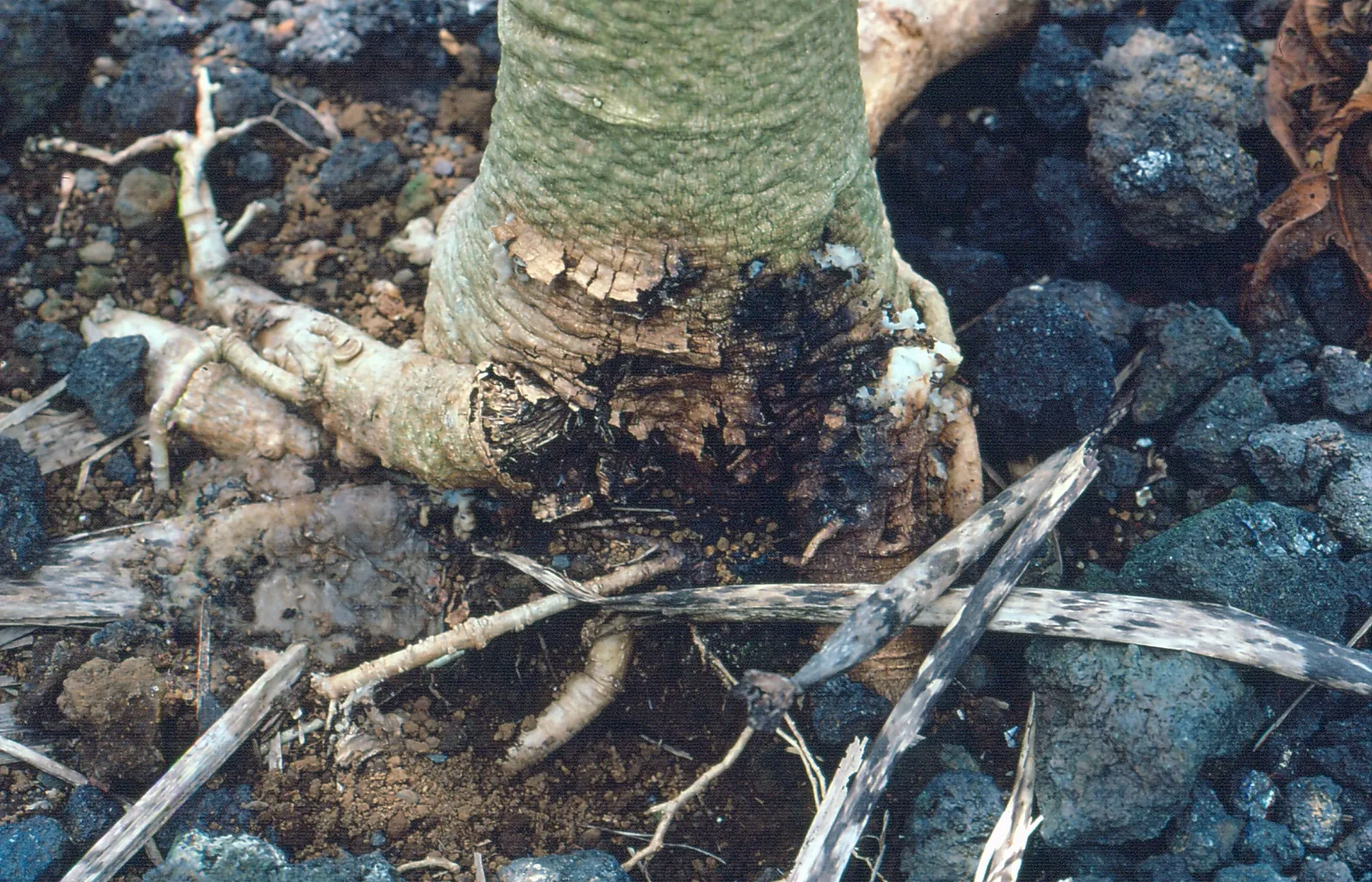
Phytophthora means 'plant destroyer' in latin and it is indeed a highly destructive plant pathogen. Phyrophthora used to be classified as fungi but it is now part of a unique class of organisms called water molds- a reference to the organisms' dependence on water to move and infect plants. There are several species of phytophthora that can cause various crown, stem, fruit, and root rots in many different garden plants as well as trees. Phytophthora can also be a cause of 'damping off' in young seedlings. Phytophthora symptoms can vary depending on the plant affected but can include: Black-brown lesions on plant stems, water-soaked spots on leaves and fruit, white mold on plant stems and fruit, leaf yellowing and scorching, mushy roots and bulbs, dark brown-orange sores on tree crowns and trunks, plant wilting, failure to thrive, and plant death. Note: there is one specific species of phytophthora (Phytophthora infestans) that causes the disease gardeners commonly call late blight. See the Late Blight disease page in Planter for information specific to late blight. Phytophthora spores can potentially live in the soil for many years waiting for a susceptible plant to infect. When soil becomes waterlogged from rainfall or irrigation the spores activate and are able to move around and infect plants. Phytophthora can live in water as well; if you irrigate your garden from a natural water source such as a pond it is possible for a phytophthora infection to start from the water. The disease can also be spread by: water runoff from affected areas nearby, water splashing soilborne spores onto plant parts, using garden tools in an affected area then moving to another area, and from infected plants spreading disease to nearby plants through root contact. Control measures for phytophthora are mainly preventative.
Damage prevention
Aim to prevent phytophthora through good gardening practices, otherwise take steps as soon as symptoms appear. Because phytophthora is dependent on water to move and spread, good watering practices can help to keep it in check. Water only when needed and avoid overwatering. Avoid splashing water on plant leaves when watering and if possible use drip irrigation. Apply mulch around the base of the plants to help keep spores from splashing up onto plants. Select planting locations that have good drainage, full sun, and good airflow. Amend heavy soils with compost to improve drainage or use raised beds. Prune and trellis plants to help improve air circulation and keep plant parts up off the soil. Sanitize garden tools and wash your hands after working in areas where phytophthora has been a problem. If phytophthora has been a problem in your garden, remove and dispose of all plant debris in and around the affected area at the end of the season. Also do not plant crops that are susceptible to phytophthora in the same spot for at least three years. This can help to reduce spore populations and minimize damage to crops. Avoid planting susceptible crops near each other if possible to keep the disease from spreading. Fungicide can be used preventatively with limited effectiveness. It generally will not help infected plants to recover.
Physical control
Remove infected plants* as well as plants immediately beside them that might be infected (even if they do not show symptoms). Pull the whole plant out, including the roots. Dispose infected plant material well away from the garden and clean tools after removing infected plants. Do not compost diseased material unless you are certain that your compost pile gets hot enough to kill off spores. *Trees infected with phytophthora crown rot can sometimes be saved by carefully cutting out infected tissue and pulling back soil from around the trunk down to the topmost roots to let the trunk dry out.
Chemical control
It is highly recommended to try physical prevention/control methods before resorting to chemical control. If you choose to use a fungicide, select a product that is labelled for phytophthora and rotate products where possible to minimize resistance. Not all fungicide products work on all types of fungal diseases. Check local regulations (or your local Extension Office where applicable) to identify products that can be used in home gardens in your area. Follow label instructions carefully for safe and effective fungicide application and to ensure that edible crops are safe to harvest. Test fungicide on a few plants before widespread application. Spray fungicides in the late evening and try to avoid spraying during blooming to minimize negative impacts on pollinators- some fungicides are directly lethal to pollinators, and others can have indirect negative impacts. Fungicides may not help if the plant is already severely diseased; it works best when used early (or preventatively in cases where you know you have a particular disease susceptibility). Severely diseased plants may need to be removed and disposed off site.
Plants Affected






...and 30 more plants
Put away the pen and paper
Plan your veggie garden in minutes with Planter's easy drag and drop planner.
Try Planter for Free