Imported Cabbage Worms
Identification
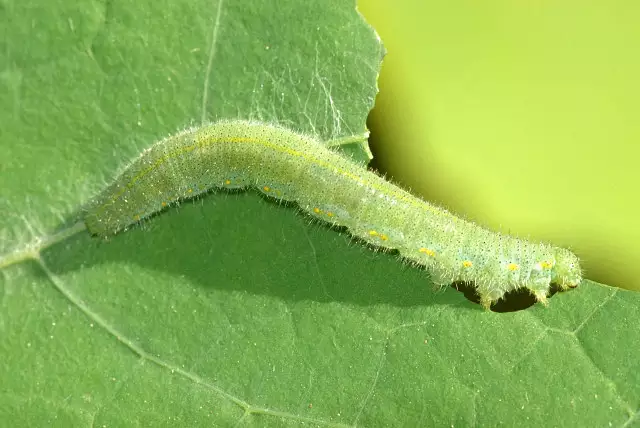
If you see cute white butterflies flying about your garden beware- they might be getting ready to devastate your brassica crops! The cabbage white butterfly is the adult stage of the imported cabbageworm, a light green, slightly hairy caterpillar with a faint yellow line running down its back. While the caterpillars are small- up to 1" (2.5 cm) long- they have the capacity to cause significant damage. They can be a particular problem in cabbages as they bore holes into the heads while eating the leaves, but they can also cause damage to broccoli, cauliflower, and other related crops. Cabbage worm or cabbage white butterfly also sometimes refers to the "large cabbage white" (Pieris brassicae) , a close relative of the imported cabbageworm that is found in Europe, Asia, and North Africa. The term cabbage worms is also sometimes used very loosely to refer to other similar cabbage caterpillar pests such as cabbage loopers and diamondback moth larvae.
Damage
Imported cabbageworms tend to be found on cabbage, broccoli, and cauliflower although there are other plants (mostly brassicas) that they will attack. They leave large, irregular shaped holes in plant leaves. They can bore deep holes into cabbage heads. In young seedlings, the chewing damage may cause the plant to never develop a proper head or it may completely kill off the plant. The brown-green frass (poop) can also cause staining especially on cauliflower heads.
Prevention
If cabbageworms are a known problem in your area apply insect netting or row cover to affected plants at the time of planting. Do not use heavy-duty row covers when the weather gets hot to prevent overheating. Keep a close eye on brassica seedlings- as cabbageworms can cause significant damage and the plant may never recover. If you see white butterflies flying around your plants, especially brassicas, inspect plants carefully for caterpillars and eggs. Eggs will be deposited on the undersides of leaves- they are small and pale yellow, with ridges down the sides. Clearing the garden of weeds and plant debris at the end of the season may help to reduce populations of overwintering cabbageworms in gardens that are severely infested. Plant companion plants that attract predators of cabbageworms such as parasitic wasps and tachinid flies.
Physical control
If the infestation is not too severe it may be possible to hand pick and dispose of eggs and caterpillars.
Chemical control
Bacillus thuringiensis kurstaki strain (Btk) is recommended to control imported cabbageworm. Be aware that Btk can also kill beneficial caterpillars so do not spray it indiscriminately. Follow the product label instructions carefully for safe and effective application. While effective, spinosad is not recommended as a first line of defence against cabbageworms- unless you are dealing with other insect pests at the same time that spinosad can also treat. Follow the product label instructions carefully for safe and effective application and to ensure that edible crops remain safe to eat. Spinosad can be toxic to bees, as well as beneficial predatory insects, for up to one day after spraying. Do not spray spinosad on flowering plants.
Plants Affected







...and 3 more plants
Put away the pen and paper
Plan your veggie garden in minutes with Planter's easy drag and drop planner.
Try Planter for Free