Spider Mites
Identification
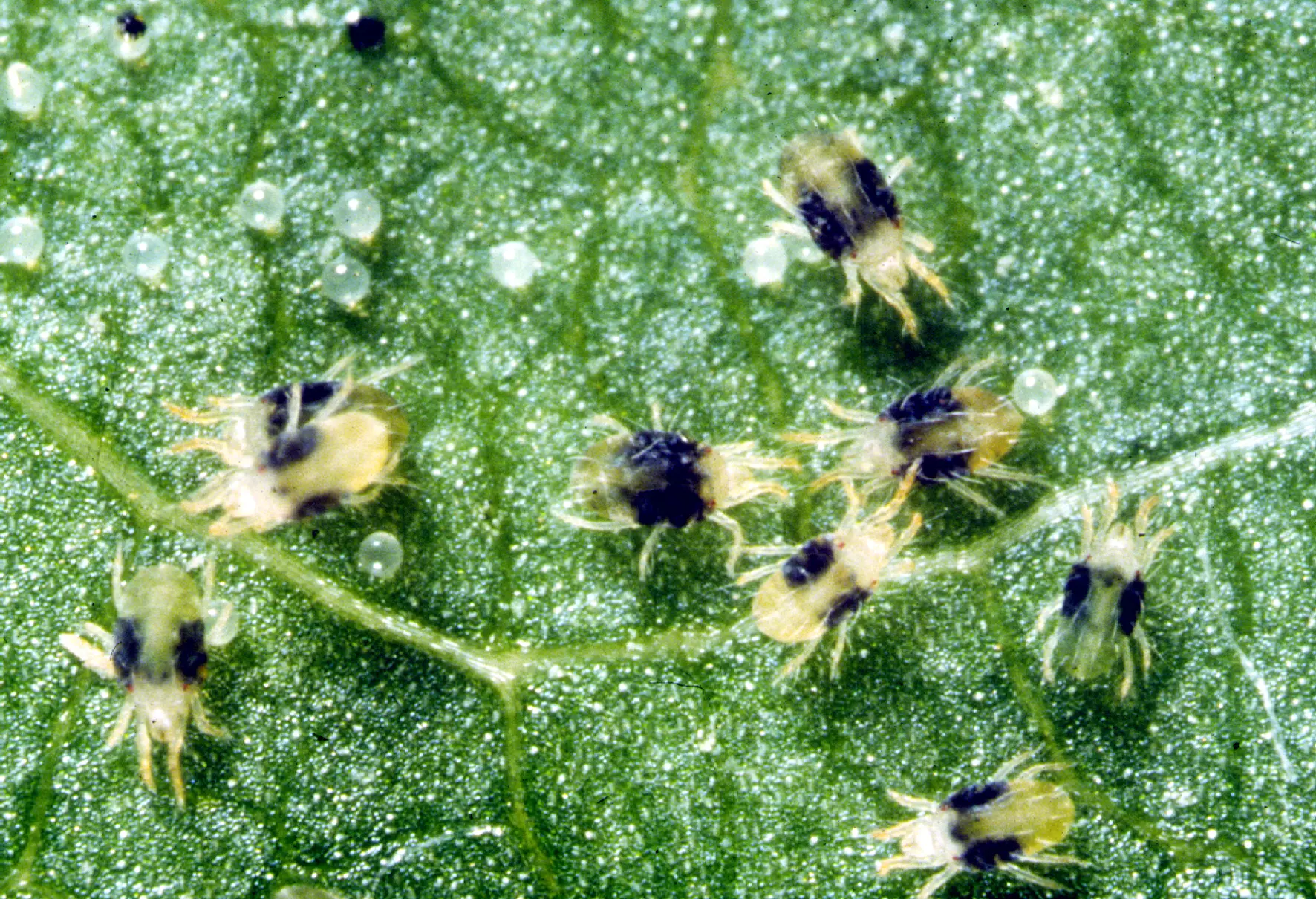
The two-spotted spider mite, Tetranychus urticae, is a type of arachnid with eight legs. They are very tiny, about 1/50th of an inch long. They are yellow-orange in color, with two dark spots on each side of the body. During heavy infestations, webbing may be present.
Damage
They use piercing-sucking mouthparts to feed on the sap on the underside of leaves and needles. This injury produces tiny white or yellow spots, giving leaves and needles a stippled or mottled appearance.
Prevention
Spider mites thrive on plants under stress. Keep plants well-watered to reduce the chances of a spider mite attack.
Physical control
Use a high-pressure water spray to dislodge twospotted spider mites. This can also wash away their protective webbing.
Chemical control
It is highly recommended to try physical prevention/control methods before resorting to chemical control. Insecticidal soap, horticultural oil, and neem are effective agains spider mites. Target the underside of leaves as well as the top. Check local regulations (or your local Extension Office where applicable) to identify which products can be used in home gardens in your area. Follow label instructions carefully for safe and effective insecticide application and to ensure that edible crops are safe to harvest. Test insecticide on a few plants before widespread application. Look for the most selective insecticide to minimize harm to beneficial insects- even some “selective” and "natural" insecticides can still negatively impact beneficial insects. Where possible, apply contact-based insecticides in the late evening and try to avoid spraying during blooming to minimize negative impacts on pollinators- in some cases the insecticide may need to be hosed off in the morning to avoid contact with pollinators.
Plants Affected









...and 51 more plants
Put away the pen and paper
Plan your veggie garden in minutes with Planter's easy drag and drop planner.
Try Planter for Free