Blossom End Rot
Identification
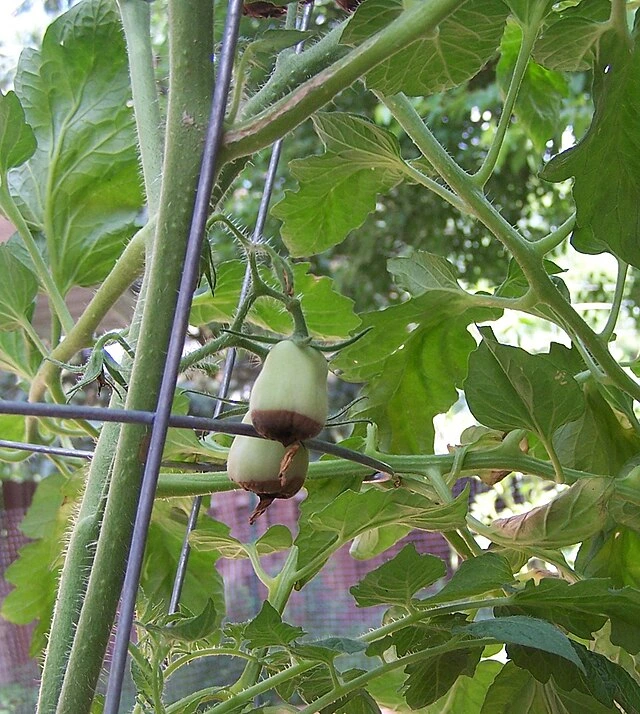
Blossom end rot is not a disease; it is a common physiological problem of tomatoes. It can occasionally affect peppers, eggplants, and vining crops such as cucumbers, melons, and squash. The first sign of blossom end rot developing is small water soaked spots typically on the bottom of the fruit. After some time affected fruits develop a black, sunken, soft patch on their bottoms (the blossom end). It is caused by an inability of the plant to uptake calcium and bring it to the fruits as they develop. The most common reason for this inability to transport calcium is inconsistent watering. Other potential causes include over-fertilization with high-nitrogen fertilizer, or a calcium deficiency in the soil.
Damage prevention
Water plants consistently to ensure the soil does not dry out (but do not overwater). Apply mulch around the base of the plants to help retain soil moisture. If you are able to install drip irrigation in your garden it may help with watering consistently. When weeding plants do not cultivate too deeply which can damage the plants' roots and prevent them from taking up enough calcium. Do not overfertilize plants with high nitrogen fertilizer which can cause the plant to direct more calcium into the leaves at the expense of the fruit. Test your soil well in advance of planting out your garden especially if you suspect a calcium deficiency.
Physical control
If your plants are showing signs of blossom end rot, take steps to water more regularly and keep the soil from drying out. Consistent watering is the first line of defense to prevent and correct blossom end rot. Stop cultivating deeply or tilling near the plants. Remove affected fruits as they will not recover and can develop bacterial or fungal infection.
Chemical control
Dial back on nitrogen fertilizer and/or switch to more balanced fertilizer. Follow the recommendations from your soil test to correct soil deficiencies. Bonemeal and garden lime are two potential sources of calcium. Bonemeal also contains high amounts of phosphorus- be cautious if your soil is already high in phosphorus. Lime can potentially raise your soil pH- be cautious not to raise your pH too much especially if your soil pH is already high. By the time blossom end rot develops it is difficult to correct a soil calcium deficiency in the current season. Foliar calcium chloride sprays can be somewhat effective if blossom end rot is caught early and cannot be resolved through better watering and other practices. Sprays will only help newly developing fruits; they will not help fruits that are already mostly developed. Follow the spray instructions carefully for the correct application rates.
Plants Affected









Put away the pen and paper
Plan your veggie garden in minutes with Planter's easy drag and drop planner.
Try Planter for Free