Armyworms
Identification
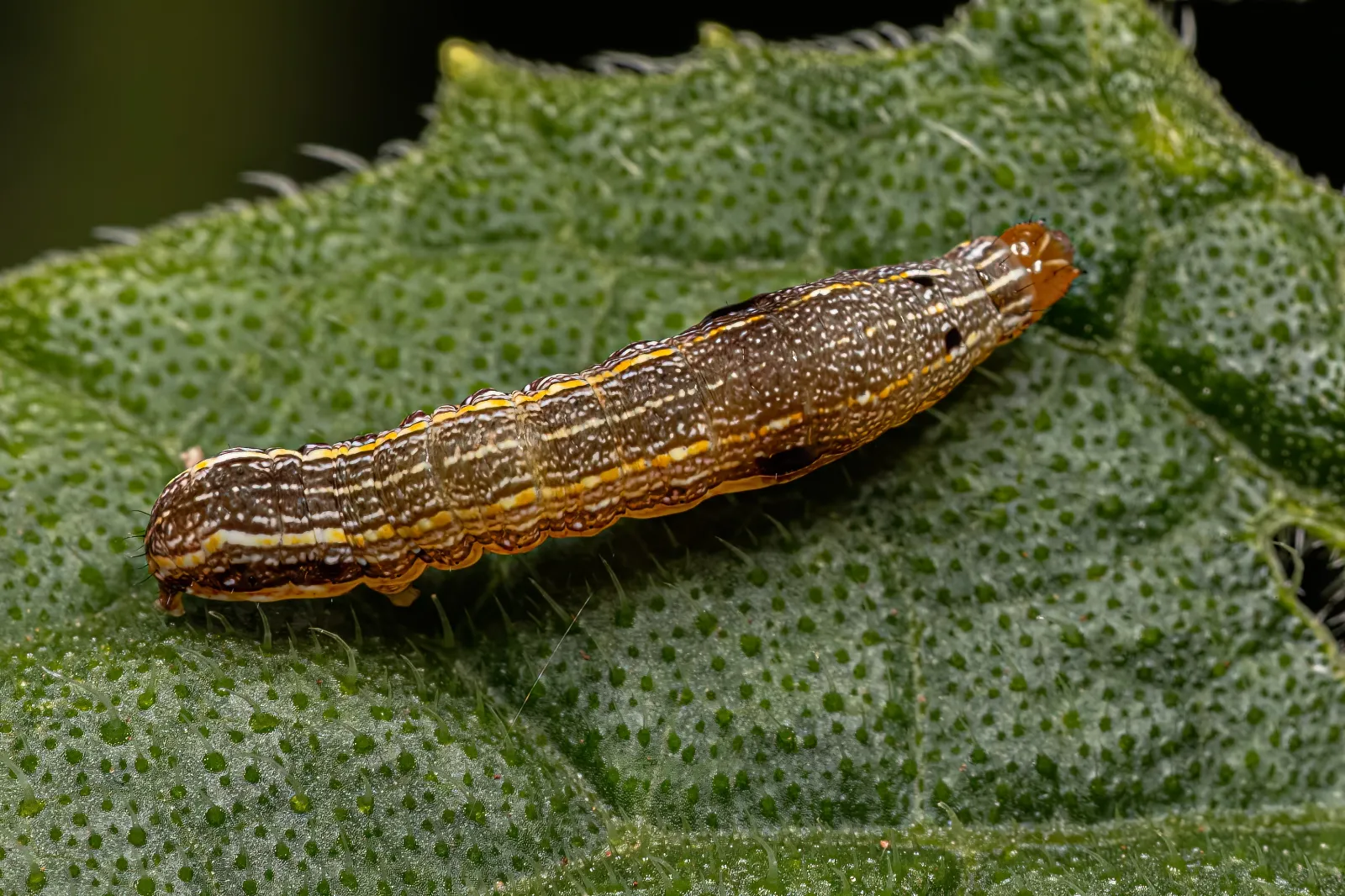
Armyworms are caterpillars that tend to move and gather in groups, hence the name armyworm. They are the destructive larvae of the armyworm moth. While the moth itself does not cause damage the larvae are voracious eaters that can defoliate older plants and decimate younger seedlings.
Armyworms are not able to survive winters with persistent freezing temperatures, but they can migrate north from warmer climes during the growing season. In milder climates the larvae can overwinter and in areas with no frost the moth can breed year-round. While they can't tolerate freezes, armyworms also migrate to avoid extreme heat. In some areas armyworms only become problematic in certain years when weather conditions induce them to migrate there.
Armyworms can have different appearances depending on the exact species and stage of growth. Younger caterpillars tend to be smaller and more greenish while older caterpillars can be green, gray, or brown with striping along their bodies and a more ‘bumpy’ appearance.
Damage
Armyworms may kill young seedlings by cutting the stems or chewing off young leaves. They will also chew large, irregular holes in the leaves of established plants. In some cases plants are defoliated (i.e., the leaves are almost completely chewed off). They will also feed on plant roots and grain heads.
Prevention
Armyworms are usually held in check by natural predators. If armyworm infestation has been a problem in your garden, monitor and take preventative measures to minimize armyworm damage. Armyworms tend to come out to feed at night or on cloudy days; if you suspect armyworm damage look for the worms in the early morning, late evening, or on overcast days. Keeping weeds, especially grassy weeds, under control may help to minimize armyworm populations. If you grow grains (as edible crops or as cover crops) be on the lookout for armyworms. Plant companion plants that attract predators of armyworms such as parasitic wasps, tachinid flies, and damsel bugs.
Physical control
If armyworms are a known problem in your garden apply insect netting or row cover to affected plants at the time of planting. Be sure to not leave covers or netting on flowering plants that require pollination. Do not use heavy-duty row covers when the weather gets hot to prevent overheating. For smaller infestations you may be able to hand-pick armyworms and dispatch them. Shaking the plants can help to dislodge hidden worms.
Chemical control
Armyworm populations are usually kept in check by predators. Only use insecticides if infestation is severe. Broad-spectrum insecticides may harm natural insect predators of armyworm. Bacillus thuringiensis Kurstaki strain (Btk) or spinosad may help to control armyworm populations, although these are most effective on young armyworms. Be aware that Btk can also kill beneficial caterpillars so do not spray it indiscriminately. Follow the product label instructions carefully for safe and effective application.
While effective, spinosad is not recommended as a first line of defence against armyworms- unless you are dealing with other insect pests at the same time that spinosad can also treat. Follow the product label instructions carefully for safe and effective application and to ensure that edible crops remain safe to eat. Spinosad can be toxic to bees, as well as beneficial predatory insects, for up to one day after spraying. Do not spray spinosad on flowering plants.
Always check local regulations (or your local Extension Office where applicable) to identify which products can be used in home gardens in your area.
Plants Affected









...and 22 more plants
Put away the pen and paper
Plan your veggie garden in minutes with Planter's easy drag and drop planner.
Try Planter for Free