Earwigs
Identification
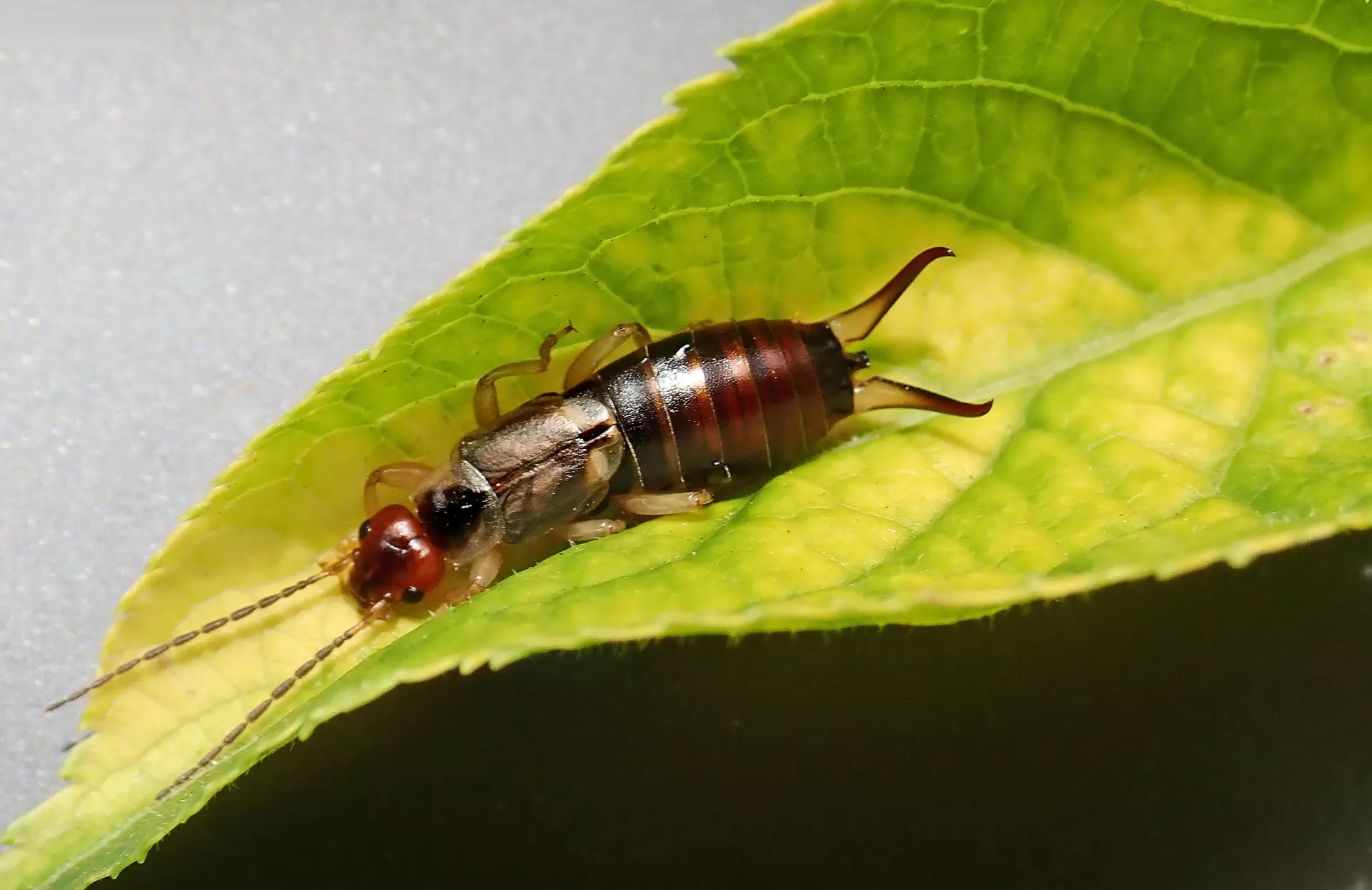
Earwigs are about 5/8 inch long, with a flat, reddish brown body and very short wings. They have medium length antennae and chewing mouthparts. They have a pair of strong pinchers (cerci) on the tip of their abdomen.
Damage
They chew irregular holes in leaves and flower blossoms. The damage is similar to that of slugs, but they do not leave a slime trail.
Prevention
Clean up debris that earwigs can hide under, such as leaves, plant debris, bricks, piles of lumber and similar things. Excess moisture also attracts earwigs.
Physical control
You can set out rolled up newspapers or similar objects to trap earwigs. Set them out during evening in areas where you have noticed earwigs in your garden. In the morning, shake the traps above a pail of soapy water to remove and kill the insects.
Chemical control
It is highly recommended to try physical prevention/control methods before resorting to chemical control. Neem-based products may help to manage earwigs. Check local regulations (or your local Extension Office where applicable) to identify which products can be used in home gardens in your area. Follow label instructions carefully for safe and effective insecticide application and to ensure that edible crops are safe to harvest. Test insecticide on a few plants before widespread application. Look for the most selective insecticide to minimize harm to beneficial insects- even some “selective” and "natural" insecticides can still negatively impact beneficial insects. Where possible, apply contact-based insecticides in the late evening and try to avoid spraying during blooming to minimize negative impacts on pollinators- in some cases the insecticide may need to be hosed off in the morning to avoid contact with pollinators.
Plants Affected









...and 1 more plants
Put away the pen and paper
Plan your veggie garden in minutes with Planter's easy drag and drop planner.
Try Planter for Free