Cercospora
Identification
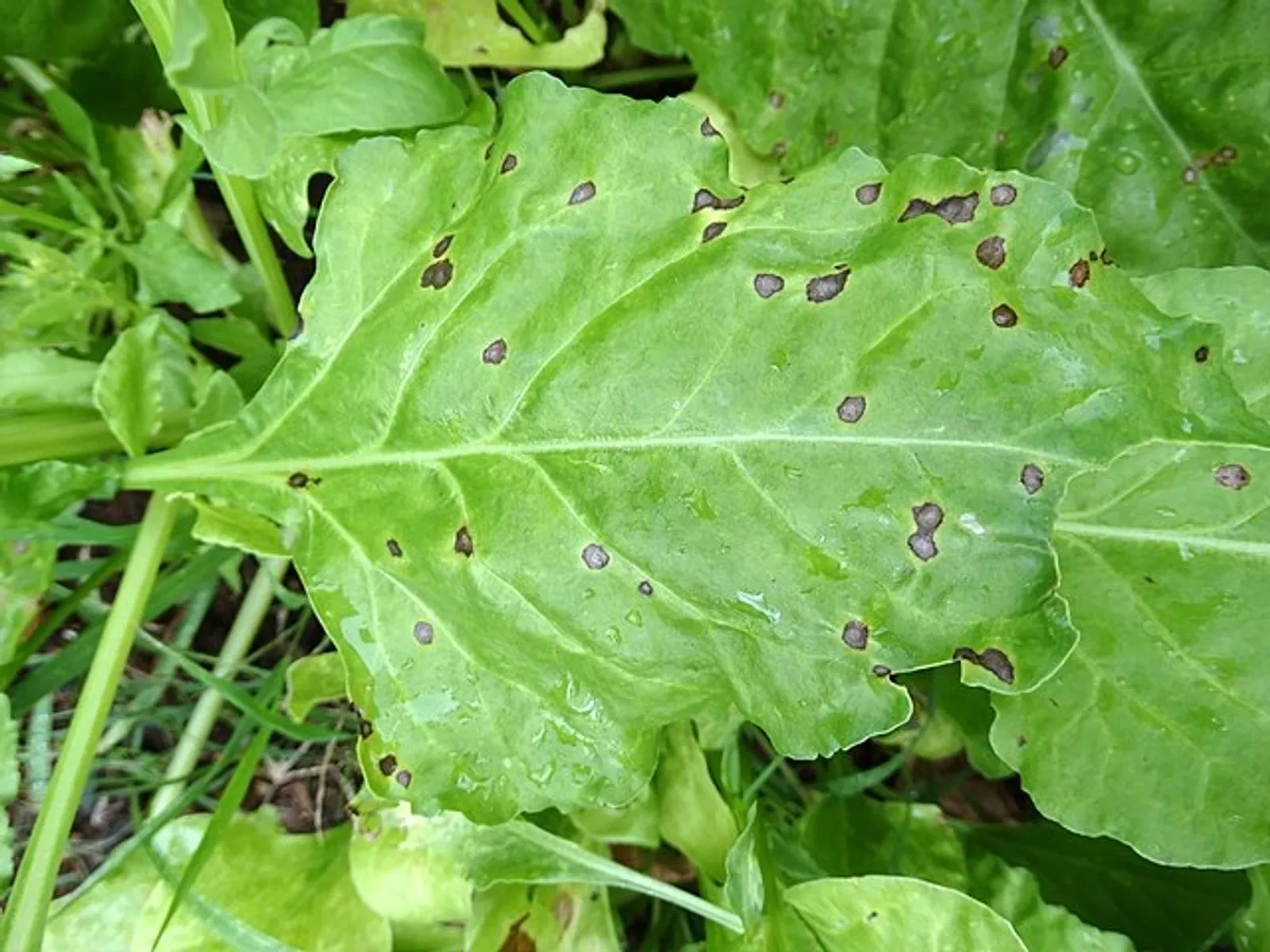
Cercospora, often called cercospora leaf spot, is a widespread disease that affects several garden plants. There are over 1200 species of cercospora but Cercospora beticola, which attacks beets, chard, spinach, and related plants, is one of the most common. Cercospora causes distinctive small round leaf lesions with light tan centers, dark brown edges, and yellow "halos". Cercospora tends to attack older leaves first. In minor infections the disease is mostly cosmetic and affected leaves can be removed. In severe infections the leaves can become consumed with spots, turn brown, and die. Leaf damage can also cause reduced yields as the plant is not able to derive energy from the infected leaves. In peppers and eggplant cercospora (Cercospora capsici) is usually called frogeye leaf spot and in tomatoes it is called cercospora leaf mold. In beans, a species of cercospora (Cercospora kikuchii) can cause a condition called purple seed stain where infected seeds develop a purpleish discoloration. Cerscospora tends to develop when conditions are warm, wet, and humid.
Damage prevention
In the home garden cercospora is not typically a devastating disease especially if caught early. Take action if symptoms develop, or if cercospora has been a major problem in your garden in the past. One of the main ways that cercospora can spread is when infected plant debris is left in the garden over winter. If you have plants that have been affected by cercospora remove the plant debris at the end of the season. Do not compost the diseased debris unless you are certain your compost pile gets hot enough to kill off spores. Do not plant susceptible crops in the same spot for 2-3 years if you have issues with cercospora. Sanitize garden tools and wash your hands after working in areas where cercospora has been a problem. Avoid splashing water on plant leaves when watering and if possible use drip irrigation. Apply mulch around the base of the plants to help keep spores from splashing up onto plants. Practice good weed control as weeds can be hosts for cercospora spores. Purchase disease-free seeds from reputable sources.
Physical control
If cercospora is caught early and only a few leaves are infected you can remove them to minimize spore production. Do not compost infected plant parts unless you are certain your compost pile gets hot enough to kill off spores. Sanitize garden tools and wash your hands after removing affected leaves.
Chemical control
It is highly recommended to try physical prevention/control methods before resorting to chemical control. If you choose to use a fungicide, select a product that is labelled for cercospora and rotate products where possible to minimize resistance. Not all fungicide products work on all types of fungal diseases. Check local regulations (or your local Extension Office where applicable) to identify products that can be used in home gardens in your area. Follow label instructions carefully for safe and effective fungicide application and to ensure that edible crops are safe to harvest. Test fungicide on a few plants before widespread application. Spray fungicides in the late evening and try to avoid spraying during blooming to minimize negative impacts on pollinators- some fungicides are directly lethal to pollinators, and others can have indirect negative impacts. Fungicides may not help if the plant is already severely diseased; it works best when used early (or preventatively in cases where you know you have a particular disease susceptibility). Severely diseased plants may need to be removed and disposed off site.
Plants Affected

...and 11 more plants
Put away the pen and paper
Plan your veggie garden in minutes with Planter's easy drag and drop planner.
Try Planter for Free