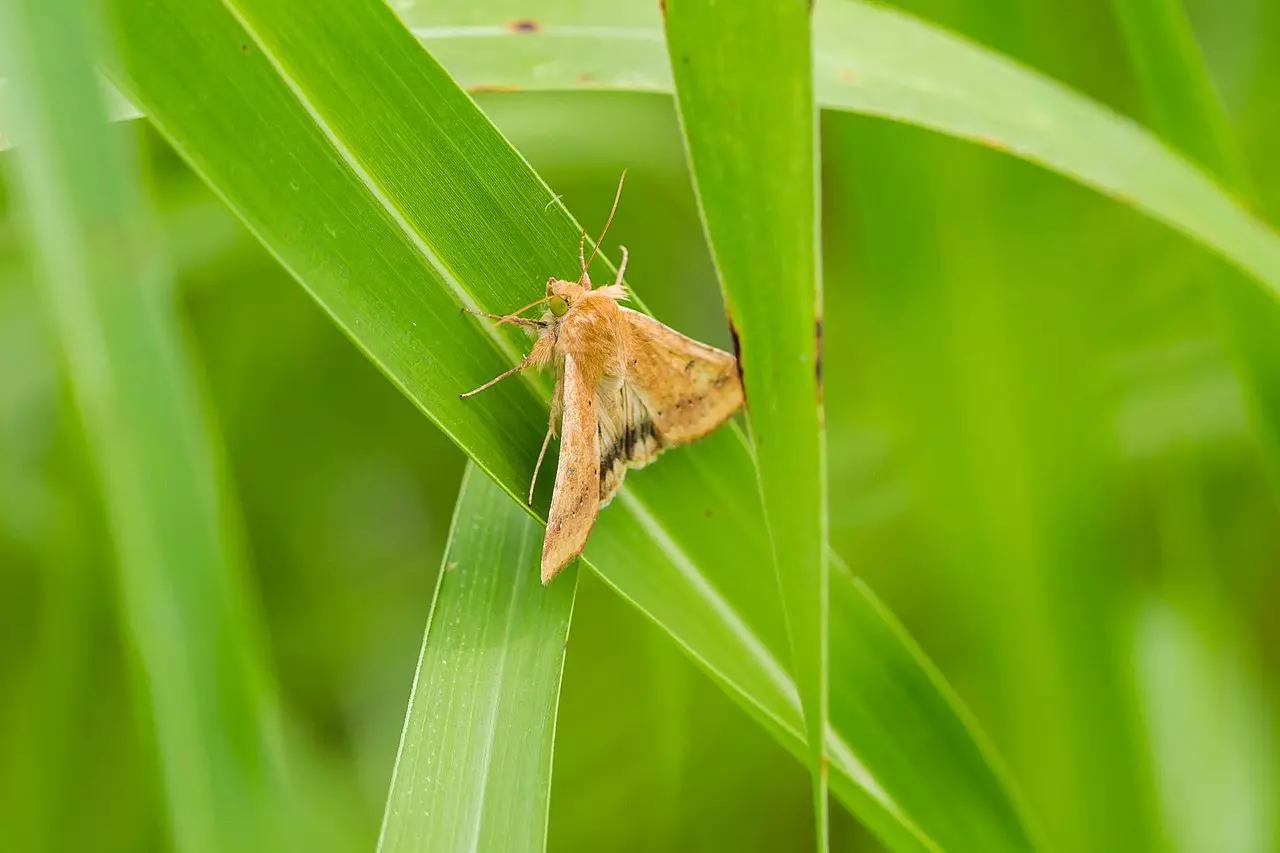
Corn Earworms
Identification
Adult corn earworms are a buff to greenish-colored moths with green eyes. Wing markings are irregular, with the most conspicuous mark being a dark comma-shaped spot on the forewings. Adults have a wingspan of about 1½ inches and are most active at night.
Damage
Sweet corn is vulnerable from row-tassel to 100% silk. The eggs hatch in about 2-6 days, and then larvae move down the silk into the developing ear where begin feeding immediately. The worms feed directly on the kernels and a mature larva can easily consume 8-15 kernels, or the top 1-2 inches of the ear tip. Feeding holes in the ear may provide entry points for fungal pathogens and increase disease incidence.
Prevention
Monitor for adult moths using a blacklight trap. Avoid late-planted corn.
Physical control
Encouraging the presence of predatory wasps may help control corn earworm populations.
Chemical control
It is highly recommended to try physical prevention/control methods before resorting to chemical control. If you choose to use an insecticide, select a product that is labelled for corn earworms. Check local regulations (or your local Extension Office where applicable) to identify which products can be used in home gardens in your area. Follow label instructions carefully for safe and effective insecticide application and to ensure that edible crops are safe to harvest. Test insecticide on a few plants before widespread application. Look for the most selective insecticide to minimize harm to beneficial insects- even some “selective” and "natural" insecticides can still negatively impact beneficial insects. Apply contact-based insecticides in the late evening and try to avoid spraying during blooming to minimize negative impacts on pollinators- in some cases the insecticide may need to be hosed off in the morning to avoid contact with pollinators.
Plants Affected









...and 3 more plants
Put away the pen and paper
Plan your veggie garden in minutes with Planter's easy drag and drop planner.
Try Planter for Free