Persimmon
Diospyros kaki, Diospyros virginiana, Diospyros virginiana x kaki
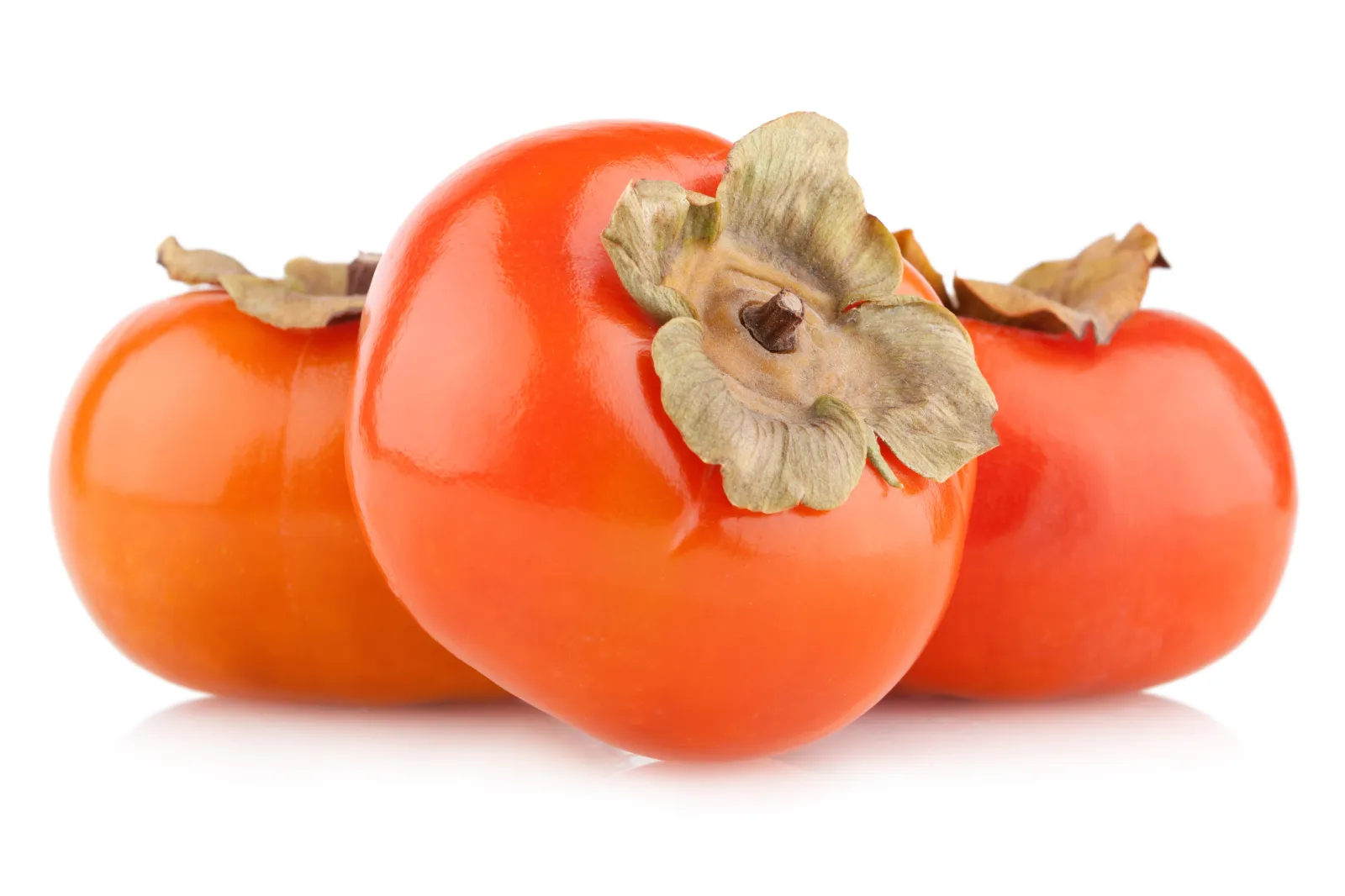
Persimmons are a sweet, juicy, slightly spice-flavored fruit- think cinnamon, honey, and ginger, not chile! Persimmon varieties are categorized as astringent and non-astringent. Astringent varieties, if not allowed to fully ripen before harvesting and eating, will be dry and mouth-puckeringly inedible due to their high tannin content. Non-astringent persimmons can be eaten when they are slightly underripe and firm, although it's best to let them fully ripen and develop their sweetness unless you prefer a firmer texture. Persimmons are low-maintenance, easy-to-grow trees. The key is to select varieties that are adapted to your climate, will produce the type of fruit that you want, and to make sure they are either self-fertile or have compatible pollinator trees nearby. Growing persimmons requires patience as it can take several years for the trees to reliably produce, but the reward is an abundance of incomparably sweet fruit unlike anything available in a store!
How to Grow Persimmon
Quick Info

Put away the pen and paper
Plan your veggie garden in minutes with Planter's easy drag and drop planner.
Try Planter for Free
Nutrition
Vitamins








Nutrients










Pests
Diseases
Beneficial Critters
Growing from Seed
It is generally recommended to purchase persimmon trees rather than starting from seed. Seeds can be hard to come by and with purchased trees there is better cultivar selection. Purchased trees are also commonly grafted to improve hardiness. Persimmon seeds typically have a very low germination rate, so plant more than you need.
If growing persimmons from seed, be sure the variety will have the qualities you want. Trees grown from seed will start producing fruit within 4-9 years while purchased trees will take 3-5 years. It can also take several years to be able to identify male and female trees if the trees are grown from seed.
Persimmon seeds should be cold stratified prior to planting. It is helpful to soak persimmon seeds in water for 24 hours before stratifying them. To cold stratify persimmon seeds, place them in a plastic baggie with a damp paper towel and keep them in the refrigerator for 3 months prior to planting. Be sure to factor in the time needed to cold stratify the seeds prior to starting them indoors.
Keep the seed starting mix consistently moist but not wet. Use grow lights to provide supplemental light as soon as the seeds germinate. Persimmon saplings can be planted in the ground after 1-2 years.
Planting Considerations
Choose persimmon cultivars that are suited for your hardiness zone and that have the pollination and fruit qualities you are looking for.
Oriental persimmons (Diospyros kaki) are smaller trees although they have larger fruits. They can be astringent or non-astringent. They are hardy in USDA zones 7-10. Many oriental persimmons are self-fertile, although some require cross-pollination from a different, compatible variety. With some oriental persimmons female trees can produce fruit without pollination (and the unpollinated fruit will be seedless). In some potentially seedless cultivars pollination improves fruit set, and the color and/or flavor of the fruit, and can be desirable even though it means the fruit will have seeds. Pollination can also change the astringency of some oriental persimmons.
American (native) persimmons (Diospyros virginiana) can grow very large, although with smaller fruit, and they are hardy in USDA zones 4-9. Most native persimmons produce astringent-type fruit. Some people prefer the flavor of native persimmons. Native persimmons usually require a male pollinator tree and a female fruit producing tree to be planted near each other, although some are self-fertile. Oriental persimmons and American persimmons generally do not cross-pollinate.
There are also hybrid cultivars that combine the best characteristics of both oriental and native persimmons.
Persimmon trees prefer loamy soil with good drainage. Add compost at the time of planting. Select a planting location that is large enough for the tree's fully-grown size. It is common for persimmons to drop some fruit as not all fruit will be carried to full ripeness, so avoid planting near a deck or walkway where dropped fruit could cause a slippery mess.
Feeding
Persimmon trees do not need much if any fertilizer if the soil is already fertile. Ideally, have a soil test done and correct any deficiencies at the time of planting. If growth is slow or leaves are yellowing (and it's not fall), apply a balanced fertilizer in the spring. Excess nitrogen can cause fruit drop.
Harvesting
Persimmons are harvested in the fall, with the exact timing depending on the variety and climate. With some types of persimmons the belief is that they will not ripen until they experience a frost, but this is a myth.
Astringent types should be picked at full ripeness, when they are orange and very soft (almost jelly-like). Non-astringent types should be harvested when they have reached their expected mature size and orange color, but are still firm. The expected fully ripened color and size varies by variety.
Use snips or scissors to gently cut the fruit off the tree, keeping a small piece of the stem with the fruit. Be careful not to tear or damage soft fruits.
Storage
Non-astringent persimmons can then be left on the counter at room temperature to reach their desired ripeness. Placing them in a paper bag with an apple or banana may help speed ripening.
Ideally ripe persimmons should be eaten right away, although they can be stored in the fridge loosely wrapped in a plastic bag for up to several days.
Whole persimmons can also be frozen in a freezer-safe bag or container and stored in the freezer for up to several months. Freezing can help reduce astringency in underripe persimmons. When defrosted the persimmons will not have the same texture as fresh persimmons; they are best used for cooking and baking.
Dehydrating can also help reduce astringency in persimmons. Dehydrated persimmons can be stored in an airtight container for up to several months. Persimmons can also be turned into preserves for long-term storage. Be sure to use safe preserving techniques and follow recipes from reputable sources.
Pruning
Persimmons do not require much pruning, other than to remove dead, diseased, or damaged branches. The canopy can be opened up and shaped if desired but this is not strictly necessary.
Persimmons may produce suckers from the roots which can be removed, unless you want the tree to become more of a multi-stemmed shrub. If the tree is not grafted suckers can be used to propagate new trees. On grafted trees all suckers below the graft point should be removed.