Kohlrabi
Brassica oleracea var. gongylodes
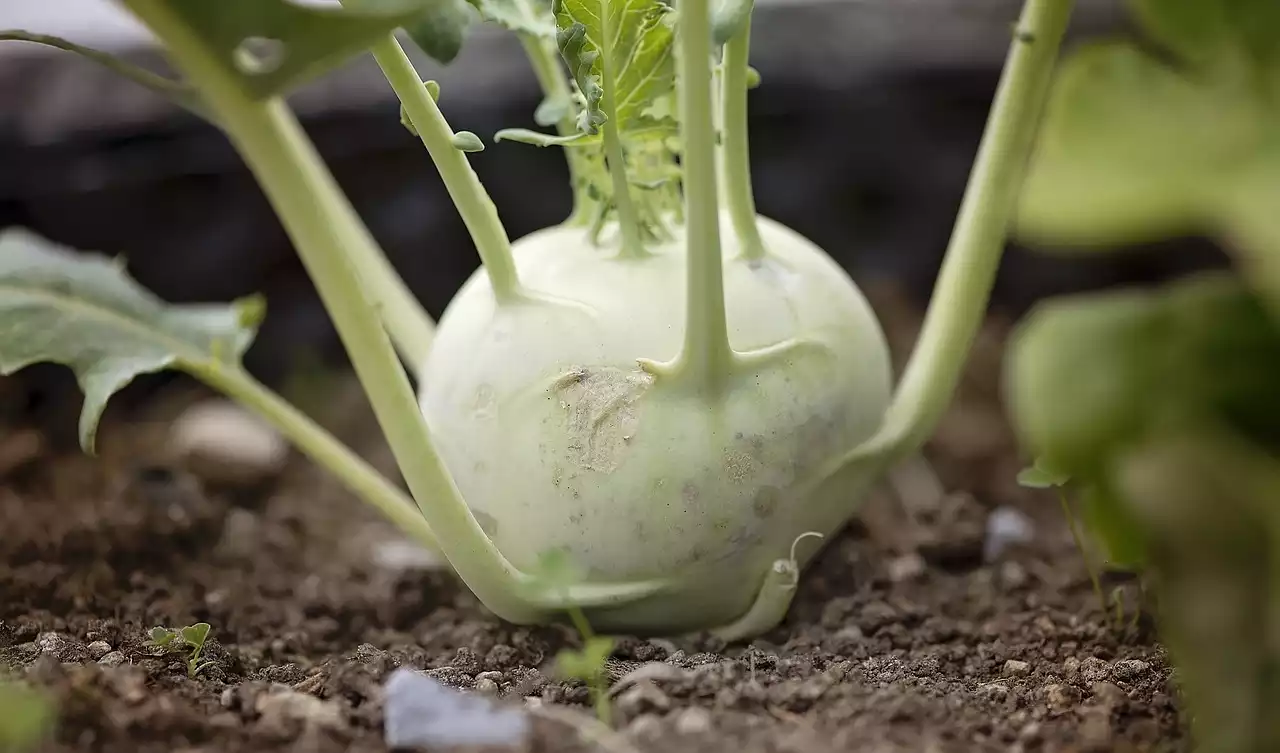
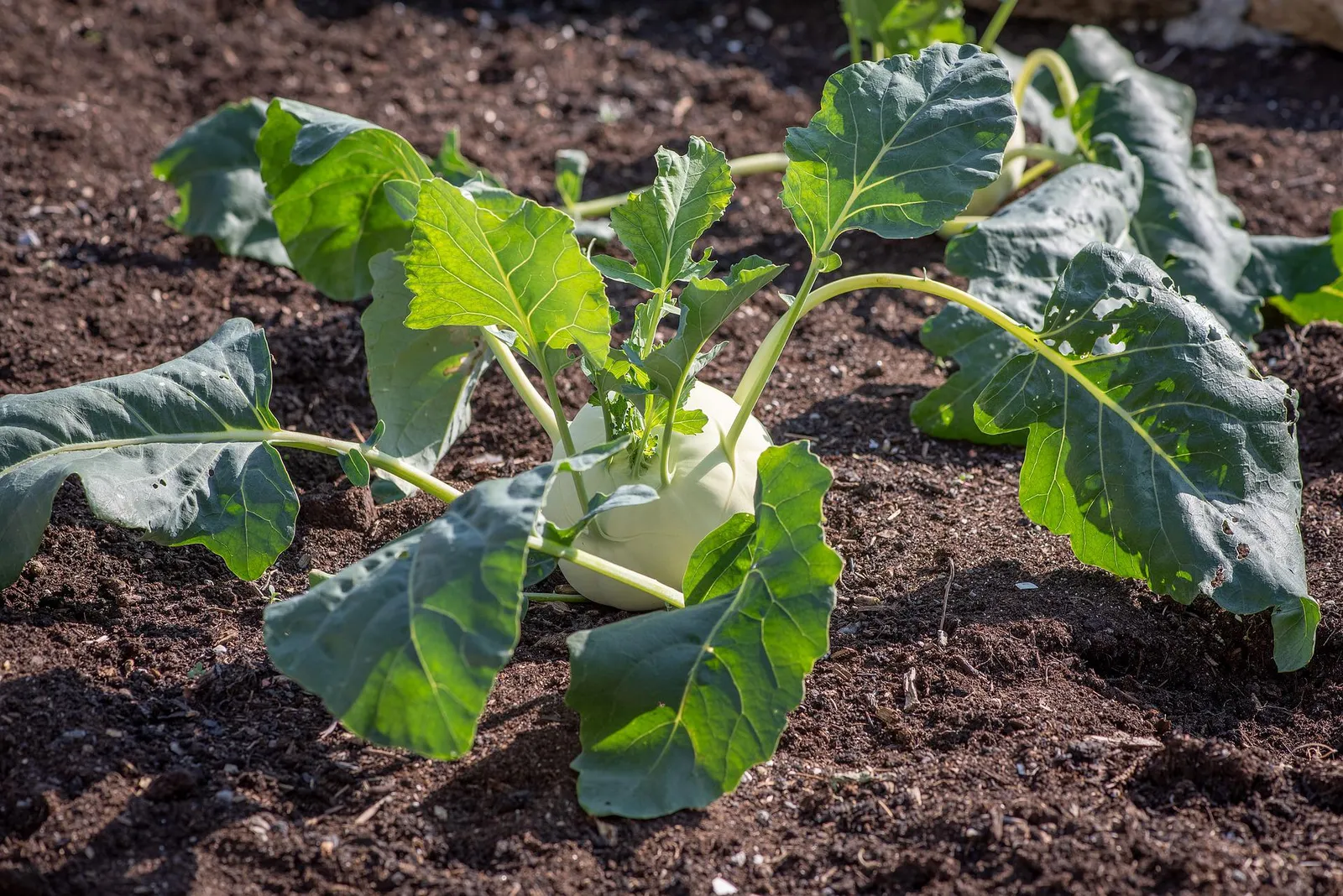
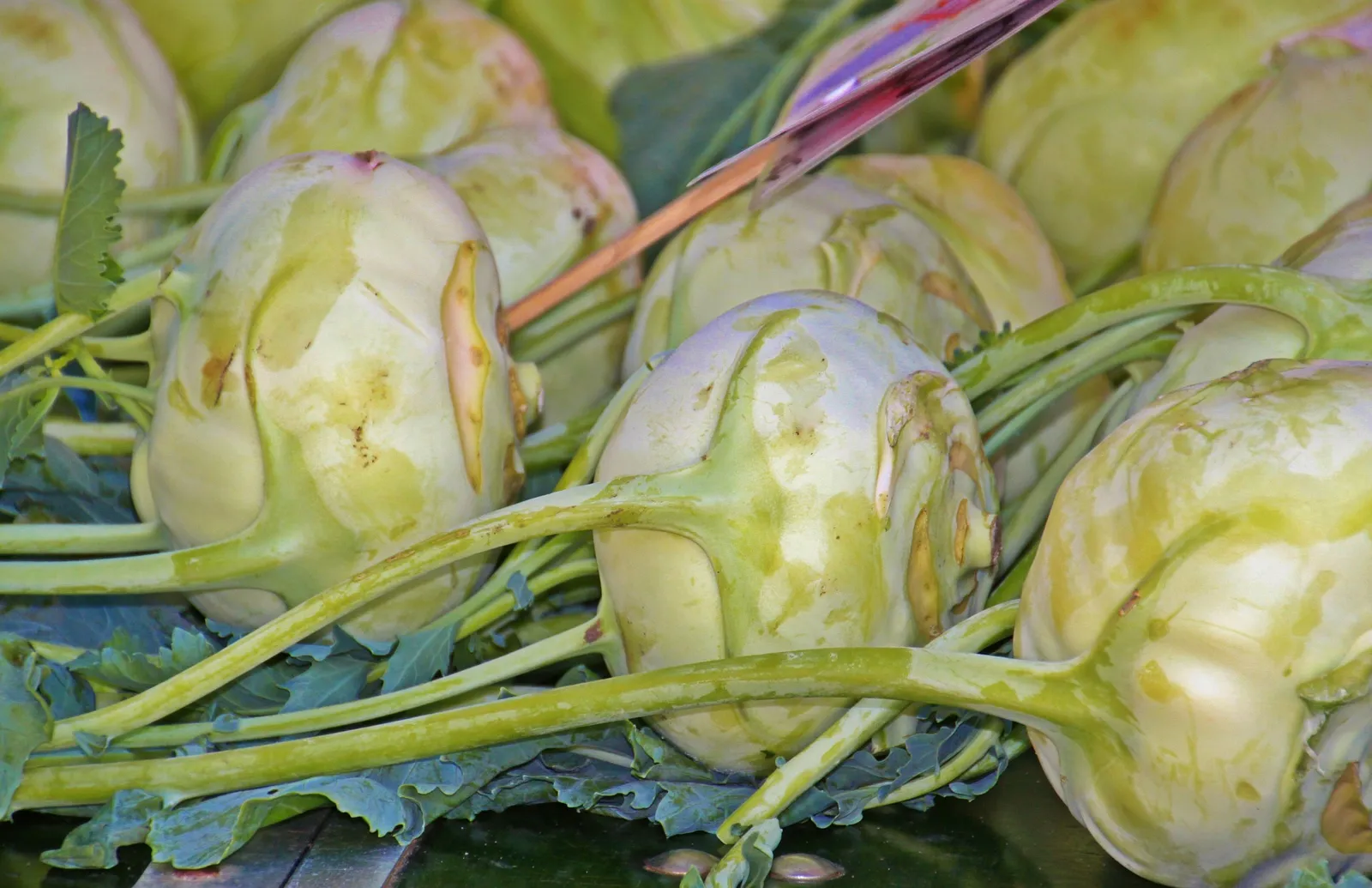
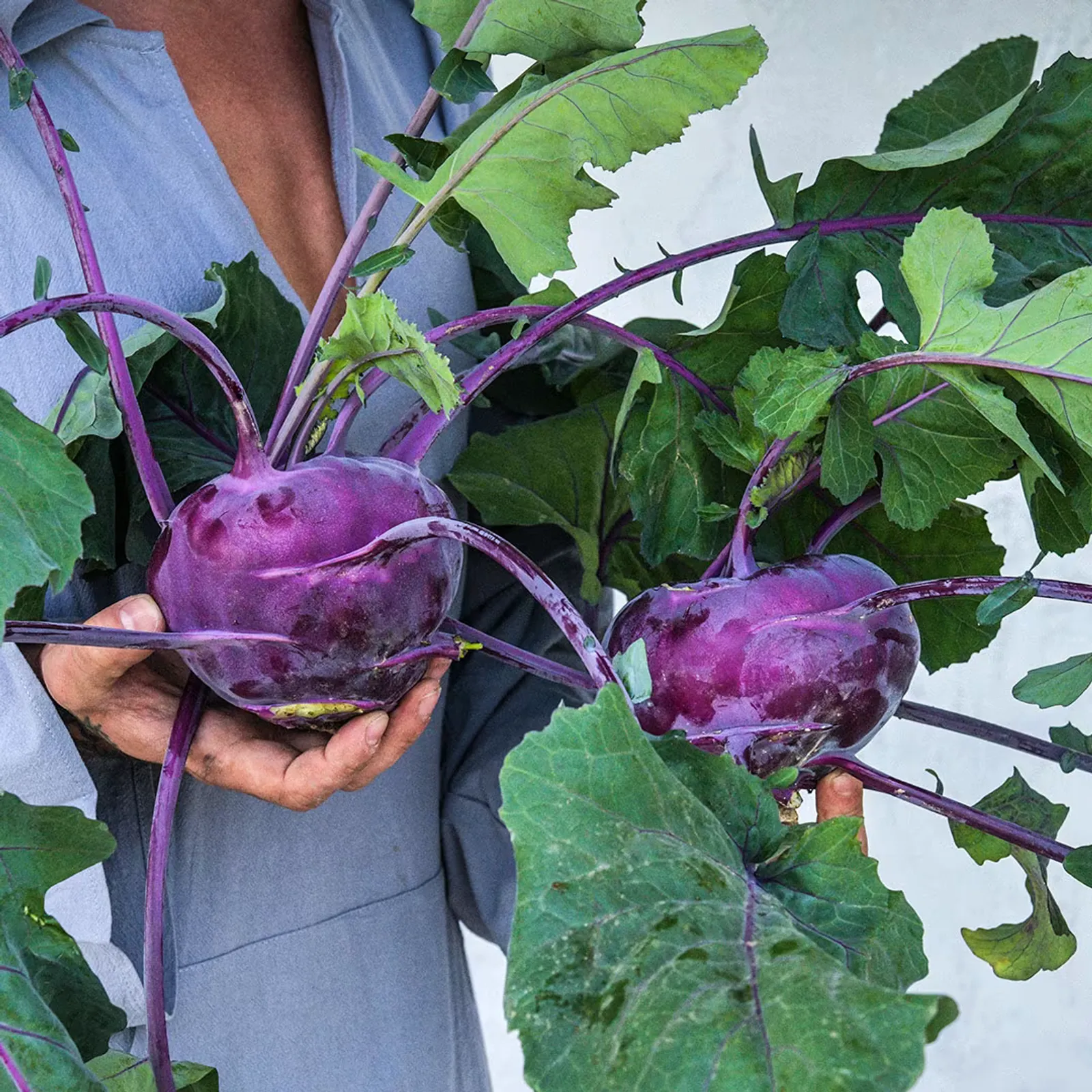
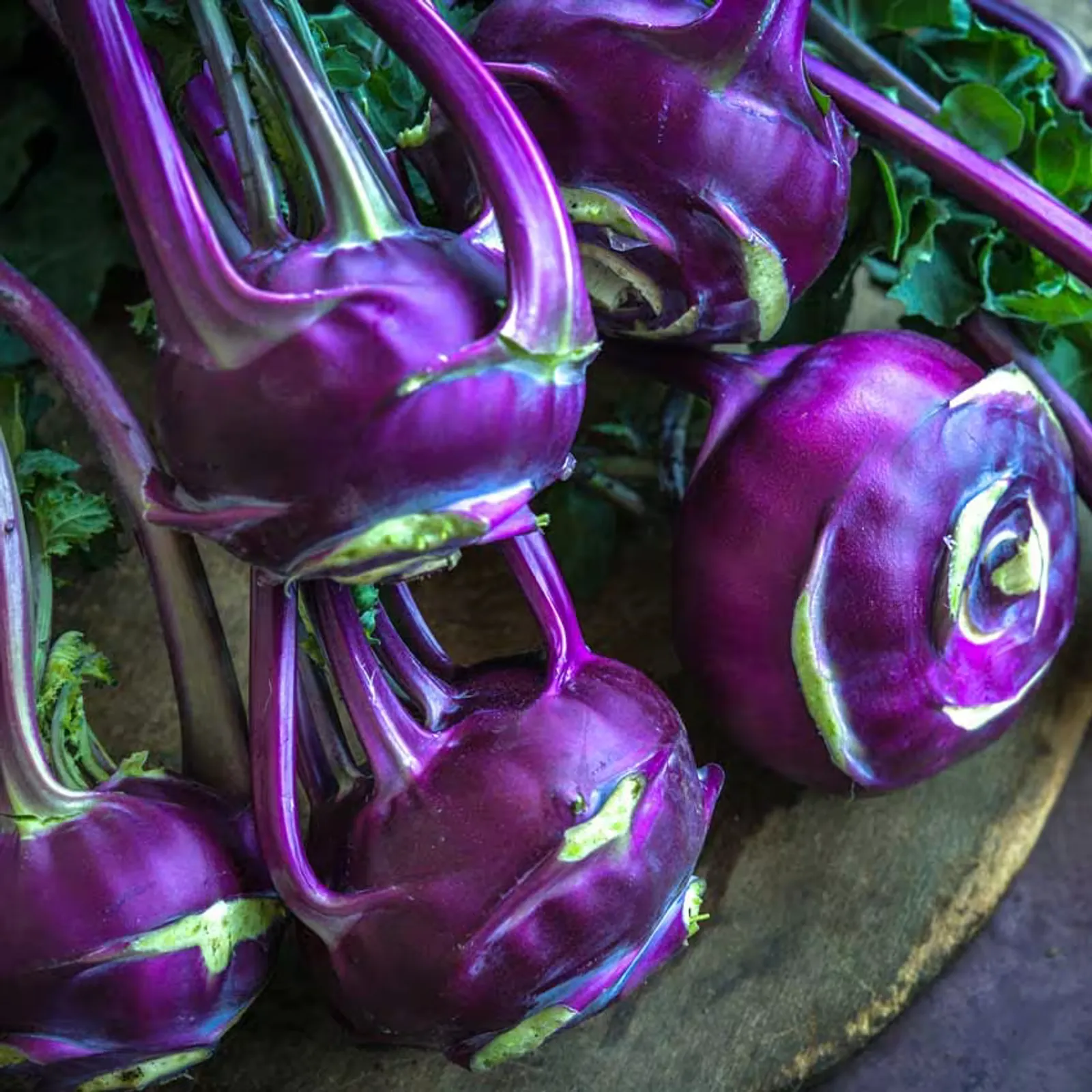
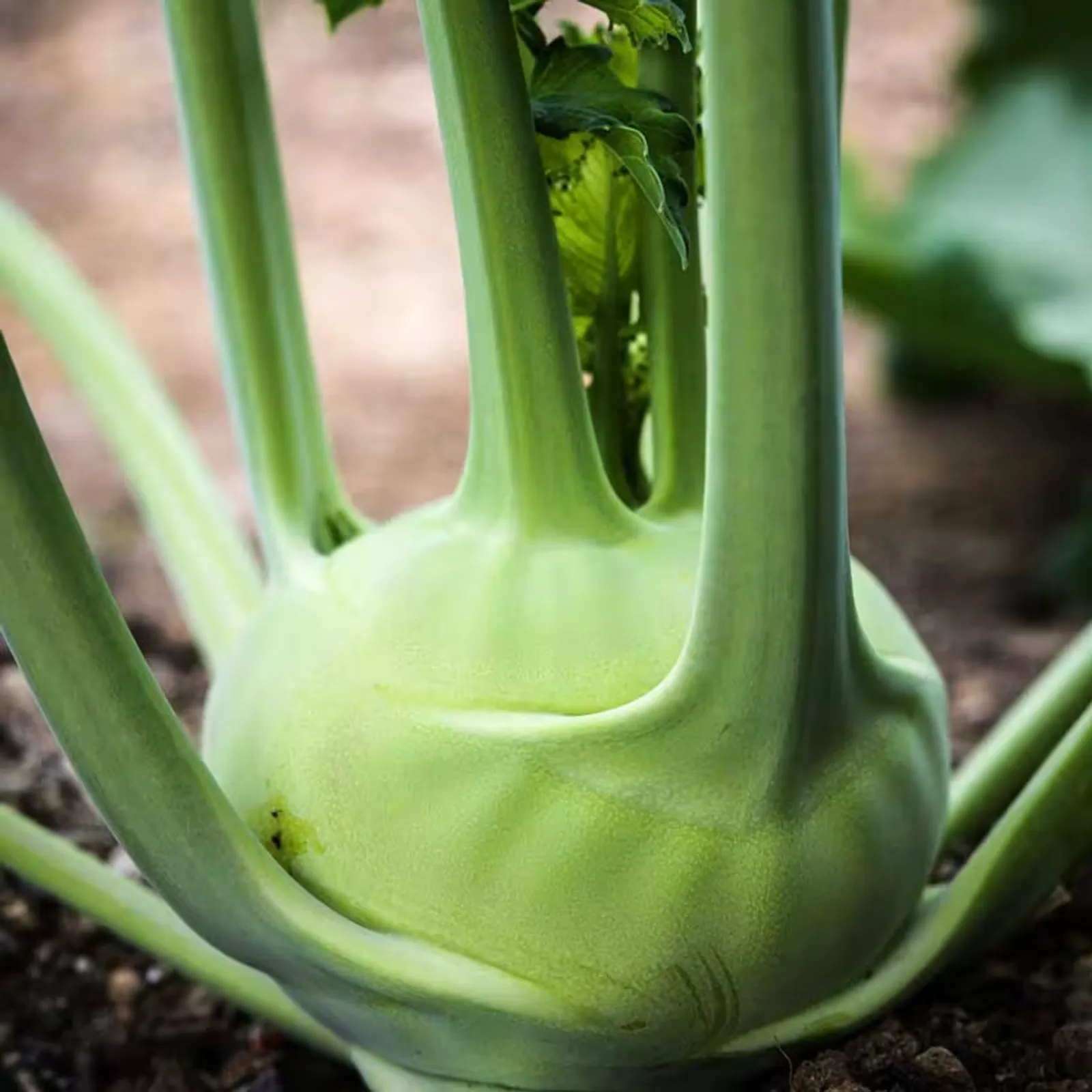
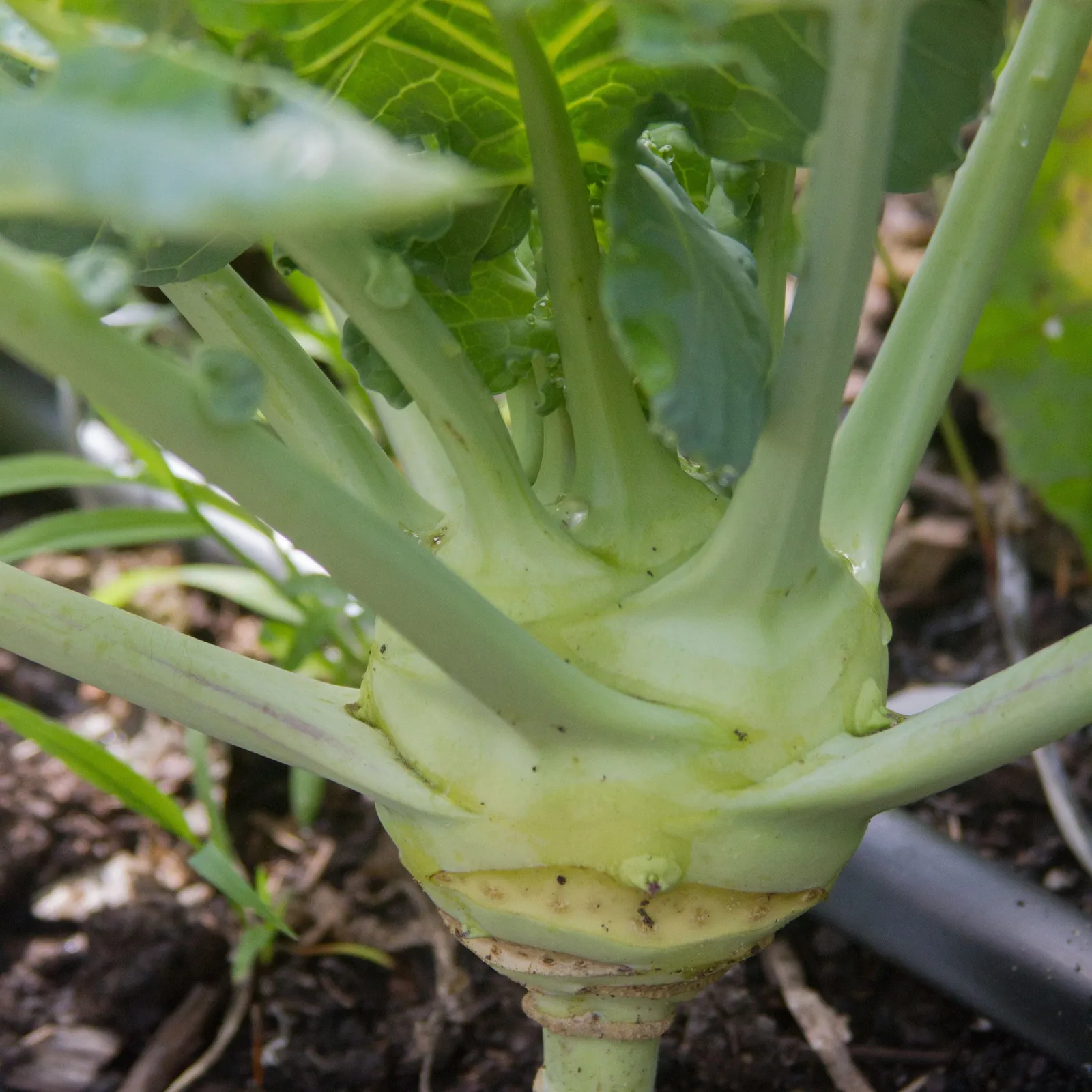
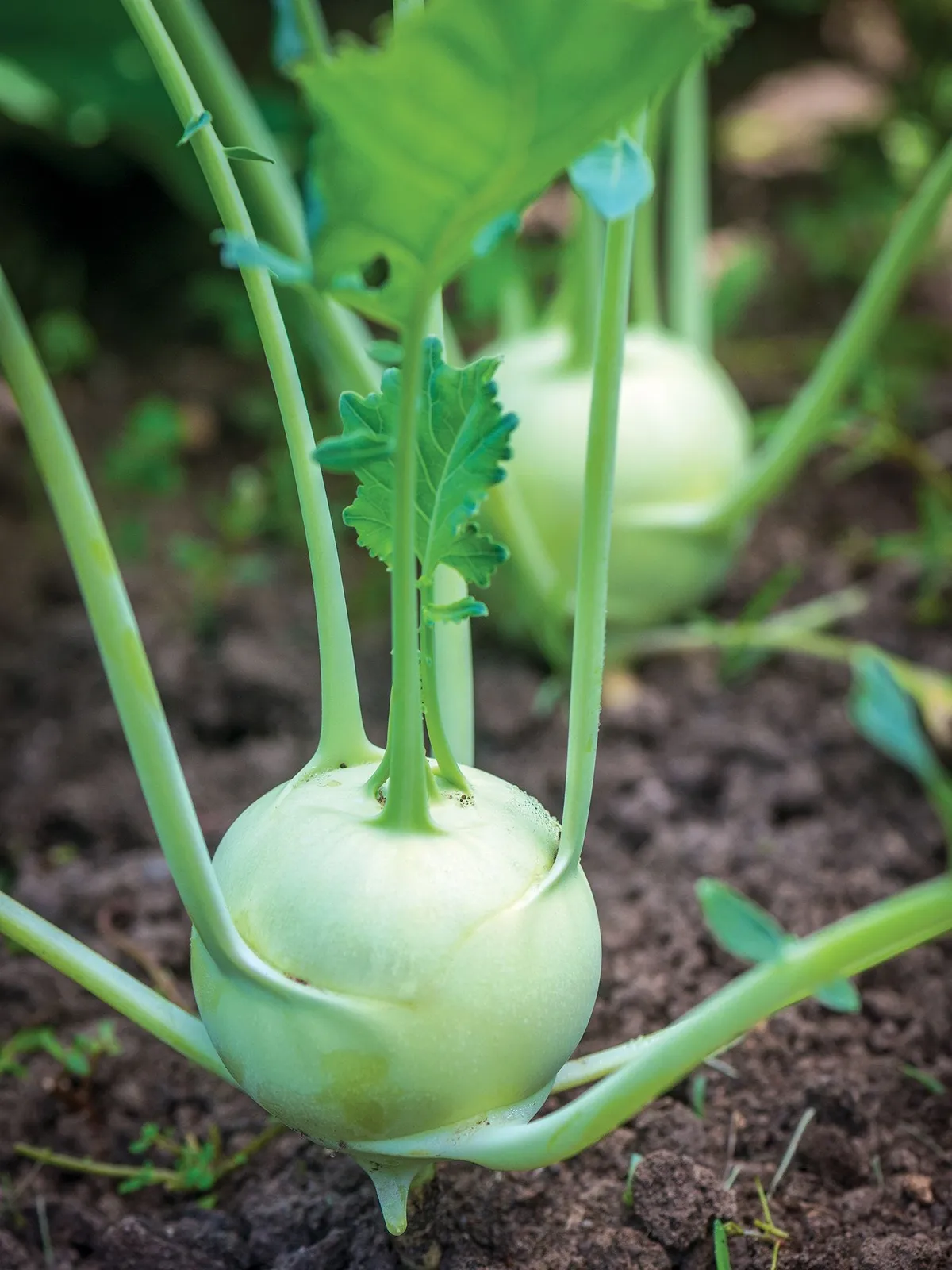
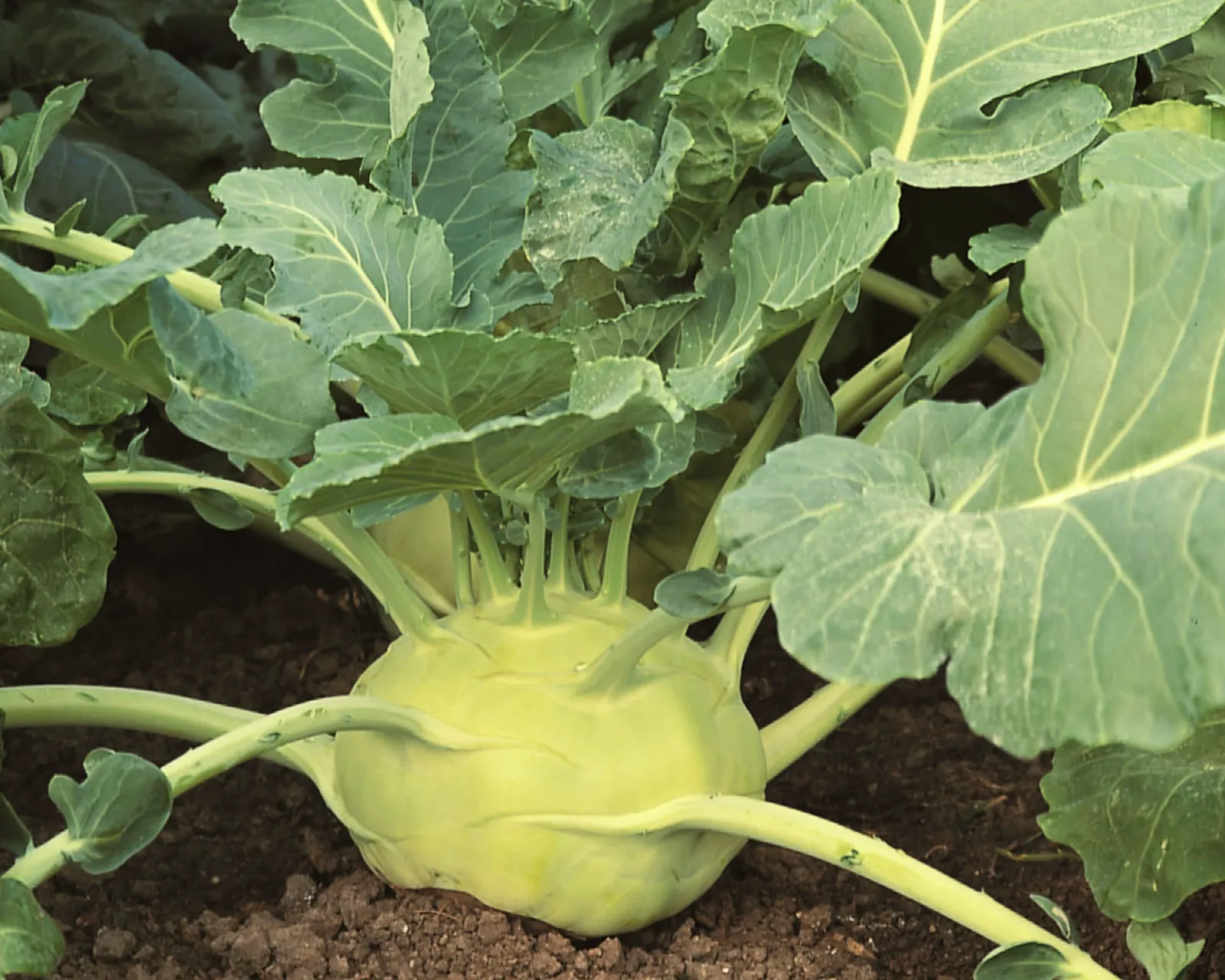
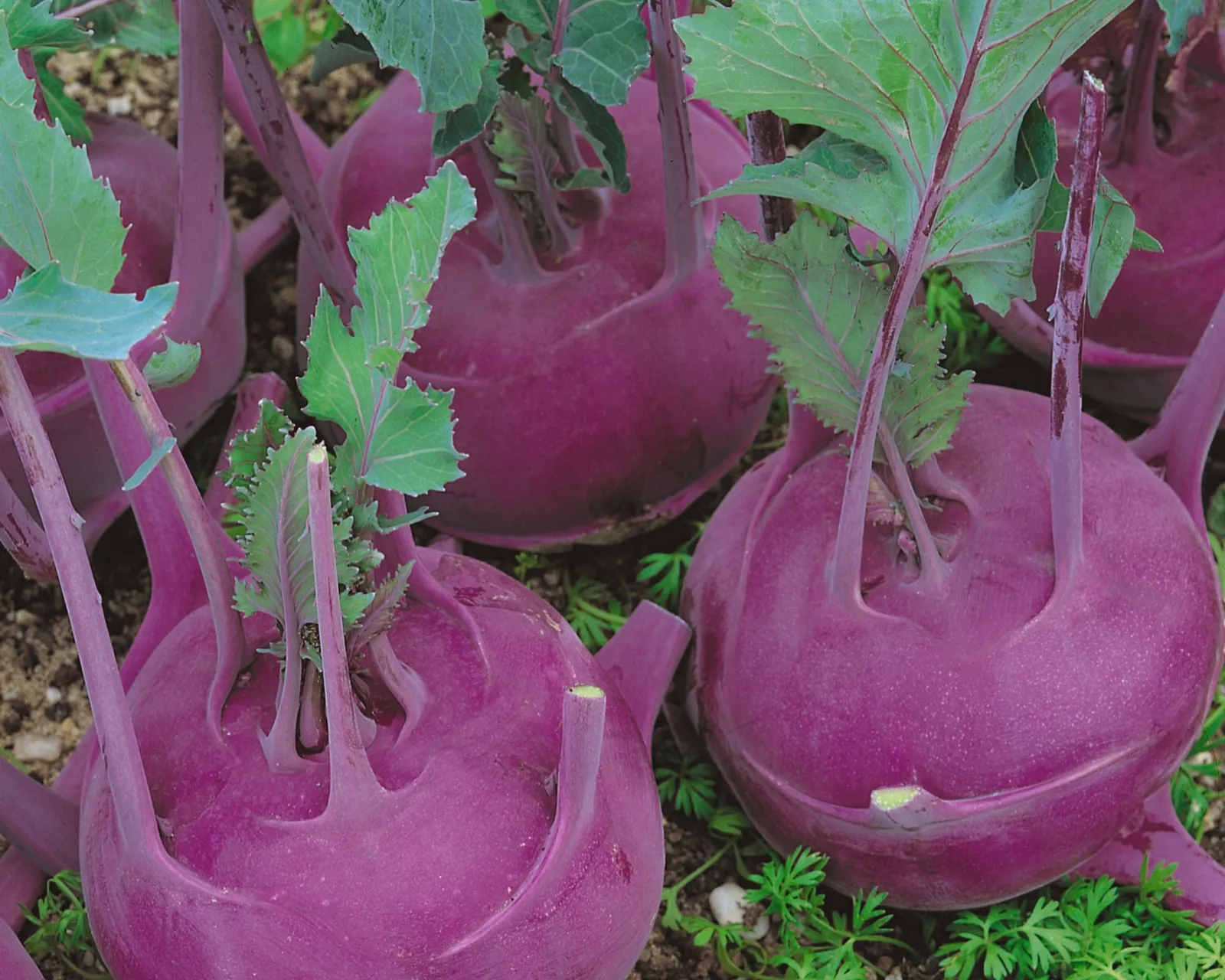
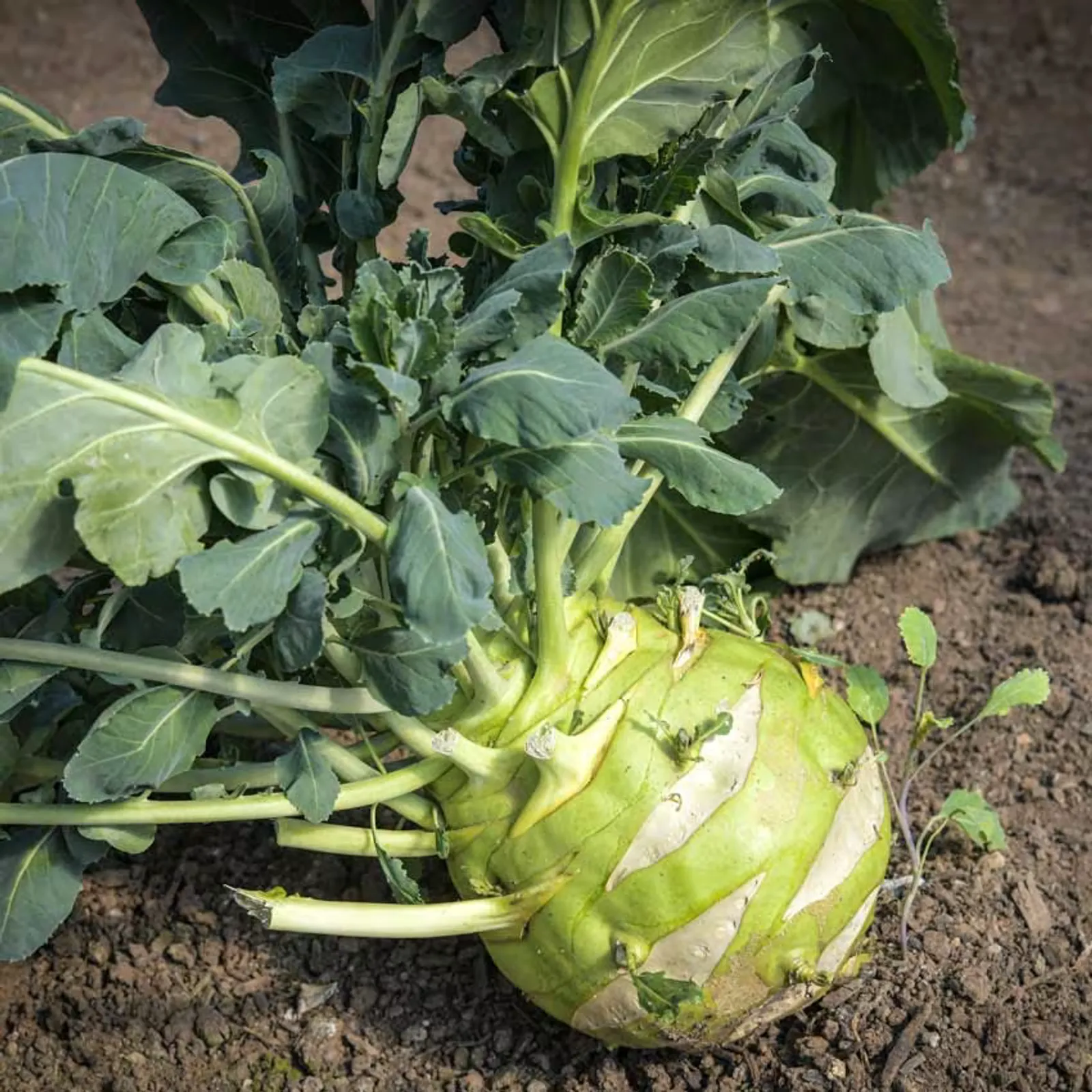
Kohlrabi is a unique looking vegetable in the brassica family. It is grown for its bulbous stem which is sweet, crispy, and juicy with a mild cabbage flavor. Kohlrabi matures faster and takes up less space than some of the more common, larger brassicas which makes it a great choice for space-constrained gardens. Kohlrabi is usually peeled before eating as it can be a bit fibrous. It can be served raw in slaws or sliced and sprinkled with salt and lemon. It can also be cooked- often steamed or roasted. The leaves of kohlrabi can also be steamed or stir-fried. There are several varieties of kohlrabi available with either green, purple, or white stems. Some kohlrabi varieties produce extra large bulbs without becoming woody. Kohlrabi is a cool weather crop that typically grows best in the spring or fall, although it can be sown in successions to get harvests through much of the season. In milder climates kohlrabi can be grown in fall and winter.
How to Grow Kohlrabi
Quick Info

Put away the pen and paper
Plan your veggie garden in minutes with Planter's easy drag and drop planner.
Try Planter for Free
Varieties
Related Articles
.jpg)
Companion Plants









Combative Plants



Nutrition
Beneficial Critters
Growing from Seed
Kohlrabi seeds are usually directly sown in the garden although they can be started indoors to get a head start or to avoid intense summer heat. Kohlrabi plant spacing can vary depending on the variety. If starting indoors, keep the seed starting mix consistently moist but not wet. A heat mat can be used to aid germination but excessive heat after germination can cause the seedlings to become leggy and weak. Turn off heat mats as soon as seedlings emerge and be sure your grow room is cool. Use grow lights to provide supplemental light as soon as the seeds germinate. Use grow lights to provide supplemental light as soon as the seeds germinate.
Planting Considerations
Kohlrabi prefers fertile, loamy soil that retains moisture but does not become waterlogged. Add compost to the soil at the time of planting. Young kohlrabi seedlings exposed to extended periods of cold temperatures may bolt. Be sure to harden off seedlings and transplant out after daytime temperatures remain consistently above 50°F (10°C). Apply mulch around the plants to manage weeds and to help retain moisture. Kohlrabi is susceptible to many pests. Proper plant spacing, good weed control, and applying row cover or insect netting at the time of planting can help to minimize pest damage. To grow kohlrabi in a container be sure to choose a container that holds at least 2 gallons.
Feeding
Kohlrabi is a heavy feeder. Apply a balanced, slow-release fertilizer at the time of planting.
Harvesting
Standard-size kohlrabi varieties should be harvested when the bulbs are 2-3" (5-7.5 cm) wide. Bulbs that are allowed to grow too large can become tough and woody. Fall-planted kohlrabi may be able to grow a bit bigger without losing quality. Use a sharp knife to cut the thin part of the kohlrabi stem at soil level, or pull the entire plant up and trim off the roots.
Storage
Snap kohlrabi leaves off the bulb for storage. Kohlrabi leaves can be stored in the fridge for up to several days. Whole kohlrabi bulbs without the leaves can be stored in the fridge for several weeks up to a few months. Kohlrabi can also be sliced (or left whole), blanched and cooled, then transferred to an airtight container or freezer-safe bag and frozen. Kohlrabi can be kept frozen for up to several months. Kohlrabi can also be pickled or fermented for long-term storage.